Showing posts with label exhibitions. Show all posts

Friday, July 13, 2012

Celebrating Bob Hope

Leslie Townes Hope grew up in Eltham near London. We all know him as Bob Hope, the much loved entertainer, who had a lifelong love of golf.

An exhibition about his life times and humour has been put together by the World Golf Hall of Fame & Museum with the support of the Bob & Dolores Hope Charitable Foundation and was launched by his daughter Linda. It was a really fun night with lots of laughter, which seemed really appropriate for such a great entertainer.

The free exhibition in the Berkeley Gallery at the
Greenwich Heritage Center at Artillery Square in Woolwich from Friday July 13 through October 28, 2012. Tuesday – Saturday 10am – 4.45pm

Friday, June 29, 2012

Last Tuesdays

Discover one of London's hidden gems and enjoy an evening with a difference on the last Tuesday of every month.
In the magnificent art deco building of the Royal Institute of British Architects (RIBA) a variety of special events are offered to the public, exhibitions, film screenings, book signings and building tours. Always with a different theme. June was play. July will be celebration and spectacle.
When you are finished, browse the bookshop, have a coffee in the cafe or better still stop for dinner in the magnificent dining room with it's superb art deco features.

Thursday, May 31, 2012

Conservation In Action: Courier trip to USA with items from the Wellcome Library’s Asian Collection

Since 2011, as part of the Preservation and Conservation team, I have been focusing on the preparation of items from the Wellcome Library for internal exhibitions in the Wellcome Collection temporary exhibition space or for external loans, which have seen borrowers from the UK, Europe and overseas.
As an Exhibition Conservator, I work closely with the Library Exhibition Liaison Officer, discussing condition environmental parameters and display requirements for every single item going to be displayed. The Library receives numerous loan requests per year with peaks of workload during the two months before openings, which fall mostly during Spring and Autumn.

After the first approach from the borrowing institution and confirmation of the list of objects, I start with assessment of the physical condition of each item. Following verification that the items are stable enough to travel and to be exhibited, I continue with their documentation on the Conservation Database and if necessary, I proceed with conservation treatment in order to stabilise their physical condition and improve manual handling. I also arrange the framing and display mounting of items with the valuable help of some external art technicians.

Conservation of Islamic Call. 90, “A saying of the Prophet Muhammad”.

Tear repairing and flattening of object from the back.
Part of my role as Exhibits Conservator is also to accompany the items and install them at the borrowing venue. Last February, I accompanied nine items from our Asian Collection to the Brigham Young University Museum in Provo, Utah, USA.

Items documented and mounted at the Conservation studio before despatch
My journey started on a Tuesday morning, coincidentally on St. Valentine’s Day. Myself and the other two girls couriering from the British Museum and the Ashmolean, Oxford were hoping that as a consolation for the 3.45 am start that morning, we would be given a red rose... but that sadly did not happen. Exhausted, we were instead promptly driven down to a Heathrow Airport warehouse following the climate-controlled, AirRide vehicle that was transporting objects to Utah from four UK institutions (Wellcome Library, British Museum, V&A and Ashmolean).
Two empty crates arrived at the Wellcome Library. The Library material was individually soft- wrapped, carefully placed inside the crate and surrounded with layers of Polyurethane foam

The pallet containing the crates was loaded onto the cargo plane ready to travel to Los Angeles
Brigham Young Museum of Art (BYU) was hosting an exhibition of Islamic Art for the first time, following a long tradition of exhibitions relating to Christianity. The exhibition “Beauty and Belief: Crossing Bridges with the Arts of Islamic Culture” at BYU is the first venue of a touring show that will also exhibit at Indianapolis Museum of Art, the Newark Museum and the Portland Art Museum. It showcases more than 250 objects from various lenders in the United States, Europe and the Middle East. Curated by the art historian and artist Sabiha Al Khemir, the show spans the entire main floor of the Brigham Museum.

After an incredibly long journey of thirty hours, we finally arrived at Provo at 1 am. The next morning my day at the Museum was spent checking the condition of the items after all that travelling, noting any possible changes and working together with the local Museum art technician on the display, which had been discussed and agreed previously between the two institutions. Materials such as oil paintings, drawings and prints are often displayed framed and hung on wall using security fixings whereas archival flat items, manuscripts and books are usually placed carefully into showcases and either laid flat (sometimes on a barrier sheet of archival board or Mylar®/ Melinex® polyester film) or laid on custom made Perspex supports.

One of the highlights from the Wellcome Library was Arabic MS 1011, “Scroll of Prayers signed by Zayn al-'Abidin”, which was beautifully displayed on its own, exhibiting a meter and a half of its length.


Marking the base of the showcase with tape in preparation for the display of Arabic MS 1011, “Scroll of Prayers signed by Zayn al-'Abidin”.

Detail of the mounting system which prevents the item rolling back on itself.
Other Wellcome Library items were sharing cases with objects from other lending institutions. The curator and couriers were all working together to make sure that the objects were placed perfectly inside the case. When the final display was refined, the showcases were secured in place, locked and witnessed before our departure.

After returning to London, the Library Exhibition Liaison Officer and I received an email from the BYU Museum Registrar, thanking us for all of our helpful support during the preparation and build-up to the loan and for the work on the installation day. The opening day was a great success and the exhibition is still being well attended.

Marking the space on a showcase for the final display solution

Arabic MS 300, “Map of the World”, was placed on a tilted support to facilitate reading.

The Perspex lid of the showcase was carefully lowered before the final locking.

External view of Brigham Young University Museum of Fine Art

 Beauty and Belief: Crossing Bridges with the Arts of Islamic Culture, Brigham Young University Museum of Fine Art, Provo, Utah, 24th February to 29th September 2012
Author: Luana Franceschet

Tuesday, April 17, 2012

Health of the People -- British style

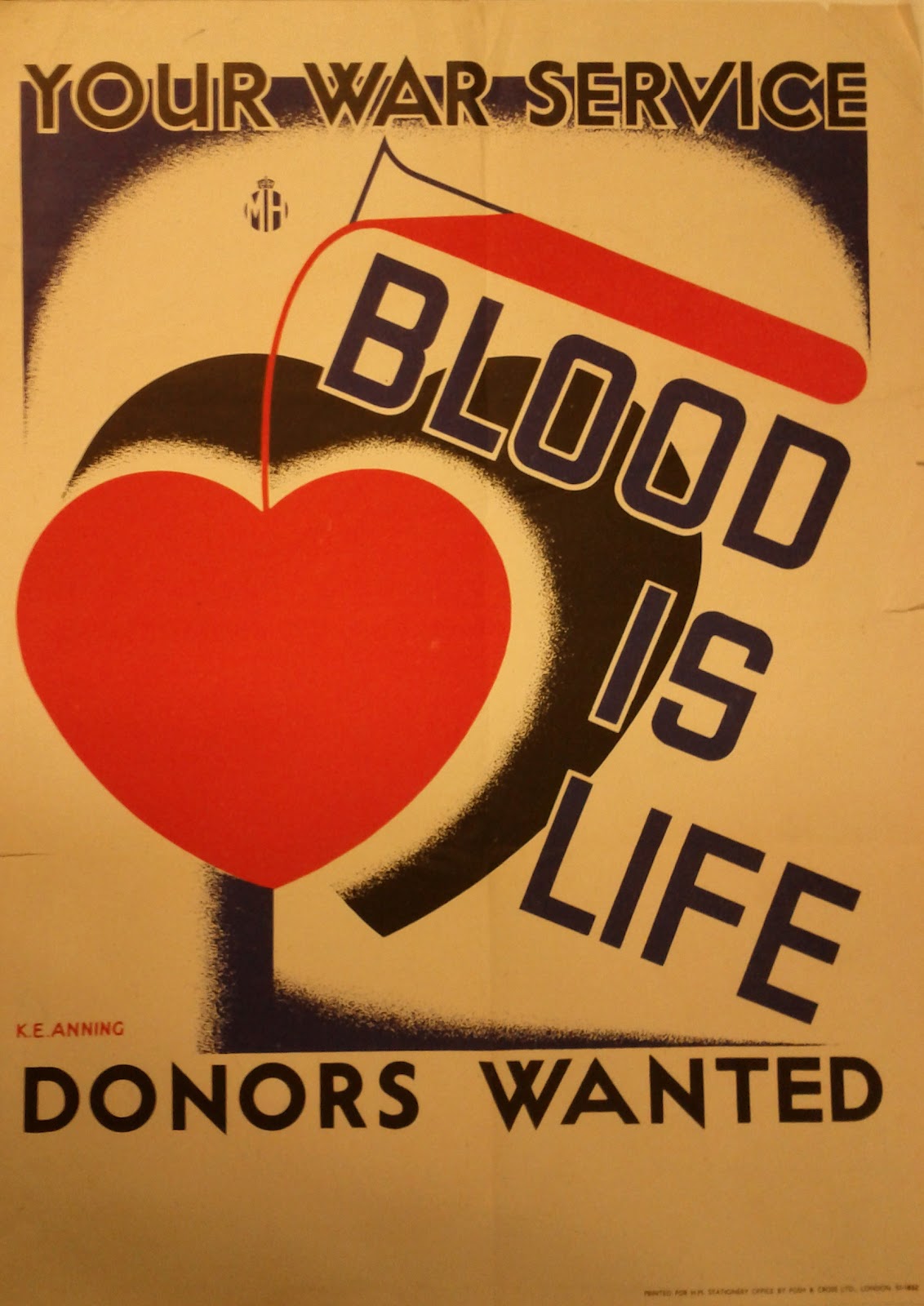
The Wellcome Library has acquired a collection of 600 British posters dating from the 1940s to the 1990s advertising the health-maintenance activities of the British state. Most were produced by the Central Office of Information for the U.K. Ministry of Health (subsequently Department of Health and Social Security, subsequently Department of Health).

The posters cover the following subjects: Blood donation (135); Children (44); Diseases (121: AIDS, asthma, colds and flu, diphtheria, epilepsy, meningitis, rabies, rubella, tetanus, tuberculosis); Drugs or narcotics (53); National Health Service services and charges (80: ambulance service, cervical screening, community care, emergency GPs, evaluation, fares to hospital, NHS 30th anniversary, prescription charges, spectacles); Nurses and midwives (87, including recruitment, Queen's Institute of District Nursing, etc.); Organ donation (44), Travel and health (8); and Miscellaneous (26: air-raids, disability, health and safety, health of the nation, hearing, incontinence, mental health, and teeth).

Proof pulls and storyboards are included as well as finished versions. Named designers include Reginald Mount, K.E. Anning (above), and Abram Games.

The posters are accompanied by a large collection of photographs, drawings, etc. which have not yet been explored, except for one item, a photograph album (Wellcome Library no. 811058i) recording an exhibition from 1948 called Health of the People. This exhibition was put on by the Central Office of Information in Oxford Street, London (but where in Oxford Street?) apparently to publicize the introduction of the National Health Service (NHS) in that year. On display from May to June 1948, the exhibition was an ambitious attempt to communicate the history of public health and the difference that the NHS would make between the past and the future. Much attention was given to new laboratory-based services.

The photographs makes it look like a halfway-house between Britain can make it at the V&A in 1946 and the Festival of Britain on the South Bank in 1951. No names of contributors (commissioners, writers, designers, manufacturers) are given, but surely they must be recorded somewhere; possibly in the unexplored parts of this same collection. The script which accompanies the album makes much reference to the Public Health Act of 1848, the centenary of which was being celebrated.

Did this period see the high-water mark of state involvement in health in the British Isles? If so, our successors will no doubt look on these documents with incredulity. Only time will tell. 
Displays in the Health of the People exhibition, 1948. Left, "the health team, consisting of the family doctor, dentist, nurse etc". Above, stands on protection of towns, water supply etc. Top, the staircase between floors.

Tuesday, February 21, 2012

A treat at the Chester Beatty Library in Dublin

© The Trustees of the Chester Beatty Library, Dublin
Only a few more days for readers in Ireland to see the exhibition China through the lens of John Thomson: 1868-1872, which comes to an end at the Chester Beatty Library in Dublin on Sunday 26 February, before moving on to Northern Ireland.

The Chester Beatty Library is a gem in its own right, with valuable and exquisite works displayed in two permanent exhibitions: one covering the principal religions of the world and the other the arts used in the making of books, including printmaking and painting. The latter starts with a magnificent George Stubbs mezzotint of a tigress, acquired in 2007 from the Christopher Lennox-Boyd collection. Other prints of particular interest include etchings by 17th-century masters such as Abraham Bosse, Jacques Callot and Antonie Van Dyck. A collection of etchings by Romeyn de Hooghe (1692) of King William III's return from Ireland to Holland is a work by the anatomist and courtier Govaert Bidloo. A rare book illustrated by Raoul Dufy, Mon docteur le vin(Paris 1936), claims that wine prevents appendicitis by killing germs in the intestines and resists typhoid, infant sicknesses, and diabetes (the WellcomeLibrary has the 2003 English translation).

A remarkable story is told by a box of Manichaean manuscripts which were entrusted to a conservator in Berlin in the 1920s, were removed to Leningrad in 1945, went back to East Germany in the 1960s, and finally returned to the Chester Beatty Library after 1990. Among the most recent works is a print of the physician and fable-writer Lu Xun (1881-1936), of whom the Wellcome Library has also recently acquired a portrait: the portrait in the Chester Beatty Library (by Wu Biduan, 1998) is appropriately a woodcut, as Lu Xun championed the woodcut technique as the medium of the people.

The other exhibition, Sacred Traditions, also contains many works which have their counterparts in the Wellcome Library, such as Burmese parabaik and Jain cosmological paintings – as well of course as splendid Qur'an manuscripts and other unique works.

The John Thomson photographs on exhibition until Sunday complement the Chinese collections of the Chester Beatty Library, which shows its own related objects in showcases in the exhibition: they include a Chinese lady's shoes and 19th-century Chinese spectacles similar to those shown in the photographs. Outside the exhibition, the reading room of the Library has a fine Chinese lacquer ceiling(right) acquired in China by Chester Beatty, the founder of the Library.

Here's an article by the Irish travel writer Manchán Magan in the Irish Times about Chinese students from Birmingham visiting the exhibition in Dublin "to see their ancestors in the Chester Beatty Library". Admission is free, opening hours here, location here.

Tuesday, January 31, 2012

The Boilly exhibition in Lille

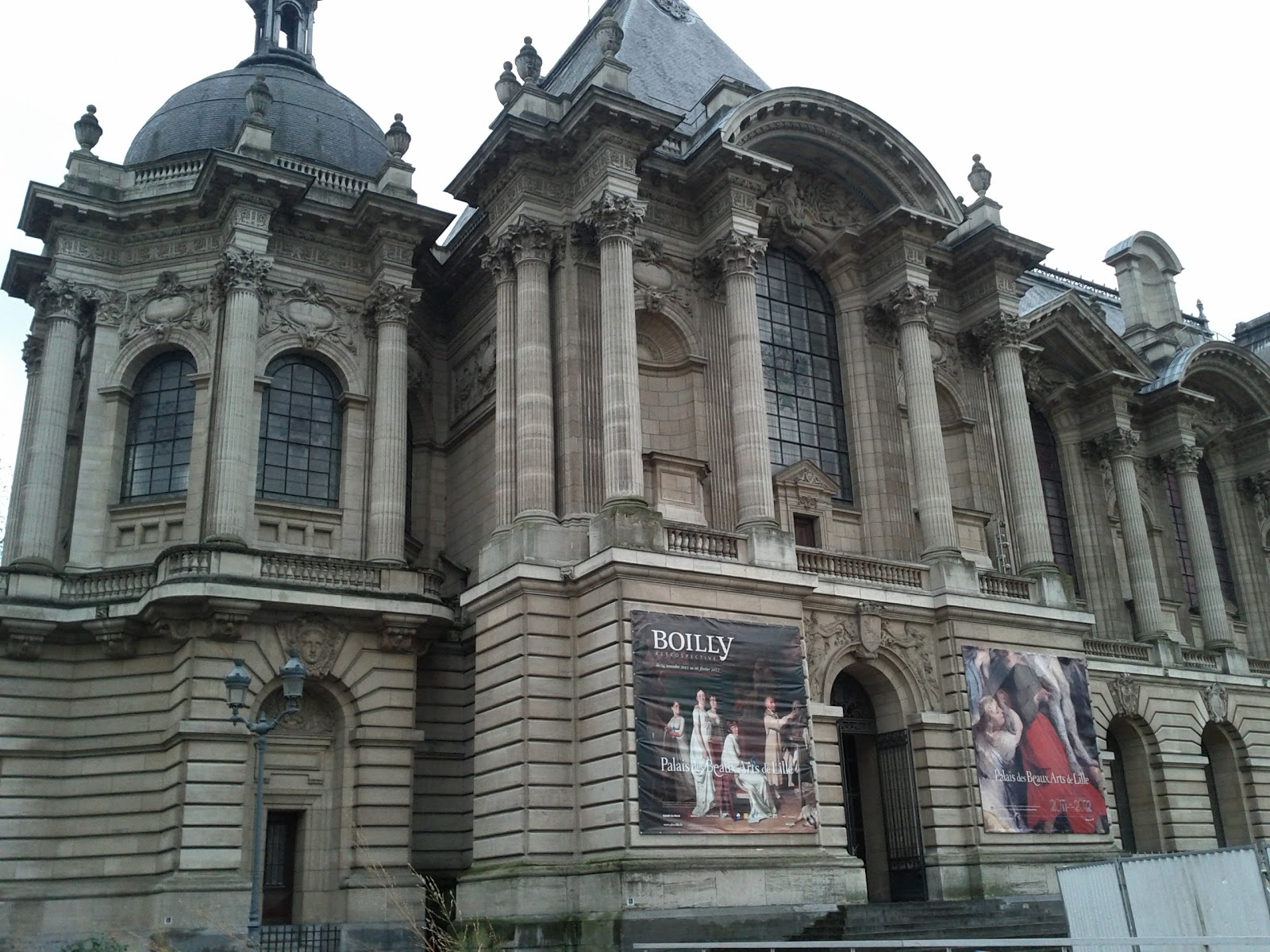
For anyone with easy access to Lille – and that includes anyone in London, which is 90 minutes from Lille by direct Eurostar train, at a price – the exhibition of works by the painter Louis-Léopold Boilly (1761-1845) is well worth visiting. It is on display at the aptly named Palais des Beaux-Arts: the photograph (left) shows the north-east corner of this truly palatial building. Boilly was a local artist: he came from La Bassée (about 20km from Lille), practised painting at Arras (about 30km from La Bassée) and moved away to Paris in 1785.

Boilly's work is admired for its precision and virtuosity, treasured for its value as a historical witness, and loved for its humour and sympathy. These qualities are well-displayed in the exhibition, and indeed in this fittingly mounted and framed self-portrait drawing (right: no. 34) on loan from the Museum of Fine Arts at Boston, Massachusetts.

Boilly's early pictures from the Ancien Regime are gallant scenes in the manner of Beaumarchais's plays. Most of those exhibited are from a series painted for a nobleman called Calvet in Avignon and are on loan from Saint-Omer. (Other paintings from the same series in the Wallace Collection in London may not be lent.)

We discover that the stories shown in these paintings were given to Boilly by Calvet himself. As with a series of prints from the same period (Estampes pour servire à l’histoire des moeurs et du costume des françois dans le dix-huitième siècle, 1773-1784), the "authors" of the picture include not only the painter or engraver, but also the person who devised it (in this case Calvet), even if he never lifted a paintbrush or an engraving tool.

To help earn his family's bread and butter, Boilly painted many small portraits, all in the same format but nevertheless distinctive. He may have painted over 4,000 of them; they certainly appear regularly in the auction rooms. In the exhibition their character and number are suggested by a wall containing twenty of them hung together at the beginning of the exhibition (left).

Boilly's virtuosity is shown in his amazing trompe l'oeil paintings. One (no. 169) bought by Lille in 1974 is available in the museum shop in the form of trays, mouse-mats and fridge magnets. The catalogue reveals (p. 63) that the term trompe l'oeil was coined in 1800 to describe Boilly's paintings, though the genre itself had existed at least since the 17th century. Another superb example not in the exhibition was sold at Christie's New York last week (The Art of France, New York, 25 January 2012, lot 144: image, right, from Christie's catalogue). It shows the back of a torn canvas, with a cat looking though the hole at a pair of mackerel hanging from the back of the stretcher: all painted in oils! For this marvel a European private individual paid $842,500 (£541,649, €650,981) including buyer's premium.  In the exhibition, Boilly's genius is demonstrated in his trompe l'oeil oil paintings in grisaille imitating non-existent engravings after his own paintings: one such grisaille painting is lent by the National Gallery, London (reproduced further below).

Caught up in the French Revolution, Citoyen Boilly could not but be overwhelmed by daily life in Paris, which thereafter dominated his paintings, giving  them great historical value. In portraiture, his masterpiece is the Atelier of Isabey from the Louvre (no. 68), showing 31 men, mostly fellow artists, in the studio of the painter J.B. Isabey. They include the rising stars of the day such as the flower painter Pierre-Joseph Redouté, the Romantic mythologist Anne-Louis Girodet, the brilliant pair of neoclassical architects Percier and Fontaine, and Boilly himself. Equally significant are those omitted: the big guns of the establishment, such as Gros, David, and Ingres. A sensation when first exhibited in An VI (1798), at Lille it is shown with a number of painted sketches for the figures, showing the great amount of work that Boilly put into both the individual portraits and the mellifluous composition. One of the studies was stolen in 1964: its reproduction in the catalogue (p. 156) may lead to its identification.

Paris as a city of pleasure is brilliantly portrayed in the Entrance to the Turkish gardens (1812, no. 136) which was bought by the Getty Museum at Christie’s New York on 27 January 2010. Boilly normally works on a very small scale by the standards of his time, but this picture is large for him (73.3 x 91.1 cm.) and contains a very rich cast of characters amusing themselves in the square outside a Turkish restaurant and ice-cream parlour. One can see why the Getty was prepared to put aside $4.5 million for it. Also exhibited is one of Boilly's preliminary drawings for the painting, which was identified in Antwerp as a result of the publicity surrounding the Getty's purchase of the oil painting: the Getty Museum subsequently bought the drawing too (no. 137).
 
It is one of several paintings which excel at showing contemporary moeurs: others are paintings of women playing billiards (no. 126, from the Hermitage, St Petersburg), a father giving his daughter a geography lesson (no. 138, from the Kimbell, Fort Worth), and conscripts from 1807 passing through the Porte Saint-Denis (no. 130 from the Musée Carnavalet, Paris): a tiny detail in the lower right corner of the last painting shows a veteran who has lost his sight (right).


Wellcome Library no. 40474i
One of these contemporary scenes (here dated to 1807) is a painting lent by the Wellcome Library (above: no. 131). It shows vaccination being carried out, within the first decade of its introduction into France: the procedure is said to have been first carried out by Pinel at the Salpêtrière in 1800. It was shown next to no. 128, on loan from St Louis, Missouri, which is from the same year and about the same size, and shows a less affluent family following the progress of Bonaparte's army through Prussia on a map.


Above and right, the installation of the Wellcome Library and St Louis paintings, supervised by Gillian Boal (Wellcome Library), Thierry Germe (Architect) and Annie Scottez de Wambrechies (Conservateur en Chef).

Also on display was one of Boilly's drawings for the Wellcome Library painting (below: no. 132), suggesting that he had previously thought of it as a more compact and intimate scene, but later enlarged it to emphasize the gravity of the occasion.

The catalogue includes an essay by Humphrey Wine (of the National Gallery, London) on Boilly and Great Britain. It was a subject well worth investigating, but unfortunately it reveals that the British have been little interested in Boilly. Perhaps this is not surprising considering the amounts paid by British collectors for the home team: painters such as Devis, Zoffany, Edward Bird, Wheatley, Rowlandson, David Wilkie, and many other artists whose work overlaps with some aspect of Boilly's. Boilly was of course collected by the 4th Marquis of Hertford (the creator of the Wallace Collection, so named after his illegitimate son), but then Hertford was specializing in French art of the period. As a notable exception to the general British indifference, the author is kind enough to mention the Wellcome Library painting, which was acquired in 1994.

Provenances in the catalogue show who really did value Boilly. Williamstown, Massachusetts (pop. 7,754) in the Berkshires provides no fewer than three paintings. One (left: no. 65) had belonged to the Singer Sewing Machine heir Robert Sterling Clark, and passed to the Sterling and Francine Clark Art Institute in Williamstown. Following his example, the Clark Institute has bought another two pictures by Boilly, including a trompe l'oeil piece (no. 163). Lille itself, other institutions in the Nord such as Saint-Omer and Tourcoing, Versailles, the Musée du Louvre, the Musée Marmottan (where the present writer was privileged to see a smaller Boilly exhibition in 1984), the Musée Carnavalet and other Paris institutions, have also acquired valuable works which are on show here. 

In Boilly's own lifetime, Prince Nikolai Borisovich Youssoupoff  (1751-1831) owned four of the paintings now on display in Lille, one of which was bought before 1812: two are from the Pushkin Museum, Moscow (nos. 43 and 66), one from the Hermitage, St Petersburg (no. 126), and one was sold by the Soviet Union and is now on loan to Dallas Museum of Art (no. 44). Prominent dealers who have committed themselves to his work in recent times include Agnew's (nos. 128, 129, 131), Hazlitt Gooden and Fox (nos. 113, 138, 163, all now in America), Didier Aaron (191), and Etienne Breton (nos. 105, 189).

It is striking that three of the four paintings on loan from British collections have belonged to women. The National Gallery's grisaille (left: no. 186) was presented in 1937 by Emily Iznaga Clement, of a Cuban sugar-refining family, and had belonged to her sister Doña María Consuelo Iznaga y Clement, sometime Duchess of Manchester (1858-1909). The extraordinary trompe l'oeil table from Wimpole Hall, Cambridgeshire (below: no. 164, National Trust) had been bought by Rudyard Kipling's daughter Elsie, Mrs George Bambridge (1896-1976).
The Wellcome Library painting came from the sumptuous residence of Graziella Patiño de Ortiz-Linares, in the Avenue Foch, Paris. Another painting, the one owned by Robert Sterling Clark, had previously been bequeathed by Alfred De Rothschild to Almina, Countess of Carnarvon, who in 1895 had married the 5th Earl (d. 1923): she sold the painting from Highclere in 1925, and died as recently as 1969.
A further point that could be observed only by visiting the exhibition is that the ornate neoclassical frame of the Wellcome Library painting (above) has strong similarities to frames on two other works in the exhibition: no. 114, from the Louvre, and no. 184, from Saint-Omer. All three works passed through Galerie Charpentier: the Saint-Omer and Wellcome paintings both on 11 December 1934, the Louvre painting in 1959. Could the Galerie Charpentier have commmissioned these carved and gilt frames?
Congratulations to Lille for a fitting tribute to its brilliant native son on his 250th anniversary. The exhibition is considered to be of national importance and has therefore received funds from the French Republic. It is also sponsored by the Wellcome Library's Euston Square neighbours Grant Thornton. Unfortunately the exhibition is due to close on Monday 6 February, but for anyone who has a free day before that date, here is the Eurostar timetable from St Pancras to Lille. If you can't make it, both Louis-Léopold and his son Julien Léopold (called Jules, 1796-1874) are abundantly represented in the Wellcome Library by their graphic work, which is not treated very thoroughly in the exhibition. For students of the reception of literary works by women, the collection of portraits of women writers by Jules is particularly noteworthy (Wellcome Library no. 40182i).

The Lille exhibition catalogue is also available in the Wellcome Library: click here  for details. Other reviews of the exhibition available online include those of The Art Newspaper  and La Tribune de l'Art .

Thursday, January 12, 2012

"The flamboyant Mr Chinnery"

Thomas Colledge with patients in Macao. Aquatint by by William Daniell, 1834, after George Chinnery. Wellcome Library no. 9880i  

"The flamboyant Mr Chinnery" is the title of an exhibition on view at Asia House, in the West End of London.* It is a rare chance to see a representative collection of paintings and drawings from private and public collections by the English artist George Chinnery (1774–1852). Though born in Gough Square in the City of London, and baptized at St Bride's church off Fleet Street, Chinnery spent most of his life in Bengal (1812-1825), then from 1825 to 1832 in Canton (Guangzhou), and finally in the Portuguese colony of Macao (Macau), where he died. Since Chinnery was not only well-travelled but also prolific, versatile and long-lived, the exhibition covers a lot of ground, in every sense.

In India and China Chinnery painted portraits and landscapes, and sketched picturesque scenes of Chinese card-players, boat-girls and builders at work. Among the portraits the exhibition includes mezzotints of William Jardine, the Scottish doctor who abandoned medicine to become an opium trader (co-founding the firm of Jardine Matheson & Co.), and of the Rev. Robert Morrison the missionary, who is shown in 1828 with his assistants translating the Bible into a 21-volume Chinese version, which raises the question as to whether the portrait is mentioned in Morrison's papers in the Wellcome Library. Chinnery's portrait of James Holman "The blind traveller", who travelled 250,000 miles recording his experiences with a "noctograph" is on loan from the Royal Society. A masterly pair of contrasting portraits belonging to HSBC shows two Chinese merchants of Canton: Mowqua (plump and relaxed) and Howqua (emaciated and self-controlled).
Group portraits include the aquatint of Thomas Colledge (1796-1879) operating in his eye-surgery in Macao established in 1827 (above and top), and the oil painting On Dent's Verandah (1842-1843, private collection), in which three men (French, American and British) involved in opium trading with Thomas Dent and Co. (rivals of Jardine Matheson) lounge in the humidity of Macao with a prominent opium poppy in the foreground. This will surely end up in one of the great public collections.

The landscapes show the fine Portuguese baroque churches of Macao (São Lourenço and the Jesuit church of São Paulo depicted before and after the fire of 1835) standing above the hustle and bustle of typical Chinese streets. A DVD Chinnery then and now cleverly juxtaposes Chinnery's street scenes with photographs of the same places in Macao as they appear today. A bridge at Honam (Canton) was painted at the request of the physician Thomas Boswall Watson, himself an amateur artist, who as a doctor would later perform an autopsy on Chinnery's body.

However, for any one familiar with Hong Kong, the most heart-stopping moment will be the last item in the exhibition: a drawing of Hong Kong made during a six-months visit in 1846, towards the end of Chinnery's life. After only five years of western ownership, the palatial headquarters of the great trading firms are already in place on the harbour front and are creeping up the hill – the start of the Hong Kong business building boom.

This drawing, like others by Chinnery, is inscribed by him in Gurney shorthand (his father was a teacher of it). At present the Colledge print is the only item in the Wellcome Library catalogue under Chinnery's name, but there are many uncatalogued drawings in the Library, and an eye should be kept open for drawings of East Asian subjects with shorthand annotations using this system – they are likely to be Chinnery's.

In Macao a street is named Rua George Chinnery in his honour, and in 1974 a trilingual inscription in English, Chinese and Portuguese was added to his tombstone to mark his 200th birthday. The exhibition is equally a fitting tribute to Chinnery's talent as a recorder of people and places, and shows that, given the right choice of subject, a modest exhibition space can provide as enriching an experience as any blockbuster.

For more on the exhibition see Brian Sewell's review in the London Evening Standard, 1 December 2011: he reproduces On Dent's Verandah. [1]

[1] http://www.thisislondon.co.uk/arts/review-24016398-the-flamboyant-mr-chinnery-an-english-artist-in-india-and-china-asia-house---review.do

* Open Monday-Saturday 10-6 until Saturday 21 January 2012 at Asia House, 63 New Cavendish Street, London W1G 7LP, admission free. Sponsored by HSBC.

Thursday, December 22, 2011

Frequent flyers

If it could collect air miles, then some of the material inthe Wellcome Library would have a pretty impressive stash of them by now. In 2011, Library material travelled a totalof 10,168 miles on its way to and from various different loans to museumsaround the world.
Countries lent to include The Netherlands, Belgium, Switzerland,Germany (on quite a few occasions), France, the Czech Republic and Canada, aswell as numerous loans within London and the UK. All of these exhibitions have been temporary,lasting on average around 6 months, and the number of items lent has variedbetween 1 and 12. Click on the map belowfor more details:


It’s not just the collections that are well travelled – we send acourier for most of our loans, and Library staff have notched up an impressive 19,928miles this year in round trips carrying out this important role.
So what exactly is involved in lending the Library’scollections? It all starts with aninitial request from the borrowing institution, giving details of theexhibition and what they would like to borrow. Our Conservation department then assess the item(s) to ascertain if theyare robust enough for loan, and what, if any, work needs doing to them in orderto make them safe for travel and display. After final approval from the Library’s Senior Management Team, therethen follows lengthy discussion between the Library’s Exhibition Liaison andthe borrower regarding display and security conditions, any costs involved,transport etc.
Couriering has already been mentioned, and this is the area oflending that many find most interesting. It can seem quite glamorous , and it’s true that it certainly beats aday in the office, but it can also be very tiring with early starts and manyhours of travelling. Professional arthandlers are always used to transport loans,and their preferred method of transport within Europe is usually by truck. Therefore, if accompanying a loan to adestination in Europe, the courier will travel in the truck, spending manyhours, sometimes even days, on the road. If travelling by air, it is necessary to arrive at the airport hours inadvance of the flight in order to witness the crate containing the loan beingloaded up. This involves going behindthe scenes to the cargo shed at the airport, donning a high-vis jacket andhaving your wits about you in order to avoid the many forklift trucks andlorries that work in these areas.
Once the courier reaches their destination with the loan safely intow, they must witness it being unloaded and securely stored into the borrowinginstitution’s premises, and then they will usually return the following day toinstall the item(s). Installationinvolves witnessing the loan being unpacked, condition checking it to ensure ithasn’t been damaged en route, and then supervising its placing in the displaycase or hanging on the wall. Dependingon the number of items being lent, and how complicated they are to install,this process can take anything from an hour to a couple of days. Then it’s back to the UK, with a de-brief onthe trip when the courier returns to work. The whole process then takes place again, but in reverse, when it istime for the loan to be returned.
With requests already received from various museums in the USA,Spain and UK, 2012 looks set to be another busy year for the loan of Wellcome Library material.

Author: Rowan De Saulles

Thursday, December 1, 2011

HIV/AIDS at 30: Spreading the Word

To mark World AIDS Day (1 December) this year, BHIVA (the British HIV Association) held a World AIDS Day Event in collaboration with the Wellcome Trust on the theme HIV/AIDS at 30: Back to the Future. 2011 is the thirtieth anniversary of the first description of AIDS -- a milestone in the continuing epidemic that has claimed the lives of millions of people worldwide. While reflecting on the experiences and work of the past 30 years, eminent speakers reviewed today's challenges, and looked ahead to consider how the knowledge of the past will inform future strategies.

One aspect of the epidemic that was considered was the way in which health authorities, activists and charities around the world have tried to prevent its spread by publicity, including posters. The Wellcome Library now has over 3,200 AIDS posters from many countries. The exhibition Spreading the Word: AIDS Posters from Around the World is a selection of 24 posters chosen and interpreted by Dr Sarah Graham of Leicester University, and shown earlier this year at the New Walk Museum in Leicester.


The posters emphasize the range of graphic techniques adopted and the variety of ethnic and social groups at which they were directed. Spreading the Word was also on display today at the BHIVA/Wellcome Trust meeting (left) and was much appreciated by those attending.

The latest AIDS poster to enter the Wellcome Library catalogue (right) must be one of the most allusive and discreet in the entire collection. It was published on World AIDS Day in 1994 by UNESCO in Paris, for Hispanic populations in which drug use was a source of transmission of the virus. Unlike the crashingly explicit posters (mostly from Germanic and Anglo-Saxon countries), it refers to open discussion within the family and use of counselling to help drug users, with no obvious indication to the casual passer-by that its end-purpose is to save them from contracting HIV through needle re-use.

Among the work publicised at the conference was a recent volume in the series Wellcome Witnesses to Twentieth Century Medicine, which was published in November 2011. It concerns the controversial National Survey of Sexual Attitudes and Lifestyles (NATSAL) which was launched in 1990. "A proposal that the UK Department of Health would fund it, after scientific scrutiny by the Economic and Social Research Council, was vetoed at government level – some say by Mrs Thatcher herself – on the grounds that this would be an unacceptable intrusion into private lives. This decision hit the headlines (first in The Sunday Times), as did the decision, some four weeks after the story broke, by the Wellcome Trust to step in and fund it instead. There is a similar story to be told of obstruction from the Bush White House,which forbade funding from the National Institutes for Health (NIH) for the American survey" (pp. xxi-xxii).

The phrase "some say by Mrs Thatcher herself" is backed up on p. 67 by a separate statement in the book (Appendix 3, pp. 66-68) by Dr Peter Williams, Director of the Wellcome Trust at the time, who received that account of events in a phone call from the Chief Medical Officer, Sir Donald Acheson. A note by Professor Virginia Berridge (p. 61) suggests that the reality behind the scenes may have been more complicated, but that at any rate Downing Street was happy to go along with the veto. More of the raw materials for this episode are set out in the volume, in the usual Witness Seminar manner: the spoken memories of people who were involved in the events at the time, provided with scholarly commentary and often with competing points of view. It makes compulsive reading. It is available in hard-copy from booksellers and Amazon, and available free of charge on the web as a PDF. [2]

[1] Overy C, Reynolds L A, Tansey E M. (eds) (2011) History of the National Survey of Sexual Attitudes and Lifestyles. Wellcome Witnesses to Twentieth Century Medicine, vol. 41. London: Queen Mary, University of London. ISBN 978 090223 874 9

[2] http://www.history.qmul.ac.uk/research/modbiomed/wellcome_witnesses/index.html

Wednesday, October 19, 2011

Louis Wain in Willesden

Amidst the much-publicised closing-down and boarding-up of some of the public libraries in the London Borough of Brent, there has been a cheering event from Brent Archives and Museum at Willesden Green Library Centre: their exhibition of works by the painter of cats, and sometime psychiatric patient, Louis Wain (1860-1939), who resided on Brondesbury Road in Kilburn (now in the borough of Brent) before his confinement in a series of asylums. The exhibition Communicating through cats: the art and mind of Louis Wain ends on Saturday 29 October 2011 (open Mon.-Sat. 10-4). It contains a good cross-section of Wain's anthropomorphic pictures of cats –- bicycling, cricketing, tea-drinking and so on.
Among the rare and remarkable works on display are two large mirrors painted by Wain for his fellow-patients at Bethlem Hospital at Christmas times (one shown above left), lent by the Bethlem Art and History Collections Trust.

No less surprising are examples of ceramic cats designed by Wain as Cubist pastiches. Their rarity may be explained by the unconfirmed story that the stock of them was sunk by a German torpedo on a cross-Atlantic crossing. Marine archaeologists of the future who are not familiar with Wain will have great difficulty in identifying these works, with their unusual combination of Cubist, Egyptian and Art Deco associations. These two examples are on loan from Chris Beetles Gallery.

Wain also knowingly applied historical and fanciful styles to his paintings, a fact which led a psychiatrist writing in a national newspaper to misinterpret them as evidence of psychosis: the story is well set out in the exhibition. That interpretation is however still accepted by some. [1]

Two drawings from the archives of a psychiatrist, Noel Gordon Harris (1897-1963), are lent by the Wellcome Library.
They are impressively displayed in a showcase to reveal a typically mysterious inscription on the verso of one of them, spoken by a smiling cat: "I have more mouth than I want to open, but don't look, it is very dark inside. But I will send you a pretty message from it." That sums up the title of the exhibition, as interpreted in Wain's idiosyncratic manner. Communicating through cats is simultaneously humorous and sinister. An approachable and rewarding exhibition.


[1] Terry Castle, 'Do I like it?', London review of books, 28 July 2011, pp. 19-23

Exhibition

Last night the London Independent Photographers (L.I.P.) 23rd Annual exhibition opened. This is one of the pieces I have in this exhibition. Lots of great work do go along and see it. The Strand Gallery 32 John Adam St. Exhibition runs until 29 October.

Friday, September 30, 2011

Max Klinger at Dresden in 1911: Wellcome Library Item of the Month


1911 was a bumper year for exhibitions. In London there was the Festival of Empire and Imperial Exhibition at the Crystal Palace. In Turin there was the Esposizione Internazionale delle Industrie e del Lavoro. At the Hague in September there was the Drankweer tentoonstelling (Anti-alcohol exhibition) at the 13th International Congress against Alcoholism. There were many others. Far bigger than any of those mentioned, however, was the international hygiene exhibition in Dresden: the Internationale Hygiene-Ausstellung.

For those who are more familiar with the Wellcome library and museum collections, the best way of describing the Dresden exhibition is to say that the Dresden exhibition makes the exhibitions of those Wellcome collections look small. The catalogue of the historical section at Dresden alone (the equivalent of the handbook of the Wellcome Historical Medical Museum, 1913) has 600 pages and lists 20,394 exhibits. [1] The section on amulets alone contains 1,212 items (pp. 375-399). Qualitatively, on the other hand, there were many similarities and links between the two enterprises, which deserve fuller study. Wellcome-watchers will find many familiar names in the Dresden catalogue: to name but three, Eugen Holländer, Edward Lovett, and Ernest Wickersheimer are listed among the lenders to Dresden, and the photographs of the displays there show many resemblances to Wellcome’s first exhibitions in Wigmore Street, London. For instance the collections exhibited included such subjects as housing, bathing, clothing, and childcare: in both institutions, hygiene was defined as preventive medicine practised in the context of evolutionary anthropology. (Of course the Wellcome collections would later grow much larger, but as the holdings expanded, the exhibitions contracted.)

The committee of honour at Dresden included the Berlin museum director Wilhem von Bode; Hermann Diels, who gathered the fragments of the pre-Socratic philosophers and tracked down the manuscripts of Galen and Hippocrates; and the most famous Greek scholar of the day, Ulrich von Wilamowitz-Moellendorf. The president of the historical section was Karl Sudhoff, Director of the Institute for the History of Medicine at Leipzig.

Also contributing to the exhibition was the artist Max Klinger (1857-1920). He will perhaps be known to many through his sequence of etchings The Glove (1879-1881), which might be described as a fetishistic psychodrama (image above from the British Museum). At the Dresden exhibition Klinger exhibited a larger-than-life-sized bronze sculpture of an athlete, and was commissioned to make a large etching on the theme of hygiene to present to VIPs who had helped with the exhibition.

Here is Klinger’s etching (left: Wellcome Library no. 24236i), which he completed in 1912. How to interpret it? The giant can perhaps be seen as a symbol of the struggle for hygiene and sanitation. He has lifted a group of people up above the tumultuous world of nature: they dance and recline in an Italianate landscape, enjoying the delightful consequences of hygiene for all. The warring male figures below may symbolize the people and circumstances which work against hygiene. The three streams of water represent nature channelled into forms conducive to human life.

There is also a racial distinction. The beneficiaries of hygiene, who have learned to master the forces of nature, and are raised up into the sunshine of life, are conspicuously white. The savages in the river, who misguidedly attack the forces of hygiene, are prominently black. They are not dancing among the poplars, but rampaging with harpoons in an unruly river bordered by dark and threatening forests. Nor do they appreciate the three streams of pure clean water that flow from the Europeans’ water jars.

Nothing about this is particularly surprising. Germany had extensive colonies in Africa, the maintenance of which required training and research in many aspects of hygiene. The print may also be compared with the section on racial hygiene in the exhibition. The catalogue of that section, by Max von Gruber and Ernst Rüdin (both of Munich, the former a hygienist and the latter a psychiatrist) is a monograph on eugenics, with an impressive number of charts, graphs and family trees, and a bibliography on heredity, genetics, extinction, population trends, degeneration, and social aspects of hygiene. [2]

It is however remarkable that the Wellcome Library has two impressions of this large and apparently rare etching. One (shown above) was presented to Dr (later Sir) Frederick Walker Mott FRCP, FRS (1853-1926). Mott (portrait right: Wellcome Library no. 15290i) was a neuropathologist, working both in asylums and in academia (at Birmingham University), who is said to have established the syphilitic origins of "general paralysis of the insane". In Mott’s copy of Klinger’s etching, his name is inscribed at the bottom of the plate in the same colour ink as the etching itself, so that it appears to be part of the etching. The other impression (in the Wellcome Foundation archives in the Wellcome Library) was awarded to the "Wellcome Research Laboratories in London", and the name of the recipient is handwritten in grey ink (the rest of the etching is in black). Presumably the Wellcome laboratories had lent items to the exhibition.

Klinger's etchings up to 1909 were catalogued by Hans W. Singer, and those after 1909 by Carl Beyer, but Beyer's work does not appear to have been published. It is a typescript of which a copy is in the library of the Kupferstichkabinett, Staatliche Museen zu Berlin. [3] The hygiene allegory is no. 416 in Beyer's catalogue, and the Wellcome impressions are of the fourth and final state of which 100 impressions were made. A century later, how many survive from the other ninety-eight? And to whom were they awarded?

[1] Historische Abteilung mit ethnographischer Unterabteilung. I. Historische Abteilung. 2. verb. und illustrierte Aufl., Dresden: Internationalen Hygiene-Ausstellung, [1911]. Wellcome Library catalogue record here.

[2] Fortpflanzung, Vererbung, Rassenhygiene: Katalog der Gruppe Rassenhygiene der Internationalen Hygiene-Ausstellung 1911 in Dresden. Herausgegeben von Max von Gruber und Ernst Rüdin; ... Abbildungen von M. v. Gruber; nebst einem bibliographischen Anhang von Rudolf Allers, München: J. F. Lehmann, [1911]. Wellcome Library catalogue record
here.

[3] Carl Beyer,
Max Klingers graphisches Werk von 1909-1919: eine vorläufige Zusammenstellung im Anschluß an den Oeuvre-Katalog von Hans W. Singer. Many thanks to Dr Alexander Dückers for information about Beyer's work.