Showing posts with label Archives and Manuscripts. Show all posts

Monday, June 25, 2012

Papers of Carlos Paton Blacker to be digitised

As part of our programme to create a Wellcome Digital Library, we are pleased to announce that we will be digitising the papers of Carlos Paton Blacker. This will include the surprise addition to his papers received in March. The collection will be digitised in full and made freely available online, subject to Data Protection and privacy issues as set out in our access policy. These images will enable readers to access large amounts of archive material remotely from anywhere in the world.

Blacker’s papers reflect his long and active career in psychiatry (including as psychiatrist at the Maudsley Hospital and as an Adviser to the Ministry of Health), and his activities with a number of organisations interested in population and birth control, including the Birth Control Investigation Committee, the Population Investigation Committee, the International Planned Parenthood Federation, and the Simon Population Trust. Blacker was also Secretary to the Eugenics Society between 1931-1961. His activities as Secretary are documented in his own papers as well as in the papers of the Eugenics Society, which are also being digitised. Through the Wellcome Digital Library Blacker’s correspondence and papers in these separate collections will be digitally united.

The collection will be digitised between 23rd July 2012 and 5th November 2012. In order to develop this world-class digital resource access to the collection will be affected. Please see the archives digitisation schedule for full details. We regret that we are unable to make any exceptions to allow individual readers access to material, and encourage readers to contact the Archives and Manuscripts team beforehand at arch+mss@wellcome.ac.uk or telephone +44 (0)20 7611 8899 to ensure that material will be available for consultation.

The creation of the Wellcome Digital Library is due to be completed later this year. Other Library collections included in this phase of the project are the substantial Francis Crick archive, the papers of Fred Sanger, Arthur Ernest Mourant, Sir Peter Medawar, the Medical Research Council Blood Group Unit, and Honor Fell.

Image: C. P. Blacker receiving the Galton Medal from C. G. Darwin, in 1957 (SA/EUG/O.17)

Author: Toni Hardy

Thursday, June 14, 2012

'I can think of nothing lovelier than owning cattle'

Photograph of West by Madame Yevonde, 1971
 (National Portrait Gallery)
Archives and Manuscripts has recently acquired a letter (MS.8815) from the writer, critic and journalist Dame Rebecca West [Cicely Isabel Andews, nee Fairfield] (1892-1983) to Sir Weldon Dalrymple-Champneys (1892-1980), Deputy Chief Medical Officer of Health at the Ministry of Health (whose papers we hold), in response to one from him. It is undated but must have been written well after World War II. (West is also, of course, known for her affair with, and son by, H. G. Wells.)

West opens the letter by indicating the 'strange connections' that bring them together. She had had 'unhappily to take an interest in brucellosis' at the time when she owned a herd of Jersey cows (a significant part of her activities during World War II was maintaining this dairy herd) and thus had read Dalrymple-Champney's writings about the disease, on which he was a significant authority.

Letitia Fairfield during World War II
She recalls, in connection with his reference to Edith Wharton, her own meeting with this distinguished American novelist in her younger days, at the home of the bohemian painter and short story writer Stacy Aumonier, and his wife, the musician Gertrude Peppercorn, describing Wharton drinking beer in the Aumoniers' garden and having 'a large, rolling laugh'. She further reminiscences about Sir Eric Maclagan, the curator of the Victoria and Albert Museum, also in response to a mention by Dalrymple-Champneys.

In a postscript she claims that, living as she does in a flat in Kensington, 'it is my great sorrow that not possibly could I house a herd - and I can think of nothing lovelier than owning cattle'.

In associated material, besides the papers of Dalrymple-Champneys, the Wellcome Library also holds the papers of West's elder sister, Letitia Fairfield (1885-1978), who had a distinguished career in public health, Senior Medical Officer to the London County Council, 1911-1948, and also as a medical officer during both world wars, in the Queen Mary's Auxiliary Army Corps and the RAF in World War I, and the RAMC in the Second World War, retiring with the rank of Lieutenant-Colonel. The sisters' relationship has notable tensions: correspondence in the Fairfield files suggests that other family members strongly dissented from West's portrayal of Letitia in her memoir, Family Memories.

Tuesday, June 12, 2012

Anatomical Archives Available

The archive of the Anatomical Society has recently been catalogued and is now available to researchers at the Wellcome Library. The collection covers the founding of the society until the 1980s, and includes a range of documents on membership, (SA/ANA/C) financial information (SA/ANA/B ) and a considerable amount of correspondence ( SA/ANA/D).

The Anatomical Society of Great Britain and Ireland was founded in May 1887 by Charles Barrett Lockwood, after collaborating with George M Humphry and Alexander Macalister. Lockwood was a surgeon at St. Bartholomew’s Hospital, and taught at the Medical College there, while Humphry and Macalister were renowned Professors and surgeons from the Medical College at Cambridge. The original minutes from the founding meeting in 1887 up until 1982 can be found in SA/ANA/A. By 1890 the society had its first overseas member and in 1894 two women were admitted from the London of Medicine for Women.

There have been over sixty presidents of the society, each one serving for just over two years and several have contributed to the advancement of biological and medical sciences. One such president is Professor Johnson Symington who was chair of anatomy at Queens College Belfast, and then appointed registrar of the college in 1901. He published several anatomy atlases, was president during 1903-1906, and the society reprinted an edition of his atlas in the 1950s. There are several awards in his name: The Symington Memorial Prize that was established in 1920 and is given out every 3 years by the society (see SA/ANA/D/11).

Another president was Professor George Mitchell, who was involved in the first use of penicillin amongst soldiers, initially distributing and in the Italy campaign, and then helping to give the drug out on D-Day. After the war he was appointed chair of anatomy at the University of Manchester. He was president of the society in 1961-1963 and some of his correspondence from this time is in this collection (see SA/ANA/D/3/3).

The society is also associated with the Journal of Anatomy (originally the Journal of Anatomy and Physiology) which was founded in 1865 by Humphry and Macalister. The Journal was independently edited for several years but upon the founding of the society in 1887, this ceased and it became fully owned by the society in 1916, when physiology was dropped from its title. (see SA/ANA/D/9) The society also has another journal: Aging Cell, which was launched in 2002.

The society’s aims are to promote, develop and advance research and education of the anatomical sciences. It achieves this through general, annual and scientific meetings, national and international conferences, awards and bursaries, exhibitions and publishing its own journals. In July 2010 the society shortened its name to the Anatomical Society.

For more information, please see the Anatomical Society website

Author: Morwenna Roche

Image: Mascagni, Paolo. Anatomia universa XLIV, tabulis aeneis juxta archetypum hominis adulti accuratissime repraesentata... Pisa: Firmin Didot for Nicolò Capurro, 1823[-1831] (Wellcome Library, F.267a)

Friday, May 18, 2012

Guest Post: Little Ilford School ‘Science Club’

We recently had the pleasure of sharing our Special Collections with Year 9 students from Little Ilford School in Newham as part of a science club run by Wellcome Collection’s Youth Programme.  Over the next few weeks we will be posting the students’ reflections on themes they explored at the library, so keep an eye out. Starting us off are Ben, Bilal, Lauren, Nicolas and Nicole:
‘Today my friends we are here to write about anatomy.  On 18th April 2012 we got to see archives hundreds of years old, which fascinated us, and learnt how anatomy developed as the years passed.

Human anatomy is looking at what makes up the human body: its structure, functions, layout and systems which keep us humans alive.  ‘Anatomy’ comes from the Greek word ‘anatemnein’ which means “cut up” and that was how anatomy was once discovered: cutting up corpses to see what was inside them.
We firstly studied two images of a human body drawn in the mid 15th century.  Human dissection was illegal then and so many people dissected animals. One of the most common animals that was dissected was the pig and so they believed that the insides of a human were identical to that of a pig.

Later we looked at a printed newspaper document of a trial that took place in the 1800s. The newspaper article talked about the conviction and execution of three men over the murder of a young Italian boy for the use of medical science.  This shows us how greedy people were becoming to learn and to know more about the body.

Initially, our first thoughts were that of shock because of what we know today, already having all this information at our hands. 
But as we went on to discover and learn more, we began to think about it. What they did was to find out more about what they were, and how the body worked.  Without what they started we wouldn’t know as much about the body as we do today. So although we find it disgusting we have to be somewhat thankful.
After a while, a member of Wellcome Collection staff said “Thank god I’m alive now - you’ll know what I mean?”.  Well, first, we didn’t know what she meant but when she showed us the development of surgical apparatus… we understood.
Thank you for time, curious reader, as we must bid you farewell.  We think that Wellcome Collection is an astonishing place full of things on the history of medicine which will amuse and amaze you!
What do you think?’
Posted on behalf of Ben, Bilal, Lauren, Nicolas and Nicole

Images: (1) 'Muscle man' from ‘Anatomy. Anatomy of the Pig’ by Pseudo-Galen, mid 15th century (MS.290)
(2) Handbill describing trial of John Bishop, Thomas Williams and James May for the murder of an Italian boy, 1831 (MS.7058)

Thursday, May 17, 2012

Norway in archives and manuscripts

Norway's National Day (celebrating the adoption of the Norwegian Constitution in 1814) seems like a good occasion to consider the quite diverse material relating to that country among archival and manuscript collections in the Wellcome Library.

Given Sir Henry Wellcome's interests in travel and exploration it is perhaps not surprising that Norwegian Polar explorers are to be found represented in the Explorers Cuttings Books among the archives of the Wellcome Foundation and that there is correspondence with Otto Sverdrup in the 1890s about the gift of Burroughs Wellcome products in Private Letter Book 2, besides substantial materials relating to the marketing of pharmaceuticals in the Nordic countries at a rather later date. We can also note the acquisition of artefacts relating to medicine in Norway by the Historical Medical Museum, and the mention of several institutions there as recipients of transferred museum objects in the 1980s.

Records of British travellers to Norway can be found from the late nineteenth century, from individuals such as Charles Brodie Sewell, whose travel diary of a trip to Norway in 1888 can be found at MS.4512 (his very extensive documenting of his travels was described in an earlier post on this blog), and Sir Thomas Lewis, who made a hunting trip there c. 1900 (PP/LEW/B.2), to groups such as the Travelling Surgical Society, which visited Oslo and Bergen in 1949 (SA/TSS.2/17) and the Medical Pilgrims, whose Norwegian 'pilgrimage' took place in 1982 (SA/PIL/A.2/2). It also formed a popular venue for numerous conferences throughout the twentieth century, for a wide assortment of groups including district nurses, midwives, health visitors, women doctors, microbiologists.

The persistence of leprosy in Norway after it had died out in the rest of Europe is reflected among the papers of leading leprologist Sir Leonard Rogers (PP/ROG/C.13/7).

The papers of Lieutenant-Colonel J.W. Wayte, RAMC, among the Royal Army Medical Corps Muniment Collection, include his War Diary as officer commanding 189 Field Ambulance during evacuation from Norway, April-May 1940, and an appreciation of the operations in April 1940 from a medical viewpoint (RAMC/1952/2-4). The papers of Papers of Brigadier Sir John Knox Smith Boyd also include, among other reports  from blood transfusion teams in the field, those of North West Europe force in Norway, 1940.

Records of a number of organisations among our holdings contain material relating to their interactions with Norwegian counterparts and collaborators.

This little exercise not only illuminates our holdings specifically relating to Norway, it indicates the extent to which material in A&M is very far from being relevant only to the UK and that it has a significant geographical reach reflecting connections with continental Europe as well as the Americas and areas formerly part of the British Empire.


Thursday, April 26, 2012

Colouring in the last bits: the end of an era

Exactly ten years ago, on April 26th 2002, one of the Library's archivists sat at a PC and started our archive catalogue programme, went through various options to set up an import of data, selected the source file and clicked OK...
...and a matter of seconds later, our archive database had received its first load of converted catalogue data and we had set out on a journey from paper to digital, a journey completed a few days ago with the conversion of our last paper archive list.

It is hard, now, to think back to those early days, so accustomed are Library users and staff to the archive database. The complexities of rendering a hierarchical archive catalogue on the screen - plus, for a long time, a lack of agreement as to what an archive catalogue should actually do [1] - meant that good catalogue software for archives developed more slowly than that for libraries, and it was only in the 1990s that a move to database catalogues gained some momentum. (Happily, this took place at the same time as the explosion in use of the World Wide Web, so archive catalogues when they did arrive were able to jump straightaway to giving readers web access, rather than forcing them to work with pre-web technologies such as Telnet.) Up till that time, the reader wanting to use our archives and manuscripts sources was confronted by six meaty published volumes of manuscript cataloguing, and some two hundred spiral-bound word-processed lists of twentieth-century archive collections.

For the reader wanting a particular organisation or individual's papers, this worked, and usership was steady. For the reader wanting thematic access across the collection, however, life was much harder. Some topics, of course, came up repeatedly, and for these we compiled sources guides describing material relating to particular themes or areas: many of these, radically recast and updated, are still to be found on our website. For the reader with a new, unusual or quirky topic, however, rather than one of the staples such as shell-shock or abortion, it could be difficult to know where to start. A few years ago, for instance, a user of the Rare Materials Room wanted to know about our sources relating to Marmite: the sort of question that would have been virtually impossible to answer before the database. [2]

The database was to revolutionise all this, and to democratise access to archives and manuscripts profoundly. It enabled readers to ask the questions that they wanted to have answered, not simply the ones we had managed to predict; and by opening up the database to a wider range of enquiries, saw some hitherto quieter areas of the collection, such as the American manuscripts, receiving heavier use than ever before.

First, though, we had to get the data into it. The turn of the Millennium saw a large number of collaborative exercises launched to get archive data onto the web, and it was from one of these that our first converted catalogues came. Access to Archives, or A2A, was a programme dedicated to converting archive catalogues to web-readable form and mounting them on the National Archives website, enabling a web presence for those many repositories which, at that stage, did not have their own site. One strand of the project worked to convert documents relating to London's contacts with the wider world, through exploration, trade and colonism, and it was material submitted to this which came back to us as a digital file in early 2002 and was loaded on that fateful April 26th. Among the items made available to readers in that first tranche were the journals of naval surgeon Fleetwood Buckle (MSS.1395-1404 and 5656), the papes of Sir James Cantlie, the tropical medicine specialist (MSS.1456-1499, 6931-6941 & 7920-7941), the diaries of the Tsimshian Native American Arthur Wellington Clah (WMS/Amer.140)... we were up and running.

From that point onwards, the process of retroconversion (to use the appropriate jargon) never stopped. We experimented with cutting and pasting word-processed catalogue into the database but the process was so complex (most of the old lists had been laid out on the page with copious paragraph markers and tab-stops, all of which needed to be removed) that it worked out quicker and cheaper to re-key catalogues. A dedicated project officer started work that year, working entire days at marking up catalogues in coloured pens (each colour corresponding to a database field) before posting the results to New Delhi, from which a spreadsheet of rekeyed data would appear with terrifying speed in the inbox. Little by little, several thousand records at a time, the database grew; little by little the profits of a particular stationers' on Cleveland Street, which boasted the best selection of coloured markers in Fitzrovia, swelled. At the end of this project, well over 75% of our data was in there. In the time since then, members of the archives department have converted the remaining catalogues in spare half-hours here and there (evening and Saturday duties have been particularly fertile times). Now, that era has ended. After a little under ten years, the final catalogue has been converted and loaded: the catalogue of the Chartered Society of Physiotherapy's papers, which had drawn the short straw and ended up last of all, was converted and loaded last week. You have only to go to Wellcome Images and search for the phrase SA/CSP to get an idea of the sort of things now described online: we expect the scrapbooks on the "massage scandals" that led to the CSP's formation to notch up a large number of hits all on their own...

2012, then, sees the end of an era: all of our archive catalogues online at last. It comes, as luck would have it, just as a new set of technical developments needs work: the wholesale digitisation of archive holdings, among other library materials, and the need to make catalogue records and images link up in as smooth and seamless an experience for the reader as we can manage. The archivists, needless to say, are not putting their feet up at this particular moment; it is, however, time for a few minutes of retrospect and quiet satisfaction as a long-running project comes to a close.

[1] For those who are interested, the breakthrough came in 1997 when the International Council on Archives set out the snappily-named ISAD(G) - the International Standard on Archival Description (General).
[2] It turns out that we have quite a few.

Images:
1/ The import screen for our CALM archive catalogue programme (backstage client): further information from the manufacturers here.
2/ Napoleon's tomb, St. Helena, from MS.1395, one of the papers of Fleetwood Buckle that were among the first items to be loaded to the database.
3/ Some of the actual pens used in retroconversion, kept for posterity.

Tuesday, April 24, 2012

The Right to Roam

"I'm a rambler, I'm a rambler from Manchester way
I get all my pleasure the hard moorland way
I may be a wage slave on Monday
But I am a free man on Sunday."
(Ewan MacColl, "The Manchester Rambler")

Eighty years ago today, massed groups of walkers from Manchester and Sheffield climbed onto the moors of Kinder Scout, defying the landowner's gamekeepers in an assertion of the right to access wild country. There were scuffles, their leaders were arrested and some were jailed, but the Kinder Mass Trespass was to lead, after the Second World War, to the setting up of Britain's National Parks - fittingly, the first one was the Peak District National Park, including Kinder - and eventually to today's Right to Roam. From this distance, aware in hindsight of the way that the trespassers were on the winning side, the politics of walking are less obvious, but this was a fundamental clash of ideologies: the gamekeepers defending the supposedly sacrosanct rights of property, whilst the trespassers embodied a radical tradition that saw much land ownership as the result of expropriation (the Acts of Enclosure or, if one goes back far enough, the Norman Conquest) and, at its most fundamental, questioned whether land could be owned in the absolute and exclusive fashion that portable property can:

"He said, All this land is my master's;
At that I stood shaking my head:
No man has the right to all mountains
Any more than the deep ocean bed."
(Ewan MacColl, "The Manchester Rambler")

On the anniversary of the Trespass, it is appropriate to highlight Library holdings to do with walking. We have, of course, much material on health and exercise, the archive sources in this area being summarised in our online sources guide. Perhaps the highlight, however, comes from the papers of the nutritionists Robert McCance (1898-1993) and Elsie Widdowson (1908-2000), held as collection GC/97. A notebook held as GC/97/B.3, under the unassuming title "Experimental study of rationing", records self-experimentation on a heroic scale. During the winter of 1939/40 McCance and Widdowson were working on nutrition for the government, assessing what the nutritional value of various proposed food rationing arrangements might be. Their approach was simple: they would live on the proposed rations, recording all food and drink intake, and then set out to exhaust themselves on the Lakeland hills, in effect monitoring who lasted longest and on what diet. On 2nd January 1940, for instance, McCance records an itinerary that the Manchester Rambler would know well, although doing it in one day is for the hard-core only: "Robin Ghyll, Stake Pass, Borrowdale, Honister, Scarf [sic] Gap, Black Sail, Wastdale [sic] Head, Boot, Hard Knot, Wrynose, Little Langdale, Elterwater, Robin Ghyll. 35 miles odd, 7000 odd [feet] of ascent and descent. Wizard." All this on a short winter day: had Hitler known of that enthusiastic note "Wizard" he would probably have thrown in the towel then and there.

The law governing access to open country in England and Wales, of course, is not universal, and other countries have different arrangements. Most notably, the Nordic countries - in which feudalism and serfdom did not develop in the same way as further south - have always enshrined in their common law a principle of the right to roam. In Sweden, for example, the constitution recognises the long-standing Allemansrätten, which can be translated literally as "Every man's rights": these give citizens the right to access (which includes walking, cycling, riding, skiing, and even camping) on any land, excluding private gardens, the area immediately around a dwelling house, and land actually under cultivation. Provided they are not legally protected, one may pick wild flowers, mushrooms and berries; similarly, one may swim in any lake, or bring an unpowered boat to it. Disruptive use of the land, then, which harms it for other users (including the landowner) is forbidden, but non-disruptive access of the sort for which the Kinder trespassers argued is a universal right. Here, perhaps, we come closest to the Wellcome Library's own holdings and ethos: through metaphor. One of the inspirational presentations given to library professionals at last autumn's Axiell Symposium in London's Docklands came from information professionals in the Swedish city of Gävle, describing an initiative that promoted the city's libraries, archives and museums together under the slogan "Kulturell Allemansrät" - the cultural right to roam. A library gives its users the same freedom that the Manchester Rambler needed: access to the whole world of knowledge, without restrictions (except for a few on behaviour that harms other people's rights: vandalism, breach of copyright, breach of data protection, and so on), without the concept of trespassing. The world of knowledge is laid out: and readers have the right to roam.


Images:
1/ Kinder Scout: image copyright Peter Barr, made available under Creative Commons via the Geograph website.
2/ Robert McCance's diary of self-experimentation on wartime food rations, GC/97/B.3.
3/ Publicity material for the city of Gävle's "Kulturell Allemansrät" initiative. The goat is a traditional Swedish Yule Goat, which has become an emblem of Gävle because of the city's tradition of building a huge one out of straw every winter (and often burning it).

Friday, March 30, 2012

Thalidomide 50 Years On

The archive of the Thalidomide Society (SA/TSY) and the papers of Professor Richard Smithells (PP/SML) have been catalogued and are now available to researchers at the Wellcome Library. Thalidomide was developed by the pharmaceutical company GrĂĽnenthal in Germany in 1957, and was used as a painkiller and tranquillizer. It was also effective in treating morning sickness during pregnancy, and many scientists believed that this drug would not harm the developing baby. However this was found not to be the case, and over 10,000 children in 46 countries were born with deformities such as phocomelia. The drug was licenced in Britain in 1958, marketed as Distaval, and was withdrawn in late 1961. Between 1959 and 1962 approximately 2,000 babies were born with deformities due to the drug, and only 466 survived. 2012 is a landmark year concerning thalidomide: it is just over 50 years since withdrawal of the drug Distaval and is the 50th anniversary of the formation of the Thalidomide Society.

The Thalidomide Society (originally called the Society for the Aid of Thalidomide Children) was formed by a meeting of four parents in August 1962, at the Dolphin Hotel in Southampton. Their aim was to set up a national society devoted to the aid of their own and other children affected by the drug thalidomide. The inaugural meeting took place on 20th October 1962, with forty-four parents attending. A draft constitution was created (SA/TSY/A/1) which states that the Society would not only include children affected by thalidomide but those with similar disabilities. Branches of the Thalidomide Society were set up, due to the wide geographic range of the parents. They would meet regularly and operated with local organisations that could help the families.

The Society worked closely with the Lady Hoare Thalidomide Appeal until 1974, to raise money to help the families affected, and increase awareness of their cause, this was helped by several national newspapers (see extensive press coverage represented in SA/TSY/G). There were a variety of fundraising schemes, general donations and offers of help (SA/TSY/C/1) and car competitions (SA/TSY/C/3). The money raised from these was used to support thalidomide families with social workers, research into new technologies (such as prosthetic arms and wheelchairs), a holiday home, and went towards the Oxford Centre for Enablement and the Chailey Heritage Craft School and Hospital. The Society is now a user led organisation; the majority of the council is made up of thalidomide affected people. The archive of the Thalidomide Society contains documents on its creation, (SA/TSY/A/1), fundraising schemes (SA/TSY/C), publications (SA/TSY/D), and of their recent events such as the annual AGM and conferences (SA/TSY/A/3).

Distillers (the company that distributed thalidomide: it is now owned by Diageo Ltd) and the parents of the children affected by thalidomide finally reached a settlement in 1973, after years of negotiations. From this the Thalidomide Children’s Trust (now the Thalidomide Trust) was set up to distribute the payments fairly amongst those affected. Professor Richard Smithells, a renowned consultant paediatrician, worked closely in these negotiations and provided medical testimony. Smithells became involved with thalidomide as a clinician on the Liverpool Registry of Congenital Abnormalities that was formed in 1960, where he began studying the links between prescription drug use during pregnancy and birth defects. Along with several other physicians he discovered the teratogenicity of thalidomide in 1961, and subsequently became a leading expert on thalidomide diagnostics. Much of his work concerning thalidomide and congenital malformations is reflected in the new catalogue PP/SML. These papers include a copy of a book for children he created for the NSPCC, Alphabet Zoop (PP/SML/A/3), correspondence and reports working with the Thalidomide Trust (PP/SML/C) and various textual resources he collected over the years regarding the drug (PP/SML/E). He became the Chair of Paediatrics and Child Health at the University of Leeds in 1968, and he served on the Thalidomide Trust advisory council from 1974, then as a trustee from December 1976.

The collections of the Thalidomide Society and Professor Smithells are part of the Wellcome Library’s Archives and Manuscripts collection. The catalogue can be searched on our online catalogue using the references SA/TSY and PP/SML respectively. Please note that due to the subject and nature of the material a significant proportion of the documents in these two collections have been closed for various fixed periods, for data sensitivity reasons.

Author: Morwenna Roche

Thursday, March 8, 2012

Duplicitous delicacies

Faking it in the world of manuscripts has a long, if not exactly distinguished, history.  Given the determination of ingenious fraudsters to play intellectual havoc with documentary evidence over the centuries, and the voracious collecting habits of the Wellcome Library’s founder Henry Wellcome, it isn’t surprising that the library turns out to have played its own unwitting part in the art of forgery.


We can’t lay claim to having discovered a fraud on the scale of the Hitler diaries hoax, but social historian of food culture and professional chef Ivan Day has recently unmasked an intriguing fake amongst our collection of 17th-century recipe manuscripts.


Image of  artificial almond paste fruit courtesy of Ivan Day


Acquired by Henry Wellcome in 1931, Grace Acton’s short recipe book (MS.1) has long perplexed researchers and archivists with its strange handwritings, recipes and lack of obvious purpose.  Ivan has now analysed the text and script of the volume to reveal that it is most likely a 17th-century notebook used by a 19th- or early 20th-century forger to create a ‘Carry On Banqueting’-style recipe collection.
The identity and motivations of the forger are unlikely ever to be discovered, but Ivan’s research sheds valuable light on a curious and problematic volume.

Thursday, March 1, 2012

Dydd Gŵyl Dewi Hapus / Happy St David's Day

In honour of St David's Day, the national day of Wales, today we focus on one of the Library's Welsh holdings.

One of the fascinations of archive material in particular is the way that it makes things specific: takes large, overarching topics and presents them in terms of particular instances, anchored to real people and real places. Today, of course, we will be looking at an item that takes us to Wales: to Rhagatt Hall in the valley of the River Dee / Afon Dyfrdwy, just downstream of the small town of Corwen.

Over the years this blog has featured extensive coverage of the Library's seventeenth century recipe books. Those are, however, simply the tip of the iceberg: manuscript recipe books continued to be compiled throughout the eighteenth century and on into the nineteenth, finally beginning to fade from common use in the second half of the century (although they are by no means extinct even now). Like the seventeenth-century volumes, these later examples mingle medical, culinary and household management instruction, in varying proportions according to the compilers' preoccupations. Their main point of difference from the earlier books is in their greater use of printed cuttings: as time passes we see people less willing to transcribe every recipe in longhand, when they can cut out something from a printed source and paste it into the recipe book, and some from this late period are composed almost entirely of cuttings.

Today's Welsh item is a recipe book from this late period. MS.8459 is a small volume containing some 130+ pages of medical recipes and other very assorted material, which was formerly owned by Jane Margaret Lloyd (1822-1912) of Rhagatt Hall, daughter of Edward Lloyd of Berth and Rhagatt, and Frances Madocks, daughter of John Edward Madocks of Fron Iw, Denbighshire. It is unclear whether she had the volume compiled or simply came into ownership of it at some stage. Within the volume are recipes for medicines, including homoeopathic ones, and some reports on experiences of their use; there are also recipes for the treatment of cats and dogs. Inserted items include prescriptions: one, dispensed by a chemist in Rhyl, is for a Mrs. Ffoulkes, probably Jane Lloyd herself, since in 1861 she married the Ven. Henry Powel Ffoulkes, archdeacon of Montgomery. There are various cuttings, including at least one in Welsh, the latter forming part of a collection of material on the use of violet leaves to treat cancer. Another cutting provides the lyrics to some popular songs, one of which - "The Lum Hat" - takes us into the realm of broad Scots dialect. Finally, taking us a very long way from Wales indeed, there is an invitation from the Officers and Council of the Japan Society to a Mr Herbert Tinker, asking him to an event also attended by His Excellency the Japanese Minister in the United Kingdom (this would be Count Hayashi Tadasu, who served as Minister from 1900 to 1905 and then as Ambassador for a further year). The presence of the last item, without any explanation, is evidence of the sheer unpredictability of archive material!

Archive material may be unpredictable: but one thing that one can predict, without much fear of contradiction, is that the Library's holdings are sufficiently various for pretty much any subject or part of the world to be represented somewhere in them. This one item is, of course, just a little sample of our Welsh material: the full list of hits on the words "Wales" and "Welsh" in the archives catalogue comes to over 8000. (Our sources guides on British Local History and Topographical Photographs provide a more manageable introduction.) On this day of all days, have a look through them.

Images:
1/ Daffodil, copyright Albert Bridge; from the Geograph website and licensed for reuse under this Creative Commons Licence.
2/ Title page and start of contents, MS.8459.
3/ Material on treatment of cancer, MS.8459.
4/ Inserted prescription envelope, MS.8459.
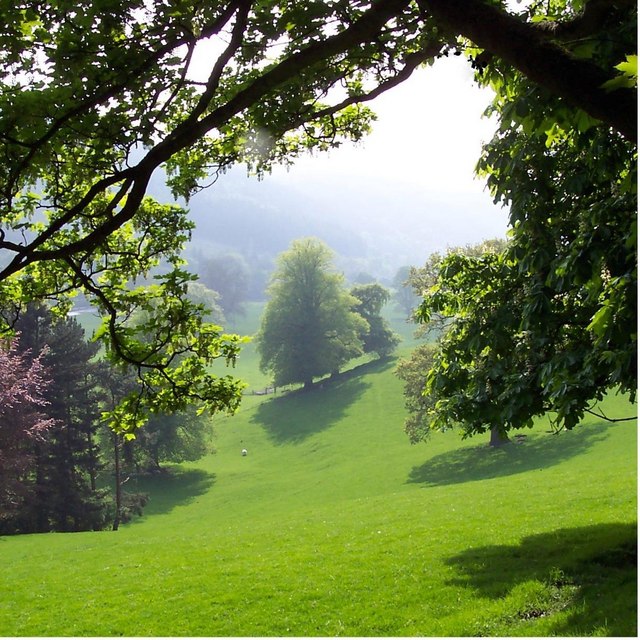
5/ Valley of the River Dee, near Rhagatt Hall, copyright Jonathan Billinger; from the Geograph website and licensed for reuse under this Creative Commons Licence.

Wednesday, February 8, 2012

Turn on, tune, in...investigate your subconscious?


On 19th April 1943, Swiss chemist Albert Hofmann accidentally got some of the chemical he was synthesising onto his fingers, resulting in what he described as a dreamlike intoxication that lasted for two hours. His employers, Sandoz pharmaceuticals were quick to recognise that this new drug, lysergic acid diethylamide, or LSD, had a lot of potential. It was soon being marketed as a psychiatric drug under the trade name Delysid.

Meanwhile in Worcestershire, Ronald Sandison had taken up his first consultancy post at Powick Hospital. Originally built in 1847 to house 200 inmates, the former Worcester County Pauper and Lunatic Asylum was home to around 1000 patients by the 1950s. In his autobiography, A century of psychiatry, psychotherapy and group analysis, Sandison described the hospital as “bleak in the extreme…I discovered that the heating was defunct, many of the internal telephones did not work, and the hospital was deeply impoverished in every department.” As part of attempts to transform the hospital by Sandison and his colleagues, in 1952 he embarked on a study tour of Swiss psychiatric hospitals. It was during this visit that he met Albert Hofmann and became aware of the therapeutic potential of LSD.

Returning to England with a supply of the drug, Sandison developed what he referred to as “psycholytic therapy”, using small amounts of LSD to assist patients in exploring their subconscious. By 1958, Powick Hospital had a dedicated LSD treatment unit, where Sandison worked until he left the hospital in 1964. LSD therapy continued at Powick for a further two years after Sandison’s departure. The increasing publicity around recreational use of LSD by figures such as Timothy Leary and Aldous Huxley, along with tighter regulation of its use, led to Sandoz withdrawing the drug from the market.

After leaving Powick Hospital, Sandison never again used LSD therapy. However, he continued to believe in its value as a treatment when used in a clinical setting.

Although Ronald Sandison is primarily remembered for his pioneering work in LSD therapy, this was far from his only area of expertise. His personal papers, now available at the Wellcome Library as PP/SAN, show Sandison as a medical renaissance man, who was successful in a number of different fields during his career. Besides his work with LSD and other psychedelic drugs like mescaline and psilocybin, the collection covers his work with the Group Analytic Society, (whose archives are also held by the library, as SA/GAS, and the Pastoral Development Group, as well as his work in in family planning, and with alcoholics in Shetland. Also included are a series of dream diaries kept by Sandison between 1948 and 2009.

Image:
Pink elephants on parade LSD blotter, from Wikimedia Commons - click for copyright information.

Monday, February 6, 2012

Happy Birthday, Charles Dickens

There can’t be many of our readers in the UK who are still unaware that this year is Charles Dickens’ bicentenary. 2012 sees exhibitions in Portsmouth, Dickens’ birthplace; in London, the city with which he is most closely associated; in Kent, where he lived at various times in his life and where he died, and, doubtless at any other place fortunate enough to claim kinship. 2012 was not even started when the Christmas season saw a flurry of Dickens adaptations on television. Throughout the year there will be events to mark this anniversary of one of our greatest writers; but today, February 7th, is the actual bicentenary, Dickens’ birthday, and it’s only right that today we look a little at Dickens and medical history.

It's fair to note that medicine is not the first profession one thinks of in connection with Dickens' fiction. Lawyers and their clerks, of course, march through his fiction in be-wigged crowds, trailing legal dust behind them. Merchants and shop-keepers and, again, their clerks (think of Bob Cratchit in A Christmas Carol), are not far behind. Dickens also has a particular eye for appalling customer service: his descriptions of horrible meals and surly staff in the Mugby Junction railway station will ring bells with many travellers (and have seldom been approached in fiction: W.G. Sebald's excruciating description of eating fish and chips in an out-of-season hotel in Lowestoft, in The Rings of Saturn, is their closest modern equivalent). The hard-core Dickens-fan will recall that Esther Summerson, in Bleak House, marries a doctor, Allan Woodcourt. Sarah Gamp, in Martin Chuzzlewit, summarises nicely the image of the drunken nurse before Florence Nightingale got to work on the profession. As regards patients, there are some penetrating descriptions of extreme mental states in his work (Miss Havisham in Great Expectations; Bradley Headstone in Our Mutual Friend), and some touching descriptions of characters with learning difficulties (Smike, in Nicholas Nickleby, or Mr. Dick in David Copperfield). However, medical personnel are generally few and far between in his work, and his description of the patients mentioned above is not clinical: one would struggle to identify particular syndromes from his descriptions, as they are used imaginatively, as symbols rather than detailed illustrations of actual conditions.

It would be a mistake, though, to think that Dickens and medical history have little connection. If the Wellcome Library's holdings teach us anything, it is that "medical history" goes far, far beyond what the official medical profession does, embracing the wider fields of public health, mortality, demography and so forth. If nothing else, the fact that Dickens' characters suffer the usual mortality-rates of the Victorian novel, with children dying young (Little Nell, Paul Dombey), young women wasting away (Dora Copperfield), and in general a lower chance of people making it through to their three-score and ten, would raise questions about the difference in health-care between his time and ours, the extent to which his fictional mortality rates mirror those of nineteenth-century society or are a matter of plot convenience, and so on.

But Dickens goes further than this, of course. He is a novelist as campaigner par excellence, using his fiction to drive debates about public health, the distribution of wealth and the interconnectedness of society: the agenda that drove the great nineteenth-century movements towards mass education, slum clearance, public ownership of utilities and, in the new century, unemployment benefit and eventually the National Health Service. Like much creative writing in the early nineteenth century (see, for example, other writers of "Condition of England" novels such as Elizabeth Gaskell), he is in revolt against Utilitarianism and the small-state Manchester School economics of the time, convinced of the value of social bonds, solidarity and empathy against a vision of society as atomized and competitive, in which the weakest go to the wall. The bleak calculus of Thomas Malthus had set out a demography in which food supply increases arithmetically but population increases geometrically until, outstripping food supply, it is reduced by famine or disease until the surplus population has gone. (Works on demography, including Malthus, can be found in the library at shelfmark EH and its subdivisions.) The long shadow of Malthus hangs over much fiction of the time: when Scrooge, before his reformation, snarls that the poor "had better [die], and decrease the surplus population", it is to this that he is alluding. Dickens, throughout his works, protests against this view of humanity in the mass, in which the poor in particular are seen only in the aggregate, as "surplus population", the death of a few thousand of which is of no great moment in the bigger scheme of things. Public health is a key element in this argument.

Visitors to our Dirt exhibition last year will remember the key role that concepts of cleanliness and dirt play in health and culture. With that in mind it is instructive to read the first paragraphs of Bleak House and to count up the references to dirt:

LONDON. Michaelmas term lately over, and the Lord Chancellor sitting in Lincoln’s Inn Hall. Implacable November weather. As much mud in the streets, as if the waters had but newly retired from the face of the earth, and it would not be wonderful to meet a Megalosaurus, forty feet long or so, waddling like an elephantine lizard up Holborn Hill. Smoke lowering down from chimney-pots, making a soft black drizzle with flakes of soot in it as big as full-grown snowflakes – gone into mourning, one might imagine, for the death of the sun. Dogs, undistinguishable in mire. Horses, scarcely better; splashed to their very blinkers. Foot passengers, jostling one another’s umbrellas, in a general infection of ill temper, and losing their foot-hold at street-corners, where tens of thousands of other foot passengers have been slipping and sliding since the day broke (if this day ever broke), adding new deposits to the crust upon crust of mud, sticking at those points tenaciously to the pavement, and accumulating at compound interest.


Fog everywhere. Fog up the river, where it flows among green airs and meadows; fog down the river, where it rolls defiled among the tiers of shipping, and the waterside pollutions of a great (and dirty) city.

At the very beginning of the novel, Dickens presents a world spiralling into entropy, all intellectual categories collapsing - Is it day or night? Is that a living animal or a mound of mud? Are we in the present or the time of the Dinosaurs? Dirt and decay are central to this vision, and as the novel progresses they concentrate in the slum, Tom-all-Alone's. In chapter 46, in his description of the slum, Dickens uses disease - and the prevalent miasma theory of infection, ascribing it to bad air rather than to microbes - as he argues against views of society as atomised and demands an acknowledgement of human interrelatedness:

But [Tom] has his revenge. Even the winds are his messengers, and they serve him in these hours of darkness. There is not a drop of Tom's corrupted blood but propagates infection and contagion somewhere. It shall pollute, this very night, the choice stream (in which chemists would find the genuine nobility) of a Norman house, and his Grace shall not be able to say Nay to the infamous alliance. There is not an atom of Tom's slime, not a cubic inch of any pestillential [sic] gas in which he lives, not one obscenity or degradation about him... but shall work its retribution, through every order of society, up to the proudest of the proud, and up to the highest of the high.

Read Dickens looking not for men with stethoscopes and bottles of medicine, but for the wider issues of medical history as understood by Henry Wellcome, embracing public health, hygiene, nutrition, poverty, all the factors that bind together a society in ways that go far beyond the purely economic: medical history issues understood thus recur over and over in his works, and are strongest in the greatest novels (Bleak House is the obvious example). It is no surprise, then, that some of Dickens' papers have found their way to the Wellcome Library. MS.7774 is a collection of various letters and other documents by Dickens or related to him, whilst MS.7775 is a group of papers related to Dickens' relationship with the maverick physician John Elliotson, pioneer of mesmerism. (Dickens, of course, operated metaphorically within a circle of stage fire all the time, and took particular delight in casting a spell over rapt audiences when doing readings of his works: he would have been fascinated by mesmerism.) To mark the bicentenary, do come and experience handling papers by Dickens himself. But you also mark his anniversary by taking a wider interest in medical history, by looking at what he would have seen as the ties of common humanity that straddle social classes: health, hygiene, poverty, nutrition, crime... all the headings you find in the Library's guide to its shelfmarks. The key themes of Dickens' great sprawling panoramas of Victorian society are often our stock in trade. Happy Birthday to him: in another two hundred years, people will still be reading.


Images:
Dickens near the end of his life, from Wikimedia Commons - click for copyright information.
Dickens as a young man, from Wikimedia Commons.
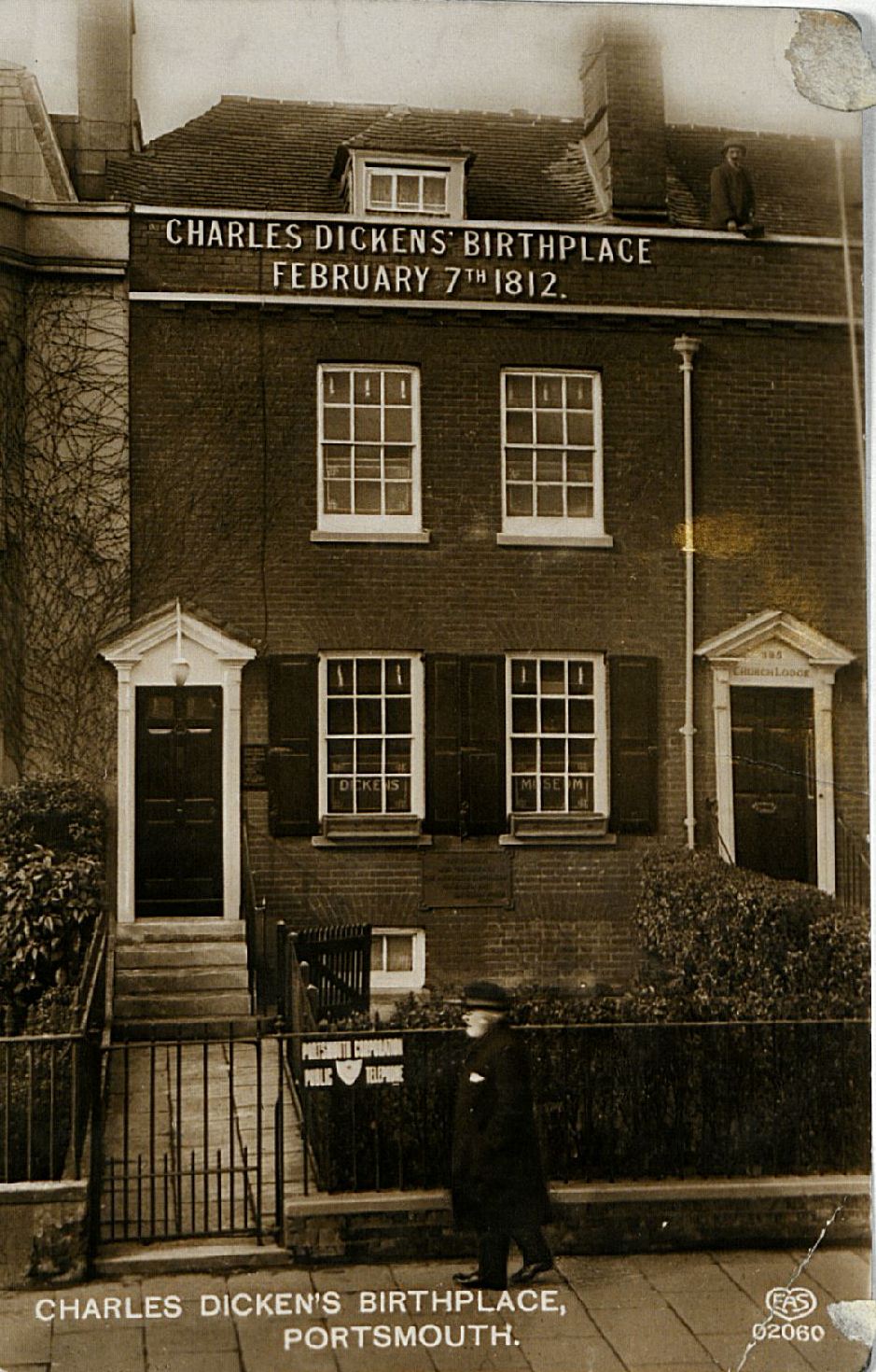
Postcard showing Dickens' birthplace, from MS.7774.
Dickens' signature, from MS.7774.

Wednesday, December 28, 2011

If not here, where?

It was the proud boast of London’s Windmill Theatre that “We never closed”: that throughout the Blitz, as bombs rained down on London, the theatre continued to provide nude tableaux for the entertainment of lonely servicemen and their like. The list of ways in which the Wellcome Library resembles the Windmill is a short one: limited, most of us would think, to being in London and beginning with W. The beauty of the digital age, however, is that we can add a third to this list and say that in a sense we too never close: even if the Library’s doors may be shut, all manner of online resources remain available, 24 hours a day, for as long as our web-servers have power.

In the past various resources such as online journals or the Hospital Records Database have been highlighted in blog posts. A less well-known project whose data can be used via the Library website, was the Medical Archives and Manuscripts Survey, or MAMS.
When the Wellcome Library began collecting modern archival material in the 1970s, it rapidly became one of the first ports of call for researchers trying to locate the papers of particular individuals, or on particular subjects. The Hospital Records Database, a collaborative project between the Library and the National Archives, grew out of the need to answer questions like this. However, as its name suggests it deals only with hospital documentation, and as regular Library users will know the range of material that can be considered “medical” goes far beyond that – beyond the records of practitioners of scientific medicine and into issues such as nutrition, hygiene, demographics, complementary medicine, and so forth. The Medical Archives and Manuscripts Survey began in the latter 1980s by sending questionnaires out to repositories, and then, when it became apparent that the respondents could not be expected to spot the potential medical implications of every possible source in their holdings, moved in the early 1990s to sending Library staff out to survey archives in situ. By the mid-1990s, well over 100 London institutions holding archives had been surveyed: some, like the Royal Colleges, specialising in medicine; some, like the various Borough record offices, covering a wide range of subjects but limited to a specific geographic area; and others still drawn from all manner of specialisms, from the Alpine Club to the Zoological Society of London via the Marx Memorial Library and any number of other points between.

The 1990s, of course, was a time of radical change in information management and presentation. When MAMS began the aim was to publish the results as a printed directory, like a specialised and more detailed version of Janet Foster and Julia Sheppard's British Archives. By the mid-1990s it was apparent, as the infant World-Wide Web took off, that the way forward for these projects was as web-mounted databases rather than print. To recast the data gathered into granularised database fields, however, rather than the freetext reports that were its current form, would have meant a level of editing work almost as lengthy as the initial survey process had been. As the Web developed, too, increasingly direct access to archive catalogues was possible, and although this did not provide the sort of considered bringing together of medical sources that was achieved by the Library’s surveys, it was another factor in reducing the project’s attractiveness to publishers. In the end the Library decided that at the very least it could make all the information gathered available to researchers in a quick and simple fashion by mounting the various survey reports on the Library website, both as single documents – for those interested in sources available at a particular venue – or as one unified searchable listing, for people interested in a particular topic wherever it was to be found.

So, to the data. The terms of reference were simple: material of some medical or health relevance (“relevance” defined as widely as Sir Henry Wellcome would have done: very widely indeed), between the years of 1600 and 1945. 1600 was chosen as the start date reasoning that material before this tended to be used by a more narrowly defined research community (for example, before this date a knowledge of Latin is increasingly important); 1945, since the post-war landscape of health and medicine was radically different, most notably because of the setting up of the National Health Service. Between these two dates, pretty much anything went. The reader should be aware that the reports are now over 15 years old for the most part and that new material will have come in, contact details may have changed and so forth: but at its core the survey records a great tranche of hugely varied material awaiting the medical historian.

There are, of course, long reports for the obvious sources: the National Archives, the various Royal Colleges for the medical specialisms, the Wellcome Library itself (an overview of archive sources necessary at the time because this predated our online catalogue) and London Metropolitan Archives. These hold the riches that the researcher would expect. The beauty of the MAMS project, however, is in the unexpected material it throws up in those repositories that may be off the beaten track for the medical historian. The numerous borough record offices of the capital hold, as well as the expected local government material (administration of drainage and sewerage, Medical Officer of Health reports, and so forth) and local hospital records, a wide variety of other papers, both business and personal. Examples, plucked at random from the typescripts of completed entries, would include: the 1696 probate inventory of a Dorking physician held at the Minet Library, Lambeth; or the Bryant and May Company records that deal with employees’ conditions and phosphorus poisoning, held at Hackney Archives Department. Croydon Archive Service holds the transcripts of a court case brought against Croydon Corporation following an outbreak of typhoid in the borough in 1938. In the same year, the International Union of Local Authorities met at Finchley sewage works, a brochure and menu from the occasion being held by Barnet record office.

One item in Lewisham’s archives department serves as a splendid illustration of the way in which archival material can travel far from its place of creation, making a guide like this necessary: the personal papers of M.H. Hogg, Medical Superintendent of Grove Park Hospital in the borough, include lecture notes taken at Aberdeen University. Similar examples of travelling material, which may or may not be explained by simple administrative or personal links, occur in other borough record offices: descriptive notes about Tooting Bec Asylum at Lewisham, or the 1914 annual report of Enfield Cottage Hospital at Sutton.

Most satisfying was the discovery of relevant material in specialist repositories whose remit was not ostensibly medical: the type of unexpected find that makes a subject survey essential. A historian of medicine might not think to check a repository whose slant is religious, but papers relating to doctors who were religious non-conformists may be found in the archives of the Religious Society of Friends or in Dr. Williams’s Library. The subjects discussed in the extensive correspondence held by the Royal Geographical Society include the health implications of different climates and medicinal plants from around the world. Finally, one can be reasonably certain that a historian of medicine in Bradford would not automatically head for the British Architectural Library at RIBA, yet there one may find a Bradford apothecary’s recipe book.

Less overtly medical material can also be fruitful for the researcher: for example, the papers of the banker Hastings Nathaniel Middleton (1781-1821), held by the City of Westminster Archives Centre, turn out to go into some detail on the mental illness of his mother.

The survey is, of course, the tip of the iceberg. Similarly varied material will exist in repositories outside London: it was the intention to carry MAMS beyond the capital, but the changing technical landscape halted the project before this happened. More material will have arrived at record offices since these surveys were carried out. There will, also be material from outside the date-span of the survey. In this last category comes a favourite example of the sheer unpredictability of medical archive sources: in the London Borough of Hillingdon’s archives at Uxbridge Library is a report, dating from the 1970s, on the movements of foxes in the borough. The medical relevance is that the fox is the main carrier of the rabies virus in continental Europe: the report was prepared to assess the rapidity with which rabies might spread by this means if the virus gained a foothold in Britain. As this illustrates, the medical implications of archive material may not superficially be obvious; but once one’s eyes are opened, almost all repositories will hold something worth recording and worth pointing out to the researcher. There is a wealth of material out there and much of it is recorded in the MAMS reports – we recommend readers to start exploring.

Note: contact details given in the MAMS reports were accurate at the time of the survey but may have changed since: for up-to-date information on addresses, telephone numbers, e-mail and web addresses, etc., readers should consult the National Archives' Archon directory.

Images, all repositories covered by the MAMS project. From top:
1/ Battersea Library, home of Wandsworth Heritage Service. Photograph copyright Christopher Hilton, made available under Creative Commons Licence via the Geograph website.
2/ The Royal College of Surgeons of England, c.1813: painting by George Dance, from Wellcome Images.
3/ Bishopsgate Institute. Photograph copyright David Bradbury, made available under Creative Commons Licence via the Geograph website.
4/ Minet Library, home of Lambeth Archives. Photograph copyright Stephen Craven, made available under Creative Commons Licence via the Geograph website.
5/ Dr Williams's Library, Gordon Square (a near neighbour of the Wellcome Library). Photograph copyright David Hawgood, made available under Creative Commons Licence via the Geograph website.