Showing posts with label posters. Show all posts

Tuesday, April 17, 2012

Health of the People -- British style

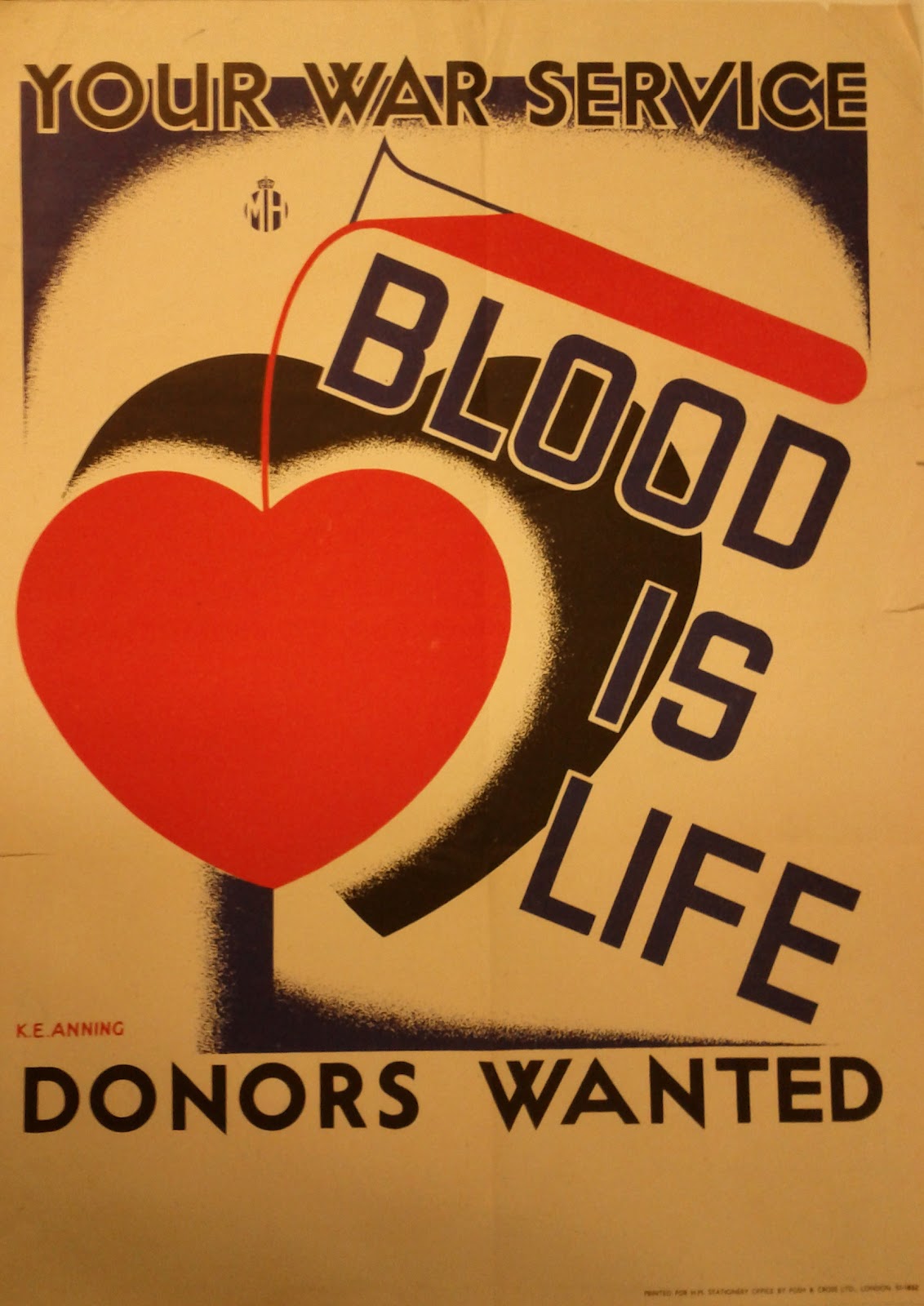
The Wellcome Library has acquired a collection of 600 British posters dating from the 1940s to the 1990s advertising the health-maintenance activities of the British state. Most were produced by the Central Office of Information for the U.K. Ministry of Health (subsequently Department of Health and Social Security, subsequently Department of Health).

The posters cover the following subjects: Blood donation (135); Children (44); Diseases (121: AIDS, asthma, colds and flu, diphtheria, epilepsy, meningitis, rabies, rubella, tetanus, tuberculosis); Drugs or narcotics (53); National Health Service services and charges (80: ambulance service, cervical screening, community care, emergency GPs, evaluation, fares to hospital, NHS 30th anniversary, prescription charges, spectacles); Nurses and midwives (87, including recruitment, Queen's Institute of District Nursing, etc.); Organ donation (44), Travel and health (8); and Miscellaneous (26: air-raids, disability, health and safety, health of the nation, hearing, incontinence, mental health, and teeth).

Proof pulls and storyboards are included as well as finished versions. Named designers include Reginald Mount, K.E. Anning (above), and Abram Games.

The posters are accompanied by a large collection of photographs, drawings, etc. which have not yet been explored, except for one item, a photograph album (Wellcome Library no. 811058i) recording an exhibition from 1948 called Health of the People. This exhibition was put on by the Central Office of Information in Oxford Street, London (but where in Oxford Street?) apparently to publicize the introduction of the National Health Service (NHS) in that year. On display from May to June 1948, the exhibition was an ambitious attempt to communicate the history of public health and the difference that the NHS would make between the past and the future. Much attention was given to new laboratory-based services.

The photographs makes it look like a halfway-house between Britain can make it at the V&A in 1946 and the Festival of Britain on the South Bank in 1951. No names of contributors (commissioners, writers, designers, manufacturers) are given, but surely they must be recorded somewhere; possibly in the unexplored parts of this same collection. The script which accompanies the album makes much reference to the Public Health Act of 1848, the centenary of which was being celebrated.

Did this period see the high-water mark of state involvement in health in the British Isles? If so, our successors will no doubt look on these documents with incredulity. Only time will tell. 
Displays in the Health of the People exhibition, 1948. Left, "the health team, consisting of the family doctor, dentist, nurse etc". Above, stands on protection of towns, water supply etc. Top, the staircase between floors.

Thursday, December 1, 2011

HIV/AIDS at 30: Spreading the Word

To mark World AIDS Day (1 December) this year, BHIVA (the British HIV Association) held a World AIDS Day Event in collaboration with the Wellcome Trust on the theme HIV/AIDS at 30: Back to the Future. 2011 is the thirtieth anniversary of the first description of AIDS -- a milestone in the continuing epidemic that has claimed the lives of millions of people worldwide. While reflecting on the experiences and work of the past 30 years, eminent speakers reviewed today's challenges, and looked ahead to consider how the knowledge of the past will inform future strategies.

One aspect of the epidemic that was considered was the way in which health authorities, activists and charities around the world have tried to prevent its spread by publicity, including posters. The Wellcome Library now has over 3,200 AIDS posters from many countries. The exhibition Spreading the Word: AIDS Posters from Around the World is a selection of 24 posters chosen and interpreted by Dr Sarah Graham of Leicester University, and shown earlier this year at the New Walk Museum in Leicester.


The posters emphasize the range of graphic techniques adopted and the variety of ethnic and social groups at which they were directed. Spreading the Word was also on display today at the BHIVA/Wellcome Trust meeting (left) and was much appreciated by those attending.

The latest AIDS poster to enter the Wellcome Library catalogue (right) must be one of the most allusive and discreet in the entire collection. It was published on World AIDS Day in 1994 by UNESCO in Paris, for Hispanic populations in which drug use was a source of transmission of the virus. Unlike the crashingly explicit posters (mostly from Germanic and Anglo-Saxon countries), it refers to open discussion within the family and use of counselling to help drug users, with no obvious indication to the casual passer-by that its end-purpose is to save them from contracting HIV through needle re-use.

Among the work publicised at the conference was a recent volume in the series Wellcome Witnesses to Twentieth Century Medicine, which was published in November 2011. It concerns the controversial National Survey of Sexual Attitudes and Lifestyles (NATSAL) which was launched in 1990. "A proposal that the UK Department of Health would fund it, after scientific scrutiny by the Economic and Social Research Council, was vetoed at government level – some say by Mrs Thatcher herself – on the grounds that this would be an unacceptable intrusion into private lives. This decision hit the headlines (first in The Sunday Times), as did the decision, some four weeks after the story broke, by the Wellcome Trust to step in and fund it instead. There is a similar story to be told of obstruction from the Bush White House,which forbade funding from the National Institutes for Health (NIH) for the American survey" (pp. xxi-xxii).

The phrase "some say by Mrs Thatcher herself" is backed up on p. 67 by a separate statement in the book (Appendix 3, pp. 66-68) by Dr Peter Williams, Director of the Wellcome Trust at the time, who received that account of events in a phone call from the Chief Medical Officer, Sir Donald Acheson. A note by Professor Virginia Berridge (p. 61) suggests that the reality behind the scenes may have been more complicated, but that at any rate Downing Street was happy to go along with the veto. More of the raw materials for this episode are set out in the volume, in the usual Witness Seminar manner: the spoken memories of people who were involved in the events at the time, provided with scholarly commentary and often with competing points of view. It makes compulsive reading. It is available in hard-copy from booksellers and Amazon, and available free of charge on the web as a PDF. [2]

[1] Overy C, Reynolds L A, Tansey E M. (eds) (2011) History of the National Survey of Sexual Attitudes and Lifestyles. Wellcome Witnesses to Twentieth Century Medicine, vol. 41. London: Queen Mary, University of London. ISBN 978 090223 874 9

[2] http://www.history.qmul.ac.uk/research/modbiomed/wellcome_witnesses/index.html

Saturday, October 15, 2011

Global Handwashing Day

It is Global Hand Washing Day today and we've chosen to mark the date by highlighting material from a recent library acquisition of African health posters, a number of which remind us all of the importance of hand washing and basic sanitation.

For instance, the simple act of washing hands with soap (752738i) and segregation of toilet facilities (756161i) can prevent common ailments in children like diarrhoea associated with cholera (755196i), eye infections (755601i) and since 2000, avian flu (755530i).


Personal hygiene was key to the 2000 Sara Campaign, an initiative aimed at adolescent girls developed in 10 countries of Eastern and Southern Africa with UNICEF assistance. Originally a radio series, the programme branched out into animated films, comic books, storybooks, audiocassettes, guides and posters. (Source: www.unicef.org/lifeskills/index).

Hand washing with soap is said to be the most effective and cheapest way to prevent diarrhoea (associated with cholera and typhoid fever) and acute respiratory infections (like TB and pneumonia). Such infections take the lives of millions of children in developing countries each year, according to the Global Public-Private Partnership for Hand Washing who initiated Global Handwashing Day (GHD) in 2008. Posters are an essential way of promoting the routine which, it appears, is seldom practiced in some areas yet could save more lives than any single vaccine or medical intervention. (Source: http://globalhandwashingday.org/).


Apart from basic hygiene issues, the majority of posters from this collection highlight family planning issues (birth control, family size, contraception etc) but, not surprisingly, many other problems are revealed: malaria (755536i), polio (755539i ), TB (752340i), typhoid (755617i) avian flu (752086i), trachoma and blindness (752498i ), diabetes (755362i) and hypoglyemia (755464i).


Less commonly depicted are issues concerning female circumcision (755185i and 755386i ), genital mutilation (752291i), and in 2001, the ‘flying toilet’ problem in Kibera slums (755701i, and 755711i).

Details of our collection of African health posters can be seen in the Wellcome Library catalogue.

Images:

A girl washing her hands in a bowl above a tap in a washing cubicle; health education in Ethiopia. Colour lithograph by Health Education Centre (?), ca. 2000, Wellcome Library ref.
752738i

School children visiting a segregated corrugated toilet and washing their hands: hygiene in Kenya. Colour lithograph by Ministry of Health, Kenya, ca. 2000, Wellcome Library ref. 756161i

Women preparing a chicken and washing their hands: preventing avian flu in Kenya. Colour lithograph by Ministry of Health, ca. 2006, Wellcome Library ref.
755530i

A girl holds a chicken on a plate as a man washes his hands: protecting against avian flu in Kenya. Colour lithograph by UNICEF and Maskew Miller Longman, ca. 2000, Wellcome Library ref. 755918i

Campaign against female genital mutilation in Djibouti. Colour lithograph by A. Rachid and A. Djama for Ministère de la Santé MGF project, ca. 2010, Wellcome Library ref.
752291i

Three toilets in the form of ducks in flight: appeal to improve sanitation in the slums of Kibera. Colour lithograph by AMREF, 2001, Wellcome Library ref.
755701i

Monday, August 1, 2011

Swiss National Day

Every country has its own day for fireworks, it seems: November 5th in the UK, July 4th in the USA, July 14th in France. In Switzerland it’s today, 1st August, and anyone standing on the southern shore of Lac Léman tonight, in France, will look across to see firework displays taking place all down the long sweep of the Swiss shore. Today is the Swiss National Day*, when communities gather all over the country (and beyond, in the so-called “Fifth Switzerland” made up of expatriates) to celebrate their Swissness and the survival of their country despite all the obstacles that geography, language, religion and sometimes-aggressive neighbours have placed in the way of its unity. Here we look at some Swiss items in the Wellcome Library collections, and the links between Switzerland and the United Kingdom.

[*Of course, as a multi-lingual country Switzerland has not one but four names for the celebration, calling it the Bundesfeier (German), Fête nationale (French), Festa nazionale (Italian) or Fiasta naziunala (Romansch).]

The date of the National Day commemorates the first Federal Charter, dated “early August” 1291, although it has become conflated also with the slightly later Oath of the Rütli sworn between the representatives of the three original cantons, an event dramatised by Schiller in his play Wilhelm Tell (and re-enacted at a crucial moment in the country’s history, in 1941, when the 650th anniversary of the confederation was used to reaffirm a commitment to democracy and independence). Needless to say, history does not really provide a neat date and time at which the country was founded. Rather, the origins of Switzerland lie in a gradual coalescence of various communities, mostly of their free will, for mutual protection and self-determination. As the Middle Ages progressed, the original three “forest cantons” of Uri, Schwyz and Unterwalden, clustered in the mountainous area around the Vierwaldstättersee, were joined by other similar areas, by imperial cities such as Zürich, Bern and Basel, by their subject areas, and by other loose confederations of mountain communities such as those that now make up the cantons of Valais and Graubünden, until by the early modern period the country had essentially the shape that it has today.

There have long been strong links between Switzerland and the United Kingdom, with the nineteenth century particularly important for these. The Romantics’ appreciation of Switzerland’s scenery – prior to the Romantic movement it had been more usual to see mountains as a nuisance – forged a trail that tourists followed, with an ever-expanding railway network (and travel agents like Thomas Cook) making it ever easier to get there. The names of hotels in holiday centres such as Interlaken are a testament to the British influence on Switzerland’s tourist industry. Politically, too, Switzerland was appealing to the nineteenth-century Briton. At a time when much of Europe was controlled by empires and other undemocratic régimes, this was a country whose foundation myths, of sturdy independent peasants banding together to resist oppression and decide their policies by democratic means, chimed well with Victorian ideas of ancestral Anglo-Saxon liberties and the evolution of the Mother of Parliaments. (In each case, of course, the foundation myth ignored many less democratic elements such as the unequal weighting that wealth gave certain citizens’ voices, and the complete absence of any voice for women.) The robust Protestantism of many Swiss would have been congenial, too. Here, a Victorian Englishman could have enjoyed foreign travel whilst feeling that the people around him were almost British themselves: sensible, sober people not given to continental vices such as riots, revolutions or too much gesticulation. One of the strangest survivors of this nineteenth-century kinship stands in the London district of Brixton, one of the capital’s poorer neighbourhoods: in the midst of a 1960s housing estate is a pub called “The Hero of Switzerland”, the sign showing the iconic scene in which William Tell aims his crossbow at an apple on his son’s head. The building is modern but stands on a site used for a pub of that name since at least 1901.

As one might expect, many of the Swiss items in the Wellcome Library relate to British travellers. In 1817 Joseph Jackson Lister (1786-1869), wine merchant, microscopist and later to be father to the founder of antiseptic surgery, was one of the British subjects flocking across the Channel to see the European sights that had been off-limits for a generation and were now finally opened to them by the victory over Napoleon. His travels are recorded in a tiny, neat diary, illustrated with pencil sketches and watercolours that track his journey across France to the Alps and then back to Britain down the Rhine (MS.6962).

Lister's journeys took him to the foot of the Gotthard Pass, into territory that was still quite wild and woolly for the average traveller. Later in the nineteenth century an expanding tourist industry had made the mountains more accessible, with mountain railways making it possible for ordinary tourists to reach summits previously thought of as the haunt only of ghosts and dragons. The surgeon Charles Brodie Sewell (1817-1900) visited Switzerland repeatedly from the 1860s to the 1890s and his detailed travel journals give an indication of how domesticated, comparatively, the Alps were becoming: photographs show us the rack-railway climbing to the summit of the Rigi, one of two that were built to this peak. Many other papers in the Library collections document similar holidays, up to the mid-twentieth century. The diary of Dr Forrest Leon Loveland, a general practitioner from Topeka, Kansas, documenting a trip to Europe in 1931, is particularly colourful, with photographs, cuttings and ephemera pasted into a large diary-cum-scrapbook (MS.7974). Shadows are cast on this tourist idyll, however, by one item Loveland includes: next to a painting of Zürich and photographs of the railway up the Pilatus is a monochrome newspaper cutting whose title declares "Germany's 100,000 on fighting edge", next to which a member of the Wehrmacht blows a purposeful bugle. Particularly poignant reminders of the world beyond the Alps come in the papers of the psychoanalysts Siegmund Heinrich Foulkes (originally Fuchs) (1898-1976) and Elizabeth Therese Fanny Foulkes (née Marx) (1918-2004). The couple collected postcards when on holiday, and their papers include blank undated cards from all over the world, Switzerland included. The Swiss cards appear to date from between the wars and it is probable that whichever of the Foulkes collected these (they were not married to each other at that time) would still have been a German citizen, since each was born German but was forced to emigrate to the U.K. by Nazi persecution of Jews.

We have focussed so far chiefly upon foreign visitors to Switzerland, but of course Swiss material is also present in the collection. Our manuscript medical recipe books include Swiss items such as MS.7908, a collection of medical recipes originally put together by a priest in Birmensdorf (canton Zürich) in the early seventeenth century. Perhaps the most striking of our Swiss holdings, however, are among the most recent. The Library's Iconographic Collections include a large number of Swiss public health posters, warning against AIDS and counselling condom use (as ill-luck would have it, AIDS arrived at about the same time that Switzerland underwent a large increase in intravenous drug use, making the problem even more pressing). The posters - available, of course, in various languages including those of immigrant communities such as Turkish, as well as the country's official languages - come in various styles, from the oblique to the downright startling and explicit. Backgrounds to the messages vary from nightclubs in, presumably, the grittier city neighbourhoods, to the chocolate-box Switzerland of Alps and meadows, in which a Heidi-milkmaid brandishes a condom and proclaims "Ohne? Ohne mich." (An idiomatic translation might be "Doing without [a condom]? Do without me."). In one particularly pretty series, the instantly-recognisable skylines of various Swiss cities are shown at night, lit only by the stars and a strange, pink moon that turns out on closer inspection to be a condom.

August 1st has provided us with a reason to dig out some of our Swiss holdings: but, of course, there are many more and they are available all the year round. All these and more can be consulted in the Library (and images of many Swiss-related items can be found on Wellcome Images). You are invited to come and explore, whether it that takes the form of rambling over Alpine meadows or looking at the many inventive uses graphic designers can find for the humble condom.

Images:
Aerial illustration of the Vierwaldstättersee (also known in Britain as Lake Lucerne), from the diaries of Dr Forrest Leon Loveland, general practitioner of Topeka, Kansas, documenting a trip he made to Europe with his wife Helen in 1931 (MS.7974).
Postcards collected on Swiss holidays, mostly showing the Berner Oberland, in the papers of S.H. Foulkes (PP/SHF/A/C/7).
Title page, MS.7908: 17th century recipe compilation.
"The Hero of Switzerland" pub, Loughborough Road, London SW9: image copyright Christopher Hilton, made available under Creative Commons via the Geograph website.
A square and fountain in Zürich, drawn by Joseph Jackson Lister in MS.6962.
The Vitznau-Rigi railway, from the 1885 travel diary of Charles Brodie Sewell (MS.4509).
AIDS-Hilfe Schweiz and Swiss Federal Office of Public Health: poster warning of the importance of condom use, 1990s.
Swiss Federal Office of Public Health: poster warning of the importance of condom use, 1990s, showing Luzern by night.

Monday, July 11, 2011

Item of the month, July 2011: On this day in Amsterdam ...

This print (left) sits in the Wellcome Library among a group of Dutch posters about the use of recreational drugs. It is exceptional for its casual production values: scraps of paper torn out of a notebook, containing incoherent verses which surround incompetently scrawled drawings, photographed on a ready made background and put together with whatever editing software was available for such purposes in 1995, the date on one of the drawings.

The scrawl can however be forgiven, as the author of these drawings was not a professional artist, and their incoherence is their whole point. As the signature "brood" indicates, they are the manic ramblings of Herman Brood (right), the charismatic Dutch rock-and-roll star whose well-publicised life was fuelled by drug-use: chiefly LSD, cannabis, heroin, amphetamines and alcohol. His heyday was the 1970s and 1980s. When the music industry became too strenuous, he turned to painting in the graffiti-influenced street styles which have since become more popular than they were then, and, though colour-blind, won some renown as a spraycan artist. This poster is an example of his drawing style, apparently published to dissuade drug users in Amsterdam from following his course in life.

As well they might (be dissuaded). For in Brood's case, years of drug-use had taken their due, and although he had made plans for a new recording with a full orchestra, the future must have looked unappetising to him. On 11 July 2001 he leapt to his death from the top of the Amsterdam Hilton hotel. To remember that moment, and the life that came to a sudden end at that time, a memorial event has been organized to take place there today, 11 July 2011, at 13.15 pm.

Image credits
Poster:
Wellcome Library no. 748920i; © DACS 2011

H. Brood in December 2000 with parrot: photograph by Sander Lamme in Wikimedia Commons: http://nl.wikipedia.org/wiki/Bestand:Herman_Brood_2000_Amsterdam_Sander_Lamme.jpg

Hilton Hotel, Apollolaan, Amsterdam: by PatrickDR on Flickr: http://www.flickr.com/photos/patrickdr/2469928582/

Tuesday, June 7, 2011

African posters

The Wellcome Library has acquired a substantial number of posters (circa 1,100) published in thirty African countries to promote health and wellbeing. Dating from 1993 to 2010, they were collected in the latter year from the following countries:

Burkina Faso; Benin; Cameroon; Congo (from 1997); Djibouti; Egypt; Ethiopia; Gambia; Ghana; Guinea Bissau; Ivory Coast; Kenya; Liberia; Madagascar; Malawi; Mali; Mauritius; Morocco; Mozambique; Nigeria; Rwanda; Senegal; South Africa; Sudan; Tanzania; Tunisia; Uganda; Zaire (up to 1997); Zambia; Zimbabwe.

The best represented countries are Ethiopia (286), Kenya (219), Nigeria (130) and Tanzania (120). Some of the subjects represented:

Contraception and reproductive health, sexually transmitted diseases, "backyard abortion", tubal ligation, breast feeding, weighing babies (as a concept), child health centres, vitamins.

Vaccination as a concept; African traditional medicine; pills as a concept.

Protection against communicable diseases including: polio, malaria, AIDS, schistosomiasis, food poisoning, nematode infections (right), tuberculosis, bird flu, and rodent-borne diseases; and against toxic pesticides and diarrhoea.

Smoking, spitting, female genital mutilation, empty hospital pharmacies due to overdemand, traditional tattooing, general health education, avoiding environmental pollution, men's and women's roles in preserving health, the health of orphans, the health of camels, appeals to Islamic and Christian values and images, individual responsibility, child abuse, and activism.

Cataloguing of the collection with brief, first-draft catalogue records has just started, and newly catalogued items are listed on the Wellcome Library's rolling web feed.

Individual items will become available in the Library as they are catalogued, but in the meantime anyone wants to see works from a particular country may see them in the Wellcome Library by ordering them from the online catalogue.

Thursday, March 31, 2011

Cardiac history roundup

The photograph above, dated 1931, portrays the cardiologist Edward Franklin Bland. Born in Virginia in 1901, Bland spent most of his career at the Massachusetts General Hospital (MGH), where he was an Intern, House Officer, Cardiac Fellow, and finally in 1949 Chief of Cardiology, a post he held until his retirement in 1964. The photograph was kindly presented to the Wellcome Library by Dr Arthur Hollman FRCP, the biographer of Sir Thomas Lewis: Dr Hollman had acquired it as a result of the fact that in 1930 Bland had spent a year on research in Lewis's laboratory at University College Hospital (UCH) in London. [1]

As a result of Bland's year with Lewis, the Wellcome Library has in its Thomas Lewis archive (PP/LEW) a letter from Lewis to Bland dated 25 March 1933. Lewis thanks Bland for submitting a paper to the journal Heart (edited by Lewis) but has to decline it because Heart was about to be replaced by a new journal Clinical science. Lewis advises Bland to "cut out a lot of stuff about coronary anomalies" because it "doesn't really give anything new": coronary anomalies were a special interest of Bland, and one of them is named Bland-White-Garland Syndrome after him, his former colleague at MGH Paul Dudley White, and Joseph Garland, who was a visiting physician at MGH while editor of the New England Journal of Medicine (and himself the owner of a congenital cardiac anomaly).

Lewis then goes on to offer for Bland's consideration a view which, in its teleological phrasing, could mutatis mutandis have been written by Galen. Explaining why, if arterial blood is not available, the myocardium clutches at straws by accepting venous blood as being better than nothing, Lewis says "In these cases Nature performs an experiment on the effects of supplying the heart with venous blood. Now in cases of occlusion of the coronary arteries, the heart is thought by some to be supplied by the Thebesian vessels [named after their discoverer Adam Christian Thebesius (1686–1732)]. The Thebesian vessels open chiefly into the right heart so that if the myocardium is supplied through these vessels it is being supplied chiefly with venous blood." Lewis does not elaborate further.

Finally in this letter Lewis refers to a forthcoming visit by Bland, who must have been about to return to the UK in 1933: "I will talk about them when I see you in a few weeks. We are looking forward to that very much. It is good of you and Jones to drive us about the country." Jones was possibly T.Duckett Jones, Bland's co-author in several papers on the heart disease rheumatic fever. Evidently Bland and Jones had offered to act as chauffeurs to Sir Thomas and Lady Lewis in exchange for Sir Thomas's gifts of physiological wisdom.

♥♥♥♥♥♥♥♥♥♥♥♥♥♥♥♥♥♥♥♥♥♥♥♥
One of the puzzling things about heart transplantation from an outsider's point of view is the sudden emergence to world-wide fame of the previously obscure Dr Christiaan Barnard. Today, he is probably the only transplant surgeon whose name is widely known, yet when experts talk about the history of transplantation, names of other great figures tend to be mentioned, such as Norman Shumway, Roy Calne, Thomas E. Starzl, and Denton A. Cooley. These worked in international centres of surgical research such as Stanford University in California; Houston, Texas; or Cambridge, England — while the man who beat them to the goal and outshone them all in the public mind was apparently a relative outsider: Barnard, working at the University of Cape Town (above) under the pressures of the apartheid regime of the time. How did that happen?

The recent history of Groote Schuur Hospital by Anne Digby and others [2] shows that research at Groote Schuur had developed after a slow start in the 1950s and flourished until the 1980s, though bedevilled by government policies: in the 1960s and 1970s black students were not allowed to cross the corridor which separated the wards for black patients from the white wards. It really was Barnard's first transplant operation on 3 December 1967 which put the hospital on the international map.

The background to these events is presented in a vivid lecture given on 25 January 2011 by Dr. David Cooper to the C.F. Reynolds Medical History Society at the University of Pittsburgh. The lecture has been made available on the internet by Dr John Erlen at the School of Medicine, University of Pittsburgh. [3] Dr. Cooper was a surgical associate of Barnard and evidently knew him well. As Cooper shows, there were other names as well, notably "the great John Lewis" (whose achievements in the field went unrecognized) and James Hardy of University of Mississippi at Jackson. Still, Barnard had had the idea of a full human heart transplant in his head for a long time (as Cooper shows from a chance remark made by Barnard early in their acquaintance, while talking about the inadequate treatment a heart patient was receiving). As a result, when he did carry it out, he was remarkably casual about it, showing that he had gone over it in his mind many times without telling anyone. Contrary to legend, Cooper shows that the procedure (apart from a bad patch in the 1970s) was usually very successful in prolonging the lives of patients.

It's a long way from the work of Edward F. Bland, though there is a connection: Barnard developed his techniques of cardiac surgery in the Tetralogy of Fallot, one of those anatomical anomalies that Bland was so interested in. Bland did live to see the establishment of transplantation: he himself must have been blessed with a good heart, for he died in 1992 at the age of 91.
♥♥♥♥♥♥♥♥♥♥♥♥♥♥♥♥♥♥♥♥♥♥♥♥

The history of the Knights of Malta (Knights of Rhodes, Knights Hospitallers, Knights of St John) was one of the interests of the founder of the Wellcome Library, Henry S. Wellcome. He acquired a substantial archive of their papers in Paris in 1933 (subsequently returned to Malta), and several iconographic documents, most notably this painting by Antoine de Favray. In recent years the Knights have focused their medical activities on specific fields such as refugees, people with leprosy, and – most conspicuous in Great Britain -- emergency services: their British outcrop St John's Ambulance is a familiar presence at crowded events such as football matches, gigs and royal weddings.

One of their contributions to emergency medicine was a campaign in France in the 1960s called "Don du souffle" (Gift of breath). Judging from this poster (above: Wellcome Library no. 744037i) which sports the Cross of Malta in the top right corner, it was intended to educate the French public in the possibilities of cardiac resuscitation. The heart — a small organ normally enveloped by the larger lung — is here brought into the foreground, being presented as a red berry on the green leaf of a single lung which folds out from the trachea. Highly stylised anatomy, of course, but all in the aid of saving lives by drawing attention to what can be done with the heart and lung.

[1] Memoir of Bland: http://www.ncbi.nlm.nih.gov/pmc/articles/PMC2376608/pdf/tacca00084-0039.pdf

[2] Anne Digby and Howard Phillips with Harriet Deacon and Kirsten Thomson, At the heart of healing: Groote Schuur Hospital, 1938-2008, Auckland Park, South Africa: Jacana, 2008, pp. xiii, 281-285

[3] David K.C. Cooper, 'Chris Barnard and the story of heart transplantation', URL: http://mediasite.cidde.pitt.edu/mediasite/Viewer/?peid=0934815fd4154df984f71032e0fe61d1. See also his book Open heart: the radical surgeons who revolutionized medicine, New York: Kaplan Pub., 2010

Wednesday, December 1, 2010

World AIDS Day: from despair to defence

During the year since World AIDS Day 2009 the Wellcome Library has continued to add to its already substantial collection of AIDS posters. This (left) is the first to be received from Tajikistan; indeed it is only the ninth work from Tajikistan (these are the nine) in the entire Wellcome Library catalogue (which as of today contains records for 704,361 works). Although created with support from international organizations, its depiction of a family at dinner and other scenes is thoroughly local. In showing nothing amiss, it resembles some of the earliest AIDS posters from Asian countries. The poster was donated through the good offices of Dr Nikolaj Serikoff of the Wellcome Library.

By contrast the earlier posters from Europe did not hesitate to pile on the agony of HIV infection, and this tactic is still shown in this poster (right) from Antwerp published in 1991. The design was selected through a competition held for Flemish art students in April 1990.

The German-language AIDS posters appear to be all now in the Wellcome Library catalogue – "appear" because it is possible that we still have some more somewhere that have not yet been catalogued; and many of the earlier records are first-draft records that need subsequent upgrading. Their completion (as it may well be) is thanks to Anna Ostrowska of the Wellcome Library, who had already catalogued the Polish ones. Many of the more recent posters (published in 2000 and subsequently) show more confidence than their predecessors in defending the status of the HIV positive, and less despair about their future, which may reflect the introduction of Retrovir and improvements in combination therapy. It also suggests that the earlier generation of poster designers and activists had been successful in their aim of taking the stigma out of AIDS.

Defending is the very subject of this poster (left): four defenders for FC Bayern Munich, all of non-German ancestry, represent the "defence" of immigrant HIV positive people against discrimination on World AIDS Day 2003: Willy Sagnol (French); Owen Hargreaves (English); Sammy Kuffour (Ghanaian); and Robert Kovač (Croatian). English Wikipedia says that Hargreaves was born in Calgary, Alberta, of a Welsh mother and an English father, and German Wikipedia says Kovač was born and brought up in Berlin. The nationalities may be somewhat fluid, but if these heroes of Bavaria are perceived as assets to Germany, the message stands: "Defend against exclusion. Live and let live".


The poster above shows a Bavarian maypole decorated with coats of arms, flags, harvest symbols etc. The maypole stands "high", and therefore represents consumers of recreational drugs who have become dependent on them. This often hidden sector of the population is alluded to ironically through the most traditional of public symbols. The photograph is by Andreas Doehring and probably dates from 2003. Though the poster was published by an AIDS support charity (Münchner Aids-Hilfe e.V.), the clinical symptoms of AIDS disappear beneath a strident message in favour of non-bourgeois values.

Credits:
Tajik AIDS poster:
Wellcome Library no. 729001i
Despairing Flemish couple: Wellcome Library no. 728713i
Footballers:
Wellcome Library no. 728560i
Maypole:
Wellcome Library no. 727923i

Tuesday, November 30, 2010

R.I.P. Robin Day R.D.I.

Left, poster by Robin Day for the Royal Society for the Prevention of Accidents, ca. 1954. Wellcome Library no. 32584i

Probably everybody reading this has at some time sat in a chair designed by Robin Day, the designer who died on 9 November 2010 aged 95. His stackable plastic chairs, and their derivatives, are ubiquitous in British schools, hospitals and office meeting rooms.

However, he designed more than chairs. During World War II he designed posters for the Ministry of Information, and in 1951 signage for the Festival of Britain. The Wellcome Library holds posters which he designed for the Royal Society for the Prevention of Accidents.

The poster above, possibly from 1954, shows the danger of alighting from a bus of the open-platform type which is scheduled to be reintroduced in London this time next year. Three different lettering-types are used to describe the three activities involved: waiting (leaning backwards), the bus trundling onwards (cursive), and the final emphatic stop (sanserif caps bold in white on black, and boxed for good measure). The man alighting looks like a self-portrait of Day himself.

Right, poster by Robin Day for the Royal Society for the Prevention of Accidents, ca. 1954. Wellcome Library no. 32585i

This film noir-type poster (right) about the rewiring of an electric plug shows an early bid in the interests of safety to reserve more work for electricians and less for amateurs.

As is the way with posters, both preserve fragments of social history within their overt message – such as the vanished three-round-pinned plug (still used in India).

See further Fiona MacCarthy's obituary of Robin Day in the Guardian, 17 November 2010, and Charlotte Higgins's account of a visit to him in the same paper, 18 November 2010.

Tuesday, October 5, 2010

Death of slapstick king

R.I.P. Norman Wisdom British slapstick virtuoso and cult hero in Albania.

Seen above in a poster advertising the French version of A stitch in time (1963), in which he stars as the comic gadfly and victim of an overbearing medical establishment. Wellcome Library no. 674325i

Monday, August 9, 2010

Getting public health messages across

"A really successful poster actually tells people what to do". That's the opening message from Dr Laragh Gollogly of the World Health Organization (WHO) in the BBC's new audio-slideshow on public health posters. The posters shown are some of those selected by Dr Gollogly for publication in a splendid illustrated book Public health campaigns: getting the message across (Geneva: WHO, 2009), which was launched at the Wellcome Library earlier this year.

The international coverage of the WHO (it has 193 countries as members) makes it well suited to display the particular problems arising from health campaigns in more than one country, which are discussed by Dr Gollogly in the audio commentary and illustrated in the choice of posters. Without detailed local knowledge, it would be impossible to respond to people's fears and desires, stir their emotions and engage them in the mission to do whatever the campaign needs to get done. Some of the posters are less concerned with "telling people what to do" than with raising their awareness of what not to do, and in fact a wide range of approaches is revealed.

Anyone working with historic posters faces particular obstacles. The collections are scattered. There are not many catalogues, and most of them are too laconic from want of contextual information. Almost all the posters other than those produced by the US government are in copyright, and clearance of copyrights can be arduous. Information about dates and print runs is hard to find except in bureaucratic regimes such as Soviet Russia. As a result of Soviet dirigism we know that this diphtheria poster (right) was produced in 1939 and had a print run of 10,000 impressions, but most British, Dutch and Danish posters (for example) do not have the print run printed on them, and we can only guess at the date (1940s or 1950s) of the American swimming-pool poster reproduced above (top).

But the posters are often the main means of communication between health organizations and the public, so it can be rewarding to meet these challenges, as the WHO has done here. And if one does so, one often finds an interesting backstory behind the production of the poster, as for example with Abram Games's controversial Your Britain series (left).

And as more posters are catalogued the job becomes easier, since the opportunities to compare and contrast are increased, and further light is shed on previously obscure designers, publishers and catchphrases. The Wellcome Library catalogue currently includes 4,208 posters, and new items are being added frequently, whether from new acquisitions or from existing, previously uncatalogued, holdings. There are also good online catalogues at the Library of Congress in Washington, DC; the US National Library of Medicine in Bethesda, Maryland; the Louise M. Darling Biomedical Library at the University of California in Los Angeles; the International Institute of Social History in Amsterdam; the Swiss National Library in Berne; the Museum für Gestaltung in Zürich; the Kunstindustrimuseet in Copenhagen; the Deutsches Historisches Museum in Berlin; and elsewhere. Printed catalogues such as those by William H. Helfand and Marine Robert-Sterkendries have not been superseded by online works, and the WHO's new volume is a useful addition alongside the publications of those expert authors.

The BBC's introduction to the WHO's new work is one in a series of productions by Paul Kerley, who has refined these five-minute talks with music and visual evidence into a fine art. Recent productions by him deal with Pope John Paul II's almost-cancelled tour of the UK in 1982, Siegfried Sassoon's World War I manuscripts in Cambridge University Library, and the current exhibition of Frederick Cayley Robinson's paintings at the National Gallery in London: all highly recommended for their production skills in addition to their subject matter.

Top: poster designed by Dorothy Darling Fellnagel (1913-2006) and published in the USA in the 1940s or 1950s. Wellcome Library no. 47637i
Above right: "Protect your child from diphtheria. Go to the doctor and get him vaccinated.", Moscow 1939.
Wellcome Library no. 545750i
Above left: poster designed by Abram Games (1914-1996) in 1942, showing Kensal House, at the north end of Ladbroke Grove in London, as a promise of improved housing after the war.
Wellcome Library no. 20283i

Wednesday, February 3, 2010

Schnaps: public messages about alcohol

This graph (left: Wellcome Library no. 689465i) is one of the latest works to enter the Wellcome Library catalogue. Unexciting to look at, perhaps, despite its outlandish subject. It combines two graphs in one: the top half shows new admissions of alcoholics at twenty-three Swiss cantonal lunatic asylums between 1908 and 1928, and the bottom half shows fluctuations in the price of fruit brandy in Switzerland over the same period. So during the First World War, the price of fruit brandy rose like the Matterhorn and the percentage of alcoholics among those entering cantonal lunatic asylums collapsed. Fruit brandy (non-grape brandy, Schnaps or Schnapps) is presumably mentioned owing to the use of much of the fruit grown in Switzerland for that purpose. As shown in the two examples below, the support of fruit-growers always seems to be prominent in earlier Swiss anti-alcohol campaigns, long before drunken driving became the theme of choice.

Right, Wellcome Library no. 689357i : colour lithograph after H.B. Wieland, urging a "Yes" vote in the referendum of 6 April 1930 on alcohol reform.


Left, Wellcome Library no. 689394i: colour lithograph after M. Goetz for the Swiss league of women abstainers, ca. 1905.

The graph (to return to that) looked strangely familiar. The reason was, that the British media in January 2010 were awash with discussion of a report on the same subject issued by the House of Commons Health Committee, bluntly entitled Alcohol. Appropriately, the report was released just before Christmas 2009.

The House of Commons Committee took evidence from four historians who have published on different aspects of the history of drinking and intoxication: Dr James Kneale (UCL), Dr Angela McShane (Royal College of Art/V&A Museum), Dr James Nicholls (Bath Spa University) and Dr Phil Withington (University of Cambridge). Their presence shows the strength of the tradition of cultural and social history in the UK. Their work informs chapter 2 of the report, which deals with the history of alcohol in the UK from 1550, and puts the recent increases in consumption into context by emphasizing "the huge decline in consumption from the late 19th century to the mid-twentieth, and its subsequent rise". One of the historians who gave evidence to the Committee also pointed out that there was a long history of British select committees examining the problems associated with alcohol.

A point much taken up by the media has been the association between consumption of alcohol and price: the Committee recommended both the introduction of a minimum price for alcohol and an increase in the rates of duty. The effect of low pricing was stressed by the President of the Royal College of Physicians (Professor Ian Gilmore, a high-profile opponent of excessive drinking). Several graphs in the report make similar points to those in the Swiss poster, though without trying to match price against side-effect in the same graph. This one shows the decline in the relative price of alcohol:

The effect on liver disease was mentioned over 60 times in the report and illustrated in this alarming graph:

In the 1929 Swiss poster, and others in the same series in the Wellcome Library, liver disease is not mentioned, and one might doubt whether a statistic for it would have been obtainable at that time. In the 2009 UK report, admissions to psychiatric services are not prominent. In the interval, clinical pathology services and statistics have increased while psychiatric hospitals have closed and the inpatient in general has become a relative rarity (unless the aged are accounted as such). Alcohol stays the same but the culture changes around it. Hence the relevance of historians who are not mere chroniclers of a single subject but are able to weave rich social and intellectual contexts around, and into the fabric of, a subject.

Also striking is the willingness of the Swiss publishers in 1929 to put a graph on a poster. Most designers today would be horrified, which may say more about designers than about the relative efficiency of graphs as against other forms of exposition.

Wellcome Library no. 659413i

Another poster from the same period (above) provides a better topical comparison, in that it conforms more with the taste of today's advertising industry. It shows a Swiss farmer bringing home a herd of 25,000 cattle, which meander through a vast Alpine valley. The value of the herd is the same as the annual cost of alcoholism to the Swiss Confederation. The composition (attributed to the Bernese artist Viktor Surbek) is certainly vivid, and the message could well be effective in a country where people have both a sense of responsibility to their local Commune and a feeling for how much a cow costs. But probably neither of those two criteria applies to the student binge-drinkers attending the "Carnage UK" events described in the House of Commons Committee report.

For further comment see the blog of the BBC's Home Editor Mark Easton, and the reactions to the report published there. For entertainment of a rather cruel kind, the grilling of the drinks industry's PR people by members of the committee is hard to beat: the MPs reprint it verbatim in their report.