Showing posts with label 20th century. Show all posts

Monday, June 18, 2012

Shackled in leg irony: black humour of the lower limb

Mezzotint by Jacob Gole (1660?-1737?) after Annibale Carracci.
Wellcome Library no. 24994i
It is a common experience to have enough feet but not enough shoes. The man shown here is, paradoxically, in the opposite situation: he has plenty of shoes but lacks a foot. The irony has a further twist: he is a shoe-seller whose single surviving foot is unshod, presumably because he cannot afford his own wares. No wonder he needs to keep up his spirits with a tobacco pipe.

Black humour (gallows humour, Galgenhumor) is a common feature of discourse about disability. However much we may deplore the fact, loss of mobility due to amputation of the lower limb -– at the thigh, leg or foot -- has been considered a particularly appropriate subject for such humour, perhaps owing to suppressed fear of losing such mobility as we may have. Irony is a way of playing down the horror of immobility while at the same time acknowledging it; and there can be intellectual pleasure (at least for functional bipeds) in the various paradoxes that can arise from limblessness, which are prominent in the drawings, photographs, prints and paintings in the Wellcome Library shown here.

Watercolour by C.W.D., 1866. Wellcome Library no. 12109i
Loss of a limb in a railway accident elicits no sympathy from this compensation board.
The victim (to Chairman) "Sir, in consequence of the carelessness of your servants. I have been compelled to have my leg amputated, besides suffering other injuries, and I consider myself entitled to compensation."
Facetious director. "Lost your leg have yer? Regular stumps etc? - Well! If yer any-think of a cricketer it must be an ill-convenience!"
Benevolent chairman. "Quite right sir - qu-i-te right, compensation by all means, loss of leg - eh? - an unfortunate accident that for all of us." (To secretary) "Here Mr Jones award this gentleman twelve shillings for a wooden one - and enter it on the minutes."'
Jones replies: "The usual discount sir I suppose for ready money? That'll make it eleven shillings." Another director adds: "One can't be too cautious but he don't look like a malingerer!".

Coloured etching, 19th century. Wellcome Library no. 44050i
To break one's natural leg is bad enough, but then to break its wooden replacement adds insult to injury. Two approximately contemporary prints show this subject. In the one above, the driver of the offending vehicle is asleep at the reins.

Coloured engraving published by Laurie and Whittle, 24 February 1800. Wellcome Library 44090i
But at least here the victim can smile as he sees the irony of his situation – and it's much less painful this time round for the young sailor who had lost his leg in the Far East. Fortunately a carpenter is passing with a saw and pot of glue in hand; "A broken leg, or the carpenter is the best surgeon. Haloo! Young Glewpot, de ye see Jack Junk has shivered his timbers, and we want a splice here." The surgeon coming out of his house on the left has no part to play on this occasion, and is pushed away.


There are even positive advantages to losing a leg!


Here another seadog has lost both his legs to the naval surgeon, but there's one compensation: no more suffering from corns ("Keine Hühneraugen mehr!").


Lithograph after Johann Bahr, 1909. Wellcome Library no. 577262i


Etching by Frederick Carter, 1928. Wellcome Library no. 44343i (Wellcome Library/©RG Clark)
"What, no legs? Lucky man!" are the words spoken by Ahasuerus (the Wandering Jew) to an immobile Spanish beggar in Frederick Carter's gloomy etching. It is the Jew's misfortune to be forever moving over the face of the earth without respite; the beggar's not to be able to move at all. You can see the world, or you can have a rest, but you can't do both.

Discarded crutches at Lourdes. Photograph, 1937. Wellcome Library no. 578619i
Once a leg has been lost, surely only a miracle could make it grow again. It was a friend of the writer Anatole France (1844-1924) who, contemplating the hundreds of discarded crutches at Lourdes, murmured "Une seule jambe de bois en dirait bien davantage" (Just one wooden leg would be much more significant). [1]

Coloured lithograph by C.J. Grant, 1834.
Wellcome Library no. 11854i
.
The regrowth of a natural leg from an amputation stump was considered absurd enough to be worthy of an advertisement for Morison’s pills – the heavily-advertised vegetable remedy for diseases attributed to iatrogenic blood poisoning. The man on the left went to bed with wooden legs, took a dose of Morison's Universal Pills, and "when I awakes in the morning to kick off the clothes, I'm blessed if I didn't find myself with these 'ere couple of jolly good legs and my old wooden ones right at the bottom of the bed!!!".

 Yet … looking towards a future age of stem-cell therapy, who would claim that regeneration of a limb could not occur?


Colour lithograph by H.G. Banks, ca. 1899.
Wellcome Library no. 556713i

It would need more than stem-cell therapy to put poor Callaghan together again. In the song What will poor Callaghan do? a disabled soldier has his wooden legs stolen by four drinking companions in a bar.

The song describes an evening out for four stage-Irishmen called Hogan, Casey, Murphy and "me"; originally "me" was Michael Nolan, a popular Irish music-hall performer. They had spent all their money drinking beer in a pub with an ex-Highland soldier called Patsy Callaghan, who had had his legs shot off from under his kilt when at war. To recover their funds, they got Callagahan drunk, removed his wooden legs and false teeth, pawned them, and left Callaghan literally legless on the pub bench. His plight, depicted on the front cover of the songsheet, is regarded by all as hilarious, though the speaker can't help wondering (in the words of the chorus) "What will poor Callaghan do?".

Michael Nolan asking "What will poor Callaghan do?"
Poor Callaghan was a precursor (or, from another point of view, a post-mediaeval successor) to The Black Knight in Monty Python and the Holy Grail (1975) who unwillingly makes comedy out of limb-deprivation. "'Tis but a scratch!" he says after losing one arm, "It's just a flesh-wound!" after losing the other, and "All right, we'll call it a draw" after finally losing both legs. Before the Black Knight, one-leggedness had been the subject of another piece of tasteless comedy: One leg too few, a sketch written by Peter Cook while a Cambridge undergraduate in 1960. For this sketch Cook appears to have coined the Latin-derived word "unidexter" to denote a person with one leg, although there was already a Greek-derived word in English, namely "monopod". Again there was an ironic twist of which some audiences were unaware: the actor playing the one-legged role (Dudley Moore) had had club-feet as a child and still had one ineffective leg. Irony and club-foot lead us on the well-intentioned but disastrous operation in Flaubert's Madame Bovary (1856), but we have enough space here merely to allude to it.

Oil painting attributed to the Master of Los Balbases, Burgos, ca. 1495.
Wellcome Library no. 46009i
Conversely, many people are shocked by the absence of irony in this Spanish altarpiece showing a verger's dream. The verger dreams that his bad leg is substituted by Saint Cosmas and Saint Damian with the leg of a black man, and on waking, finds it is true. Some viewers tend to resort to jocularity, showing that they are sophisticated enough to realize that transplants cannot routinely be performed by such means, but not knowledgeable enough to understand the episode as a miracle that could, for example, comfort diabetics. 
The dream of Saint John Damascene: the Virgin attaches his severed right hand.
Drawing, 16--. Wellcome Library no. 651341i
Similar pictures showing the reattachment of a hand do not seem to arouse the same facetiousness. But then in favourable circumstances, surgical reattachment of a hand (or for that matter a foot) to its original limb is not impossible today, according to this popular webpage about "fascinating reattachment surgeries". That really is something to be glad about.

The first examples discussed here have irony and humour, while the last two examples show that in religious contexts lack of a limb could be represented without humour and without irony. Let's end with an example that has irony but not (I suggest) humour.
Engraving by L. Gaultier, ca. 1613. Wellcome Library no. 571261i
This engraving by Léonard Gaultier (1561-1641) shows a man with a wooden leg carrying arms, legs and feet in a basket. At first sight it appears to have a similar subject to the Dutch mezzotint after Annibale Carracci (top).

However, it is a detail of a broadsheet designed by the Franciscan friar Martin Meurisse (1584-1644) to teach logic in Paris in 1613. If it is the nature of man to be a biped, is a "unidexter" a man? And if the function of a foot is locomotion, does a detached foot have the nature of a foot? The answer is that parts that naturally belong to an entity and are necessary for its completion, if removed from that entity, are reduced to predicates of it. Students whose minds have been befuddled by the many distinctions in Aristotle's writings on logic will have been glad to have had such a vivid and ironic image to remind them of how the contingencies relate to the substance of human life.

[1] Anatole France, Le jardin d’Epicure (1895), Paris 1923, p. 158

Wednesday, May 23, 2012

Let us spray? Papers of Leonard Jan Bruce-Chwatt now available

The distinguished malariologist Leonard Jan Bruce-Chwatt (1907-1989) summed up the feelings of many of his contemporaries when, in 1986, he wrote:

“We all know the main chapters of the sad saga of global malaria eradication and felt, often personally, the rise and fall of our hopes during the past 30 years.” [1]

Those involved in today’s major malaria initiatives seem likewise haunted by the fortunes of the large-scale malaria control programmes of the second half of the twentieth century. An overall lack of “progress” is analysed, attempts are made to draw “lessons” from the past, and bold ambitions for future eradication are greeted with a certain degree of caution.

For an insight into global anti-malaria endeavours from the advent of effective insecticides in the 1940s through the large-scale eradication campaigns of the 1950s and 1960s, and the disillusionment of the 1970s and 1980s, one could do worse than begin with an examination of the papers of Bruce-Chwatt himself, now available for consultation in the Wellcome Library (ref WTI/LBC).

From 1949 to 1958 Bruce-Chwatt headed up the Federal Malaria Service of Nigeria, where he oversaw an early control project in Sokoto, in the north-west of the country. Reports and unpublished papers, maps, charts and photographs relating to this project are all contained within the collection.

In 1958 he moved to Geneva, then the epicentre of international malaria matters, and became Chief of Research and Technical Intelligence in the Malaria Eradication Division of the World Health Organisation. From this position, as a member of the WHO Expert Panel on Malaria (on which he served continuously from 1951 onwards), and later as a consultant, he was witness to the entire span of the Global Malaria Eradication Program launched by the WHO in 1955 and abandoned in 1969. By 1962 he had been convinced that, “It is now plain that nobody can perform the miracle of malaria eradication in Africa simply by saying ‘Let us spray!’”. [2]

Bruce-Chwatt remained an expert commentator on all aspects of the disease, and on malaria policy, right up to his death in 1989. His own published and unpublished writings and the various papers by others which are also included in the collection cover many different aspects of the issue including epidemiology, parasitology, insecticides, antimalarial drugs and drug resistance.

Despite the apparent pessimism of his comments as quoted above, Bruce-Chwatt did, in fact, remain guardedly optimistic about the future, placing his faith in a combination of scientific progress and the efforts of international agencies. We can only wonder whether he would have felt this optimism justified by today’s global programmes such as Roll Back Malaria, the Malaria Vaccine Initiative and the Multilateral Initiative on Malaria, the Wellcome Trust’s continued heavy investment in malaria research, the sequencing of the malaria parasite genome and rising hopes for an effective vaccine.

[1] L. J. Bruce-Chwatt, ‘Malaria control at the cross-roads! Where do we go from here?’, Memórias do Instituto Oswaldo Cruz, 1988, p.1.

[2] L. J. Bruce-Chwatt, ‘Malaria eradication in Africa’, New Scientist, 28 June 1962, p.703.

Images:
- A spraying team at work as part of a malaria control programme in Sokoto, Northern Nigeria. Note from left to right the stages of preparing insecticidal supsension before spraying operations: the drum with the DDT powder, the pouring of the prepared suspension into the container through the sieve, and the compression sprayer. Mid 20th century (Wellcome Images, W0004205) 
- Jan Leonard Bruce-Chwatt (Wellcome Library no. 14530i)

Author: Jenny Haynes

Tuesday, April 17, 2012

Health of the People -- British style

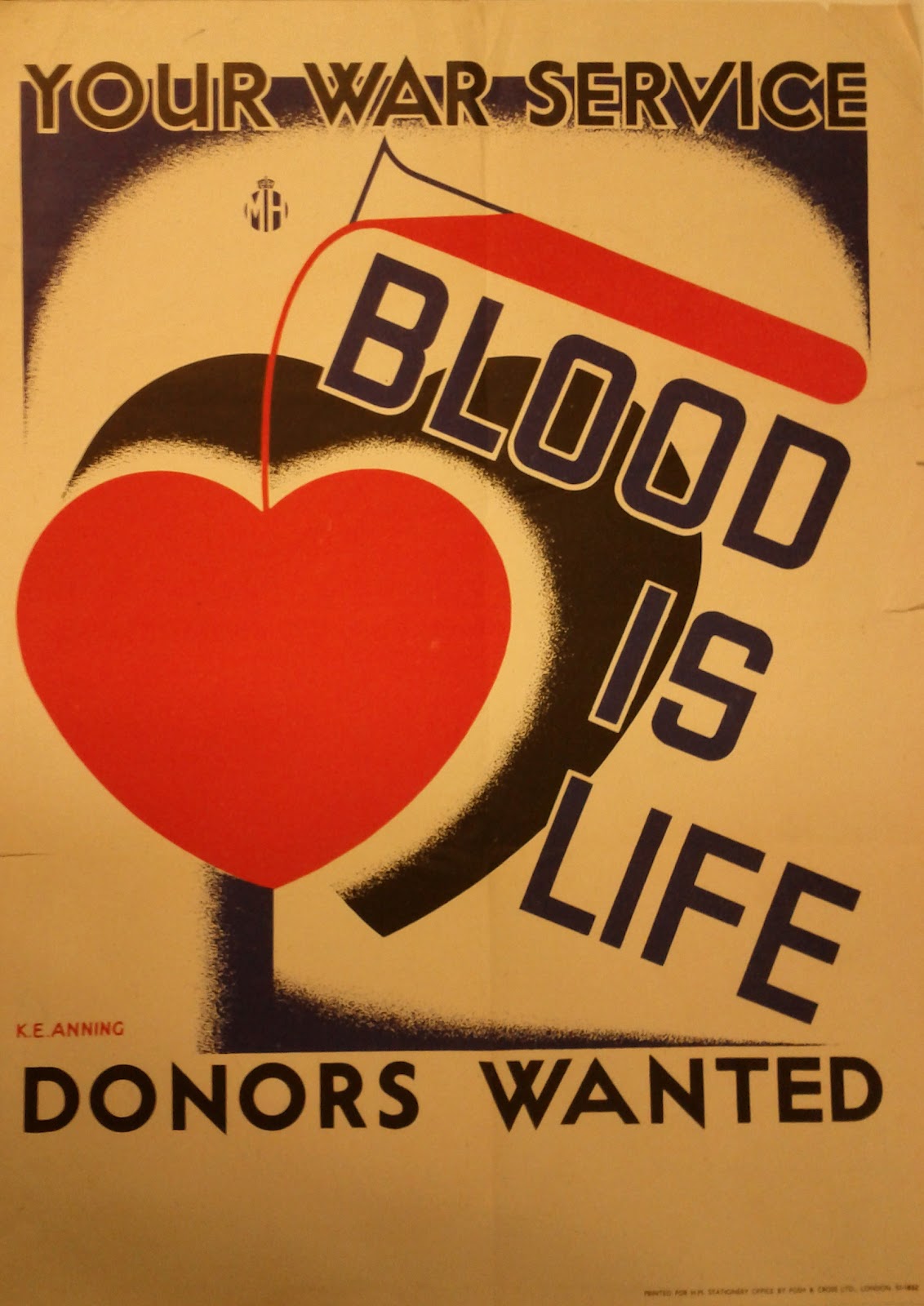
The Wellcome Library has acquired a collection of 600 British posters dating from the 1940s to the 1990s advertising the health-maintenance activities of the British state. Most were produced by the Central Office of Information for the U.K. Ministry of Health (subsequently Department of Health and Social Security, subsequently Department of Health).

The posters cover the following subjects: Blood donation (135); Children (44); Diseases (121: AIDS, asthma, colds and flu, diphtheria, epilepsy, meningitis, rabies, rubella, tetanus, tuberculosis); Drugs or narcotics (53); National Health Service services and charges (80: ambulance service, cervical screening, community care, emergency GPs, evaluation, fares to hospital, NHS 30th anniversary, prescription charges, spectacles); Nurses and midwives (87, including recruitment, Queen's Institute of District Nursing, etc.); Organ donation (44), Travel and health (8); and Miscellaneous (26: air-raids, disability, health and safety, health of the nation, hearing, incontinence, mental health, and teeth).

Proof pulls and storyboards are included as well as finished versions. Named designers include Reginald Mount, K.E. Anning (above), and Abram Games.

The posters are accompanied by a large collection of photographs, drawings, etc. which have not yet been explored, except for one item, a photograph album (Wellcome Library no. 811058i) recording an exhibition from 1948 called Health of the People. This exhibition was put on by the Central Office of Information in Oxford Street, London (but where in Oxford Street?) apparently to publicize the introduction of the National Health Service (NHS) in that year. On display from May to June 1948, the exhibition was an ambitious attempt to communicate the history of public health and the difference that the NHS would make between the past and the future. Much attention was given to new laboratory-based services.

The photographs makes it look like a halfway-house between Britain can make it at the V&A in 1946 and the Festival of Britain on the South Bank in 1951. No names of contributors (commissioners, writers, designers, manufacturers) are given, but surely they must be recorded somewhere; possibly in the unexplored parts of this same collection. The script which accompanies the album makes much reference to the Public Health Act of 1848, the centenary of which was being celebrated.

Did this period see the high-water mark of state involvement in health in the British Isles? If so, our successors will no doubt look on these documents with incredulity. Only time will tell. 
Displays in the Health of the People exhibition, 1948. Left, "the health team, consisting of the family doctor, dentist, nurse etc". Above, stands on protection of towns, water supply etc. Top, the staircase between floors.

Tuesday, February 28, 2012

Portrait of a lady in Nizamabad: Isabel Kerr. Wellcome Library Item of the Month.

Photograph by G.M. Kerr, 1926. Wellcome Library no. 726380i.
This photographic print is one of the apparently few and elusive portraits of Isabel Kerr (1875-1932), a Methodist missionary who founded the Victoria Treatment Hospital for people with leprosy at Dichpali, near Nizamabad in the state of Andhra Pradesh in India.

Born Isabel Gunn, she had graduated MB ChB at Aberdeen in 1903, and arrived in India with her husband, the Rev. George McGlashan Kerr, in 1907. They noticed the frequency of leprosy and the unsatisfactory treatment of its victims, and having resolved to do something about it, received a donation of 10,000 rupees (£590) from a citizen of Nizamabad, Narsa Gowd, towards a leprosy hospital. In 1913 a gift of 60 acres of land at Dichpali (also called Dichpalli), a village ten miles down the railway line from Nizamabad to the city of Hyderabad, was received from the Nizam of Hyderabad. With further funds from Narsa Gowd and others, the hospital opened on 18 April 1915. [1]

The hospital expanded rapidly owing to demand, and by 1921 it consisted of 120 buildings. Further buildings were added in 1923 when the Minister of Finance of Hyderabad, A. Hydari (later Sir Akbar Hydari) opened more new buildings, again paid for by the Nizam. The running costs from 1910 to 1944 were subsidised by the Mission to Lepers, from 7 Bloomsbury Square, London (since 1965 known as The Leprosy Mission).

In 1920 Isabel Kerr adopted the treatment using oil of the chaulmoogra tree, which she learnt from Ernest Muir in Calcutta. It is presumably a chaulmoogra injection (excruciating for the patient) that is shown in the photograph. An Indian variation of the treatment used the related hydnocarpus plant, which was cultivated along with cinchona in the Nilgiri hills.

At Dichpali there was no shortage of patients, but in too many cases they were the wrong kind for treatment. The Rev. G.M. Kerr described how, in the early stage, when the disease was infectious and treatment would be most effective, patients would hide their symptoms. Only much later would they go for treatment, when the hydnocarpus oil could do nothing to undo the mutilations caused by the bacillus decades previously. Kerr compared the treatment-after-the-event at Dichpali to a clifftop where people were in danger of falling off: it would be better to install a rail at the top than a casualty station at the bottom. To encourage people to be treated in the early stages of leprosy, the Kerrs therefore opened an outpatient clinic in Hyderabad in 1928, with the desired effect: "Students from the colleges, clerks from their offices, and Government officials from their posts" all flocked to the clinic. [2]

A second photograph in the Wellcome Library (below) shows yet another foundation-stone laying ceremony, this time in 1935.
The foundation stone was laid this time by Amena, Lady Hydari. By this time Isabel Kerr had died: she died in 1932, aged 57. [3] The Rev. George McGlashan Kerr continued to run the hospital after her death, until his retirement to Scotland in 1938. His archive including three photographs is in Edinburgh University. He died in 1950.

Isabel Kerr was described as "modest, shy and diffident, and reluctant to speak in public". Hence no doubt the lack of photographs of her: the opposite of the much-portrayed Albert Schweitzer, renowned for his skilful use of publicity.

As a Methodist, Isabel Kerr was doubtless familiar with, and motivated by, the words of John Wesley (1703-1791), the founder of Methodism:

"Do all the good you can. By all the means you can. In all the ways you can. In all the places you can. At all the times you can. To all the people you can. As long as ever you can."


[1] Dermott Moynahan, The story of Dichpalli, London: The Cargate Press, 1949, is the source for most of what is written here. It is a revision of his earlier book The lepers of Dichpali, London: The Cargate Press, 1938. In the earlier edition but not in the later, the present photograph of Isabel Kerr is reproduced with legend "Dr Isabel Kerr giving an injection" (facing p. 28) 

[2] Rev. G.M. Kerr, 'Tackling a great social problem: the fight with leprosy', The foreign field (of the Wesleyan Methodist Church), April 1926, pp. 155-158 

[3] Her obituary in The Lancet reads as follows (in its entirety). "Isabel Kerr, M.B. Aberd. The death is reported from Dichpali, the Leper hospital settlement outside Nizamabad, of Dr. Isabel Kerr, the Scottish medical missionary, who has made this institution the outstanding centre in South India for the treatment of leprosy, and for training in diagnosis and treatment. Born at Fochabers-on-Spey in 1875, she graduated in medicine at Aberdeen in 1903, and went to India with her husband, the Rev. George M. Kerr, who is superintendent of the Wesleyan Mission Station at Nizamabad. She had charge for 12 years of the mission hospital there until the foundation of the Dichpali Home, where husband and wife have worked devotedly ever since. In 1923 she was awarded the Kaisar-i-Hind gold medal in recognition of her services." (The Lancet, 31 December 1932, pp. 1460-1461) 

Portrait of John Wesley: mezzotint by J. Faber after J. Williams, 1743. Wellcome Library no. 9621i.

Thursday, December 1, 2011

HIV/AIDS at 30: Spreading the Word

To mark World AIDS Day (1 December) this year, BHIVA (the British HIV Association) held a World AIDS Day Event in collaboration with the Wellcome Trust on the theme HIV/AIDS at 30: Back to the Future. 2011 is the thirtieth anniversary of the first description of AIDS -- a milestone in the continuing epidemic that has claimed the lives of millions of people worldwide. While reflecting on the experiences and work of the past 30 years, eminent speakers reviewed today's challenges, and looked ahead to consider how the knowledge of the past will inform future strategies.

One aspect of the epidemic that was considered was the way in which health authorities, activists and charities around the world have tried to prevent its spread by publicity, including posters. The Wellcome Library now has over 3,200 AIDS posters from many countries. The exhibition Spreading the Word: AIDS Posters from Around the World is a selection of 24 posters chosen and interpreted by Dr Sarah Graham of Leicester University, and shown earlier this year at the New Walk Museum in Leicester.


The posters emphasize the range of graphic techniques adopted and the variety of ethnic and social groups at which they were directed. Spreading the Word was also on display today at the BHIVA/Wellcome Trust meeting (left) and was much appreciated by those attending.

The latest AIDS poster to enter the Wellcome Library catalogue (right) must be one of the most allusive and discreet in the entire collection. It was published on World AIDS Day in 1994 by UNESCO in Paris, for Hispanic populations in which drug use was a source of transmission of the virus. Unlike the crashingly explicit posters (mostly from Germanic and Anglo-Saxon countries), it refers to open discussion within the family and use of counselling to help drug users, with no obvious indication to the casual passer-by that its end-purpose is to save them from contracting HIV through needle re-use.

Among the work publicised at the conference was a recent volume in the series Wellcome Witnesses to Twentieth Century Medicine, which was published in November 2011. It concerns the controversial National Survey of Sexual Attitudes and Lifestyles (NATSAL) which was launched in 1990. "A proposal that the UK Department of Health would fund it, after scientific scrutiny by the Economic and Social Research Council, was vetoed at government level – some say by Mrs Thatcher herself – on the grounds that this would be an unacceptable intrusion into private lives. This decision hit the headlines (first in The Sunday Times), as did the decision, some four weeks after the story broke, by the Wellcome Trust to step in and fund it instead. There is a similar story to be told of obstruction from the Bush White House,which forbade funding from the National Institutes for Health (NIH) for the American survey" (pp. xxi-xxii).

The phrase "some say by Mrs Thatcher herself" is backed up on p. 67 by a separate statement in the book (Appendix 3, pp. 66-68) by Dr Peter Williams, Director of the Wellcome Trust at the time, who received that account of events in a phone call from the Chief Medical Officer, Sir Donald Acheson. A note by Professor Virginia Berridge (p. 61) suggests that the reality behind the scenes may have been more complicated, but that at any rate Downing Street was happy to go along with the veto. More of the raw materials for this episode are set out in the volume, in the usual Witness Seminar manner: the spoken memories of people who were involved in the events at the time, provided with scholarly commentary and often with competing points of view. It makes compulsive reading. It is available in hard-copy from booksellers and Amazon, and available free of charge on the web as a PDF. [2]

[1] Overy C, Reynolds L A, Tansey E M. (eds) (2011) History of the National Survey of Sexual Attitudes and Lifestyles. Wellcome Witnesses to Twentieth Century Medicine, vol. 41. London: Queen Mary, University of London. ISBN 978 090223 874 9

[2] http://www.history.qmul.ac.uk/research/modbiomed/wellcome_witnesses/index.html

Wednesday, October 19, 2011

Louis Wain in Willesden

Amidst the much-publicised closing-down and boarding-up of some of the public libraries in the London Borough of Brent, there has been a cheering event from Brent Archives and Museum at Willesden Green Library Centre: their exhibition of works by the painter of cats, and sometime psychiatric patient, Louis Wain (1860-1939), who resided on Brondesbury Road in Kilburn (now in the borough of Brent) before his confinement in a series of asylums. The exhibition Communicating through cats: the art and mind of Louis Wain ends on Saturday 29 October 2011 (open Mon.-Sat. 10-4). It contains a good cross-section of Wain's anthropomorphic pictures of cats –- bicycling, cricketing, tea-drinking and so on.
Among the rare and remarkable works on display are two large mirrors painted by Wain for his fellow-patients at Bethlem Hospital at Christmas times (one shown above left), lent by the Bethlem Art and History Collections Trust.

No less surprising are examples of ceramic cats designed by Wain as Cubist pastiches. Their rarity may be explained by the unconfirmed story that the stock of them was sunk by a German torpedo on a cross-Atlantic crossing. Marine archaeologists of the future who are not familiar with Wain will have great difficulty in identifying these works, with their unusual combination of Cubist, Egyptian and Art Deco associations. These two examples are on loan from Chris Beetles Gallery.

Wain also knowingly applied historical and fanciful styles to his paintings, a fact which led a psychiatrist writing in a national newspaper to misinterpret them as evidence of psychosis: the story is well set out in the exhibition. That interpretation is however still accepted by some. [1]

Two drawings from the archives of a psychiatrist, Noel Gordon Harris (1897-1963), are lent by the Wellcome Library.
They are impressively displayed in a showcase to reveal a typically mysterious inscription on the verso of one of them, spoken by a smiling cat: "I have more mouth than I want to open, but don't look, it is very dark inside. But I will send you a pretty message from it." That sums up the title of the exhibition, as interpreted in Wain's idiosyncratic manner. Communicating through cats is simultaneously humorous and sinister. An approachable and rewarding exhibition.


[1] Terry Castle, 'Do I like it?', London review of books, 28 July 2011, pp. 19-23

Tuesday, October 11, 2011

Wellcome Library Insight: Nourishing the Nation


Think Jamie Oliver's campaigns are new initiatives? This week's free Wellcome Library Insight session - 'Nourishing the Nation' - may make you think again.

Drawing on archives and illustrative materials from our collections, the event will explore the work of the medics and scientists who helped shape and publicise nutritional knowledge in the 20th century.

From the ‘Bran Gang’ and debates over the evils of highly refined foods, to the growth of the modern ‘nutrition media’ in all its complexity, trace the roots of our current anxieties over what is and isn’t good to eat.

The event takes place at 3-4pm this Thursday (13th October) and is part of our current Recipes and Remedies season. The session will also includes time for you to view documents and archives from the Wellcome Library’s special collections.

For more information on attending, see the Wellcome Collection website.

Image: Advertisement for Simpsons Fish Dinner at the Three Tuns, Billingsgate Market, London

Saturday, October 8, 2011

How much medical history do you pass every day?


Every day I walk to my local station to catch the train to work. Every day I pass a plaque on the station wall commemorating an event which has historical significance. And every day I ignore it.
On 8 October 1952, 112 people lost their lives and 340 people were injured in the worst peacetime rail accident in Great Britain. Three trains were involved in the collision, which accounts for the very high loss of life (1) (2).

So why should this terrible accident be of interest to the medical historian? Because this was the first time the triage system for assessing casualties was used in the UK:
“By modern standards the fire and ambulance services were hopelessly inadequately equipped, and were untrained to keep trapped people alive. All that could be done was a little bandaging and to take people to hospital as fast as possible. Edgware General Hospital learned of the crash when a commandeered furniture van arrived with walking wounded. Among those responding to the disaster were US teams from nearby bases, who were trained in  battlefield medicine. They were disciplined, brought plasma and undertook triage - sorting casualties into those needing urgent attention, those who could wait and those who were beyond help. It was a new experience for the rescue services;  they were amazed and full of admiration.” (3)
Contemporary issues of the British Medical Journal, and the Lancet, available in the Wellcome Library, talk about the efficient use of the triage system (4) (5), discuss how to deal with such a large-scale disaster (6), and touchingly allow thanks to be given to all who helped in the aftermath (7).
When I do stop and think about this event it is quite sobering. This is partly due to the large loss of life and number of casualties, but also because it happened just at the time of day when I’m getting on my commuter train to Euston. And what other history am I missing as I go about my usual routine?
It also makes me wonder if there’s something harrowing about Harrow. Harrow-on-the-Hill is the site of the first fatal motoring accident in Great Britain (8). But that’s another medical history story…

References

Friday, September 30, 2011

Max Klinger at Dresden in 1911: Wellcome Library Item of the Month


1911 was a bumper year for exhibitions. In London there was the Festival of Empire and Imperial Exhibition at the Crystal Palace. In Turin there was the Esposizione Internazionale delle Industrie e del Lavoro. At the Hague in September there was the Drankweer tentoonstelling (Anti-alcohol exhibition) at the 13th International Congress against Alcoholism. There were many others. Far bigger than any of those mentioned, however, was the international hygiene exhibition in Dresden: the Internationale Hygiene-Ausstellung.

For those who are more familiar with the Wellcome library and museum collections, the best way of describing the Dresden exhibition is to say that the Dresden exhibition makes the exhibitions of those Wellcome collections look small. The catalogue of the historical section at Dresden alone (the equivalent of the handbook of the Wellcome Historical Medical Museum, 1913) has 600 pages and lists 20,394 exhibits. [1] The section on amulets alone contains 1,212 items (pp. 375-399). Qualitatively, on the other hand, there were many similarities and links between the two enterprises, which deserve fuller study. Wellcome-watchers will find many familiar names in the Dresden catalogue: to name but three, Eugen Holländer, Edward Lovett, and Ernest Wickersheimer are listed among the lenders to Dresden, and the photographs of the displays there show many resemblances to Wellcome’s first exhibitions in Wigmore Street, London. For instance the collections exhibited included such subjects as housing, bathing, clothing, and childcare: in both institutions, hygiene was defined as preventive medicine practised in the context of evolutionary anthropology. (Of course the Wellcome collections would later grow much larger, but as the holdings expanded, the exhibitions contracted.)

The committee of honour at Dresden included the Berlin museum director Wilhem von Bode; Hermann Diels, who gathered the fragments of the pre-Socratic philosophers and tracked down the manuscripts of Galen and Hippocrates; and the most famous Greek scholar of the day, Ulrich von Wilamowitz-Moellendorf. The president of the historical section was Karl Sudhoff, Director of the Institute for the History of Medicine at Leipzig.

Also contributing to the exhibition was the artist Max Klinger (1857-1920). He will perhaps be known to many through his sequence of etchings The Glove (1879-1881), which might be described as a fetishistic psychodrama (image above from the British Museum). At the Dresden exhibition Klinger exhibited a larger-than-life-sized bronze sculpture of an athlete, and was commissioned to make a large etching on the theme of hygiene to present to VIPs who had helped with the exhibition.

Here is Klinger’s etching (left: Wellcome Library no. 24236i), which he completed in 1912. How to interpret it? The giant can perhaps be seen as a symbol of the struggle for hygiene and sanitation. He has lifted a group of people up above the tumultuous world of nature: they dance and recline in an Italianate landscape, enjoying the delightful consequences of hygiene for all. The warring male figures below may symbolize the people and circumstances which work against hygiene. The three streams of water represent nature channelled into forms conducive to human life.

There is also a racial distinction. The beneficiaries of hygiene, who have learned to master the forces of nature, and are raised up into the sunshine of life, are conspicuously white. The savages in the river, who misguidedly attack the forces of hygiene, are prominently black. They are not dancing among the poplars, but rampaging with harpoons in an unruly river bordered by dark and threatening forests. Nor do they appreciate the three streams of pure clean water that flow from the Europeans’ water jars.

Nothing about this is particularly surprising. Germany had extensive colonies in Africa, the maintenance of which required training and research in many aspects of hygiene. The print may also be compared with the section on racial hygiene in the exhibition. The catalogue of that section, by Max von Gruber and Ernst Rüdin (both of Munich, the former a hygienist and the latter a psychiatrist) is a monograph on eugenics, with an impressive number of charts, graphs and family trees, and a bibliography on heredity, genetics, extinction, population trends, degeneration, and social aspects of hygiene. [2]

It is however remarkable that the Wellcome Library has two impressions of this large and apparently rare etching. One (shown above) was presented to Dr (later Sir) Frederick Walker Mott FRCP, FRS (1853-1926). Mott (portrait right: Wellcome Library no. 15290i) was a neuropathologist, working both in asylums and in academia (at Birmingham University), who is said to have established the syphilitic origins of "general paralysis of the insane". In Mott’s copy of Klinger’s etching, his name is inscribed at the bottom of the plate in the same colour ink as the etching itself, so that it appears to be part of the etching. The other impression (in the Wellcome Foundation archives in the Wellcome Library) was awarded to the "Wellcome Research Laboratories in London", and the name of the recipient is handwritten in grey ink (the rest of the etching is in black). Presumably the Wellcome laboratories had lent items to the exhibition.

Klinger's etchings up to 1909 were catalogued by Hans W. Singer, and those after 1909 by Carl Beyer, but Beyer's work does not appear to have been published. It is a typescript of which a copy is in the library of the Kupferstichkabinett, Staatliche Museen zu Berlin. [3] The hygiene allegory is no. 416 in Beyer's catalogue, and the Wellcome impressions are of the fourth and final state of which 100 impressions were made. A century later, how many survive from the other ninety-eight? And to whom were they awarded?

[1] Historische Abteilung mit ethnographischer Unterabteilung. I. Historische Abteilung. 2. verb. und illustrierte Aufl., Dresden: Internationalen Hygiene-Ausstellung, [1911]. Wellcome Library catalogue record here.

[2] Fortpflanzung, Vererbung, Rassenhygiene: Katalog der Gruppe Rassenhygiene der Internationalen Hygiene-Ausstellung 1911 in Dresden. Herausgegeben von Max von Gruber und Ernst Rüdin; ... Abbildungen von M. v. Gruber; nebst einem bibliographischen Anhang von Rudolf Allers, München: J. F. Lehmann, [1911]. Wellcome Library catalogue record
here.

[3] Carl Beyer,
Max Klingers graphisches Werk von 1909-1919: eine vorläufige Zusammenstellung im Anschluß an den Oeuvre-Katalog von Hans W. Singer. Many thanks to Dr Alexander Dückers for information about Beyer's work.

Newly available: Papers of the World Federation of Occupational Therapists

The Wellcome Library acquired the papers of the World Federation of Occupational Therapists (WFOT) in 2010. The collection has recently been catalogued in detail and is now available for consultation (SA/WFO).

Occupational therapists are health and social care professionals trained to help people who have difficulty carrying out their daily activities or occupations independently as a result of physical or mental illness, disability, developmental conditions or social exclusion. Thus, occupational therapists work with people from across the age spectrum.

The occupation stands apart from other more mainstream scientific health disciplines in that it often deals with disorders caused by a combination of factors including biological, social and economic.

The modern health profession of Occupational Therapy was conceived in the early 1910s and the subsequent world wars saw a rapid development of the profession in terms of training and practise. This was in response to the mass scale of injury and the need for subsequent rehabilitation.

The WFOT archive provides a valuable insight into the birth and subsequent growth and evolution of this international association and of the profession between 1951 and 2007.

The papers cover the administrative history, management structure and activities of the Federation primarily through various committee reports and minutes of meetings. It also reflects the development of the WFOT through growth in membership and matters related to education of occupational therapists in member countries which was at times a challenge for some national associations with limited resources.

The collection includes a wealth of contemporary clinical information. This is primarily through sources such as papers presented at International Congresses (held every 4 years); newsletter articles on topical issues contributed by national associations on a rotational basis; and study courses held at the International Congresses. The study courses provided a means of continuing education for qualified occupational therapists.

There are also publications by the Federation which provide information on the vocation of Occupational Therapy for the public as well as guidance for members on important practical issues such as employment requirements in different countries and a code of ethics.

Membership of the WFOT grew to represent associations from 76 nations (in 2011). The collection, therefore, gives fascinating insights on the challenges faced by occupational therapists working in different countries and continents with widely varying occupational health issues ranging from multiple sclerosis to educating disabled children.

Of particular interest are the oral and poster presentations given at the International Congresses. They demonstrate the methods used to deal with a range of conditions, often using new technologies and research and in response to a rapidly changing world. As an example, presentations at one congress could vary from ‘Children who witness violence: consequences and implications for occupational therapists’, in response to the conflicts in Bosnia, Northern Ireland, and Israel; to ‘High–tec solutions for individuals with physical and visual impairments’, a review of hardware and software adaptations such as voice recognition to aid physically and visually impaired individuals (see 12th International Congress, Montreal, Canada, Book of Abstracts, SA/WFO/B/12).

Historians of occupational therapy may also be interested in the book A Chronicle of The World Federation of Occupational Therapists written by Alicia Mendez, a former president of the WFOT. The book provides an informative overview of the federation’s development particularly in the sections on Council Meetings and the workings of the Standing Committee. Each decade (between 1952-1982) saw different phases of expansion: the 1950s were a formation and foundation era; the 1960s saw a rapid growth in membership and the 1970s and early 1980s were marked by progress in professional skills and knowledge. Colour is added to Mendez's writings by use of anecdotal material and personal memories (see SA/WFO/G/12).

The WFOT archive interlinks with other material held by the Wellcome Library, particularly on disabilities, health education, social medicine and mental health.

Image: Care for the community. Illustration of medical care in a neighbourhood (Credit: Neil Webb / Wellcome Images B0007074).

Author: Sejal Shah

Monday, July 25, 2011

Sightings of Cayley Robinson in Florence, Paris and Cheltenham

Visitors to the Wellcome Library see in the entrance hall four paintings of the Works of Mercy by Frederick Cayley Robinson. They are allegories embedding the oppositions within themes relevant to the historic mission of hospitals: institutions and individuals, children and adults, interiors and exteriors, civil and military, night and day, etc. They were previously in the Middlesex Hospital in London, and are remembered with affection by many staff members of the hospital and visitors.

Orphans 1, one of the Works of Mercy by Frederick Cayley Robinson, 1915. Wellcome Library no. 672831i.

Cayley Robinson's pictorial ideas were much enriched by his studies abroad. We have a glimpse of him in Florence in Bernd Roeck's book Florence 1900: the quest for Arcadia. [1] As Roeck points out, Florence in 1900 was of importance as an artistic centre as much for its visiting foreign artists as for its natives. "We should at least mention the three visits that Degas paid to the city, the presence of Maurice Denis during the winter of 1893-4, and the extended visit by the English symbolist Frederick Cayley Robinson, who lived in Florence between 1898 and 1902, engaging chiefly with the work of Giotto, Mantegna and Michelangelo." Other artists mentioned include Max Klinger, who established the Villa Roxane (home to Max Beckmann, Käthe Kollwitz and Gustav Klimt), and Arnold Böcklin, who lived in Florence and Fiesole for almost two decades. A painting by Cayley Robinson, The Kingdom of the Past in the Fitzwilliam Museum, Cambridge, shows his familiarity with Böcklin's Island of the dead or with Klinger's etching of it. [2]

*******


Cayley Robinson is mentioned, in passing and more unpredictably, in the autobiography of the radical campaigner Havelock Ellis (1859-1939), where he appears in a completely different role: as landlord. In 1903 Edith, Mrs Havelock Ellis, "arranged with the artist Cayley Robinson to take his flat in an ancient house on the Quai [de] Bourbon in the Ile Saint Louis in Paris for month of June." [3] Cayley Robinson had been a student in Paris, and after leaving Florence evidently used a pied-à-terre in that attractive street near the cathedral of Notre Dame (above).

*******

On Thursday 28 July 2011 the auction firm of Chorley's at Cranham, near Cheltenham, will offer for sale a modello (above) by Frederick Cayley Robinson for the Orphans, one of the four paintings in the Wellcome Library . It comes from the accumulated collection of Tony Haynes, a Gloucestershire art-dealer. The modello (lot 359 in the sale) is signed and dated 1914 in the lower left corner, the same place in which the finished version is signed and dated 1915. Measuring 65 x 111 cm., it is on a scale of 1:9 compared with the area of the finished version (199 x 339 cm.).

As might be expected of a modello on this scale, the composition is completely worked out. To work out the composition, Cayley Robinson will have already painted studies on a smaller scale: there is a smaller study for the Orphans, measuring 21.6 x 37.5 cm., i.e. 1:9 again compared with the Haynes modello, or 1:81 compared with the area of the finished version. This small preliminary study in tempera formerly belonged to the parasitologist G.H.F. Nuttall (1862-1937), whose collections of photographic prints and lantern slides, aesthetically rather different from Cayley Robinson, are also in the Wellcome Library (example right: a Kentucky family of "dirt-eaters" with hookworm, Wellcome Library no. 750040i). [4]

The Haynes modello might have been painted for the approval of the patrons, Edmund Davis and the Governors of the Middlesex Hospital. It is inscribed on the verso in what looks much like the artist's hand, though, oddly, the inscription spells his name wrongly (Caley: left, from Chorley's website). As this composition is for many people their favourite among the four pictures, there must be a fair chance of the modello reaching its lower estimate of £6,000.

[1] Bernd Roecke, Florence 1900: the quest for Arcadia, Yale University Press 2009, p. 199; translation of Florenz 1900: die Suche nach Arkadien, Beck 2001

[2] Jane Munro, Chasing happiness: Maurice Maeterlinck, the Blue bird and England, Fitzwilliam Museum 2006, pp. 51-52

[3] Havelock Ellis, My life, London: Heinemann, 1940, p. 337

[4] Frederick Cayley Robinson, A.R.A., 1862-1927, Fine Art Society 1977, no. 50

Thursday, March 31, 2011

Cardiac history roundup

The photograph above, dated 1931, portrays the cardiologist Edward Franklin Bland. Born in Virginia in 1901, Bland spent most of his career at the Massachusetts General Hospital (MGH), where he was an Intern, House Officer, Cardiac Fellow, and finally in 1949 Chief of Cardiology, a post he held until his retirement in 1964. The photograph was kindly presented to the Wellcome Library by Dr Arthur Hollman FRCP, the biographer of Sir Thomas Lewis: Dr Hollman had acquired it as a result of the fact that in 1930 Bland had spent a year on research in Lewis's laboratory at University College Hospital (UCH) in London. [1]

As a result of Bland's year with Lewis, the Wellcome Library has in its Thomas Lewis archive (PP/LEW) a letter from Lewis to Bland dated 25 March 1933. Lewis thanks Bland for submitting a paper to the journal Heart (edited by Lewis) but has to decline it because Heart was about to be replaced by a new journal Clinical science. Lewis advises Bland to "cut out a lot of stuff about coronary anomalies" because it "doesn't really give anything new": coronary anomalies were a special interest of Bland, and one of them is named Bland-White-Garland Syndrome after him, his former colleague at MGH Paul Dudley White, and Joseph Garland, who was a visiting physician at MGH while editor of the New England Journal of Medicine (and himself the owner of a congenital cardiac anomaly).

Lewis then goes on to offer for Bland's consideration a view which, in its teleological phrasing, could mutatis mutandis have been written by Galen. Explaining why, if arterial blood is not available, the myocardium clutches at straws by accepting venous blood as being better than nothing, Lewis says "In these cases Nature performs an experiment on the effects of supplying the heart with venous blood. Now in cases of occlusion of the coronary arteries, the heart is thought by some to be supplied by the Thebesian vessels [named after their discoverer Adam Christian Thebesius (1686–1732)]. The Thebesian vessels open chiefly into the right heart so that if the myocardium is supplied through these vessels it is being supplied chiefly with venous blood." Lewis does not elaborate further.

Finally in this letter Lewis refers to a forthcoming visit by Bland, who must have been about to return to the UK in 1933: "I will talk about them when I see you in a few weeks. We are looking forward to that very much. It is good of you and Jones to drive us about the country." Jones was possibly T.Duckett Jones, Bland's co-author in several papers on the heart disease rheumatic fever. Evidently Bland and Jones had offered to act as chauffeurs to Sir Thomas and Lady Lewis in exchange for Sir Thomas's gifts of physiological wisdom.

♥♥♥♥♥♥♥♥♥♥♥♥♥♥♥♥♥♥♥♥♥♥♥♥
One of the puzzling things about heart transplantation from an outsider's point of view is the sudden emergence to world-wide fame of the previously obscure Dr Christiaan Barnard. Today, he is probably the only transplant surgeon whose name is widely known, yet when experts talk about the history of transplantation, names of other great figures tend to be mentioned, such as Norman Shumway, Roy Calne, Thomas E. Starzl, and Denton A. Cooley. These worked in international centres of surgical research such as Stanford University in California; Houston, Texas; or Cambridge, England — while the man who beat them to the goal and outshone them all in the public mind was apparently a relative outsider: Barnard, working at the University of Cape Town (above) under the pressures of the apartheid regime of the time. How did that happen?

The recent history of Groote Schuur Hospital by Anne Digby and others [2] shows that research at Groote Schuur had developed after a slow start in the 1950s and flourished until the 1980s, though bedevilled by government policies: in the 1960s and 1970s black students were not allowed to cross the corridor which separated the wards for black patients from the white wards. It really was Barnard's first transplant operation on 3 December 1967 which put the hospital on the international map.

The background to these events is presented in a vivid lecture given on 25 January 2011 by Dr. David Cooper to the C.F. Reynolds Medical History Society at the University of Pittsburgh. The lecture has been made available on the internet by Dr John Erlen at the School of Medicine, University of Pittsburgh. [3] Dr. Cooper was a surgical associate of Barnard and evidently knew him well. As Cooper shows, there were other names as well, notably "the great John Lewis" (whose achievements in the field went unrecognized) and James Hardy of University of Mississippi at Jackson. Still, Barnard had had the idea of a full human heart transplant in his head for a long time (as Cooper shows from a chance remark made by Barnard early in their acquaintance, while talking about the inadequate treatment a heart patient was receiving). As a result, when he did carry it out, he was remarkably casual about it, showing that he had gone over it in his mind many times without telling anyone. Contrary to legend, Cooper shows that the procedure (apart from a bad patch in the 1970s) was usually very successful in prolonging the lives of patients.

It's a long way from the work of Edward F. Bland, though there is a connection: Barnard developed his techniques of cardiac surgery in the Tetralogy of Fallot, one of those anatomical anomalies that Bland was so interested in. Bland did live to see the establishment of transplantation: he himself must have been blessed with a good heart, for he died in 1992 at the age of 91.
♥♥♥♥♥♥♥♥♥♥♥♥♥♥♥♥♥♥♥♥♥♥♥♥

The history of the Knights of Malta (Knights of Rhodes, Knights Hospitallers, Knights of St John) was one of the interests of the founder of the Wellcome Library, Henry S. Wellcome. He acquired a substantial archive of their papers in Paris in 1933 (subsequently returned to Malta), and several iconographic documents, most notably this painting by Antoine de Favray. In recent years the Knights have focused their medical activities on specific fields such as refugees, people with leprosy, and – most conspicuous in Great Britain -- emergency services: their British outcrop St John's Ambulance is a familiar presence at crowded events such as football matches, gigs and royal weddings.

One of their contributions to emergency medicine was a campaign in France in the 1960s called "Don du souffle" (Gift of breath). Judging from this poster (above: Wellcome Library no. 744037i) which sports the Cross of Malta in the top right corner, it was intended to educate the French public in the possibilities of cardiac resuscitation. The heart — a small organ normally enveloped by the larger lung — is here brought into the foreground, being presented as a red berry on the green leaf of a single lung which folds out from the trachea. Highly stylised anatomy, of course, but all in the aid of saving lives by drawing attention to what can be done with the heart and lung.

[1] Memoir of Bland: http://www.ncbi.nlm.nih.gov/pmc/articles/PMC2376608/pdf/tacca00084-0039.pdf

[2] Anne Digby and Howard Phillips with Harriet Deacon and Kirsten Thomson, At the heart of healing: Groote Schuur Hospital, 1938-2008, Auckland Park, South Africa: Jacana, 2008, pp. xiii, 281-285

[3] David K.C. Cooper, 'Chris Barnard and the story of heart transplantation', URL: http://mediasite.cidde.pitt.edu/mediasite/Viewer/?peid=0934815fd4154df984f71032e0fe61d1. See also his book Open heart: the radical surgeons who revolutionized medicine, New York: Kaplan Pub., 2010