Showing posts with label public health. Show all posts

Tuesday, June 26, 2012

Guest Post: History of Healthcare Curriculum for Excellence Resource

In the following post, Dr Emma Newlands (Lecturer, University of Strathclyde) discusses the creation of a history of medicine web resource aimed at schools in Scotland
The History of Health and Healthcare Curriculum for Excellence Resource is a web resource devised by academics in the Centre for the Social History of Health and Healthcare at Glasgow Caledonian and Strathclyde Universities. Its aim is to deliver history of medicine materials to local schools, centred round the key themes of: infectious disease in the 19th century, disease in the developing world, occupational health, mental health, the rise of the NHS, and war and medicine.

The project began in 2011 with researchers at Strathclyde and Glasgow Caledonian working with local school teachers and archivists to determine what sorts of materials would fit into the Curriculum for Excellence scheme in Scotland. This aims to develop four key attributes -  successful learners, confident individuals, responsible citizens and effective contributors - through interdisciplinary learning.

The Wellcome Library’s collection of art, film, photographs and Medical Officer of Health reports proved to be an excellent source of information for the project and in August 2011 Rachel Meach undertook an internship in the Library with the task of mining the collection to identify resources that could be employed by teachers in the classroom. In particular, Sir John Simon’s reports on the health of the population of London during the mid-nineteenth century, provide excellent first-hand accounts of the public health issues facing urban populations during this period. Also, a film such as Hospitals for All, made by the UK Ministry of Health in 1948, teaches students about the beginnings National Health Service by focusing on three Scottish hospitals and their specialised departments.

With the website now live, the next stage in the Curriculum for Excellence project is to promote the resource through visits to local schools. None of this would have been possible without the help and advice offered by staff in the Wellcome Library. From all at the Centre for the Social History of Health and Healthcare and Glasgow, a huge thank you!

Image: View of the interior of a ward off the Bellahouston theatre, Royal Glasgow Infirmary (Wellcome Images, L0018637)

Author: Dr Emma Newlands

Friday, June 22, 2012

This is a public service announcement…

and some benefit will be gained by reading on… trust me. Yesterday I attended a programme of public health information films The Cinema of Disease held at the Open City Docs Fest, which is taking place in and around UCL 21st-24th June.


As a panel member, I had the opportunity to watch the films ahead of time and in fact it was no hardship to watch them again at the screening. They provided a fascinating journey with illustrations of the evolving production aesthetics of this genre. Science was in evidence and we all felt that we had learnt something we never knew (often with the benefit of imaging techniques using, for example, microscopy to make the hidden seen).

At the end, a lively discussion ensued facilitated by Claire Thomson, lecturer in Scandinavian Film & Head of Department; well do public information films have a role today? As of the 31st March this year, the coalition government closed down the Central Office of Information which became the successor to the war-time Ministry of Information in the UK. The UK-government appears to have no appetite to get involved in high profile health awareness. The devolution of healthcare means that we are more likely to seek health-care advice from the Internet. Fellow panel member Deenan Pillay (UCL Research Department of Infection) explained that clinical research in this area is moribund. In fact it was argued that greater public awareness has come from ‘seeding’ health messages within a less ‘high-brow’ context such as in soap operas – a good example of this was cited, having been scripted into the character of Mark Fowler in EastEnders; originally conceived no doubt to reflect the ‘real’ world but having a positive impact on awareness of this condition none-the-less. Cathryn Wood (Innovation Manager, DMI) added that this latter technique and the use of story, a narrative with an emotional hook, has proved instrumental in addressing maternal behaviour and infant mortality of 20% in some areas of sub-Saharan Africa.

Some health campaigns were remembered quite fondly, but there was a sense of unease around whether they were ever evidence-based; was the health campaign around HIV/AIDs; Aids Monolith, 1987 instrumental in changing behaviour? An example mentioned in the discussion, which did lead to changes in infant mortality; Life is a miracle, 1996 had a celebrity presenter, Anne Diamond, who was well known at the time and who gave added poignancy as she had lost her son to Sudden Infant Death Syndrome.

Public health information films are part of the conversation relating to health and well-being and part of the public understanding of science and biomedicine; it is an important part of the conversation. We have been digitising our moving image and sound collection to make this kind of material more freely available; films can be found in the Wellcome Film resource and on our YouTube channel - there are over 2000 subscribers and a growing number of lively comments to the films, particularly those relating to public health. Another port of call is the National Archives which has a selection of public information films online. There are many other online resources and I have taken the hard work out of sourcing these films by providing links so you can replicate the experience of watching the programme yourself.

You Have To Say It (On Doit Le Dire) O’Gallop / 1918 / France / 5’


Unhooking The Hookworm 1920 / USA /10’

[Mind Your Health (Beregi Zdorov’e) Aleksandr Medvedkin 1929 / USSR / 9’ this was not screened]

Preventing The Spread Of Disease 1940 / USA /10'


Tony Bacillus & Co. Colm O’Laoghaire / 1946 / Ireland / 6’


Surprise Attack Crown Film Unit / 1951 / UK / 10’


Unseen Enemies Michael Clarke / 1960 / UK / 27’
Unfortunately, no online copies are in evidence; a 16mm print copy is the Moving Image & Sound collection and can be viewed onsite. There may be a number of versions as the catalogue and programme state 1959/60; from memory, the date on the screening copy credits was 1974.


Author: Angela Saward

Tuesday, May 8, 2012

Wellcome Library Insight: Water-borne


A new Insight entitled 'Water-borne' debuts this week featuring a guest speaker from Wellcome Collection, Will Giller, who is plunging into the often murky waters of London's famous River Thames. Take a dip into the history of the benefits and hazards it has posed to local inhabitants in this richly illustrated talk.

The talk takes place on Thursday 10th May 3-4pm. Places are limited, free tickets can collected from the Information Desk after 1.30pm on the day.

Our popular Insight sessions offer visitors to the Wellcome Library an opportunity to explore the variety of our holdings. These free sessions are thematic in style, last around an hour and offer a chance to learn about our collections.

For further details, please follow the links above to the appropriate pages on the Wellcome Collection website.

Image: A boat capsized on the Thames leaving three ladies and four men swimming to the shore. Engraving. 1793. (Library no. 43063i)

Monday, April 23, 2012

Wellcome Library Insight: Get behind 'Good Health'


A new Insight talk this week entitled 'Good Health: Medicine and Modernism' tells the story behind our current lightbox exhibit 'Here Comes Good Health!'. Co-curator Alex Green reveals how the local London boroughs like Bermondsey adopted new technologies and strategies to persuade communities to become cleaner and healthier.

The talk takes place on Thursday 26th April 3-4pm. Places are limited, free tickets can collected from the Information Desk after 13.30hrs on the day.

Our popular Insight sessions offer visitors to the Wellcome Library an opportunity to explore the variety of our holdings. These free sessions are thematic in style, last around an hour and offer a chance to learn about our collections.

For further details, please follow the links above to the appropriate pages on the Wellcome Collection website.

Image: L0070009 Public Health cinema van, Bermondsey, 1937.Credit Southwark Local History Library Archive, Wellcome Images.

Tuesday, April 17, 2012

Health of the People -- British style

The Wellcome Library has acquired a collection of 600 British posters dating from the 1940s to the 1990s advertising the health-maintenance activities of the British state. Most were produced by the Central Office of Information for the U.K. Ministry of Health (subsequently Department of Health and Social Security, subsequently Department of Health).

The posters cover the following subjects: Blood donation (135); Children (44); Diseases (121: AIDS, asthma, colds and flu, diphtheria, epilepsy, meningitis, rabies, rubella, tetanus, tuberculosis); Drugs or narcotics (53); National Health Service services and charges (80: ambulance service, cervical screening, community care, emergency GPs, evaluation, fares to hospital, NHS 30th anniversary, prescription charges, spectacles); Nurses and midwives (87, including recruitment, Queen's Institute of District Nursing, etc.); Organ donation (44), Travel and health (8); and Miscellaneous (26: air-raids, disability, health and safety, health of the nation, hearing, incontinence, mental health, and teeth).

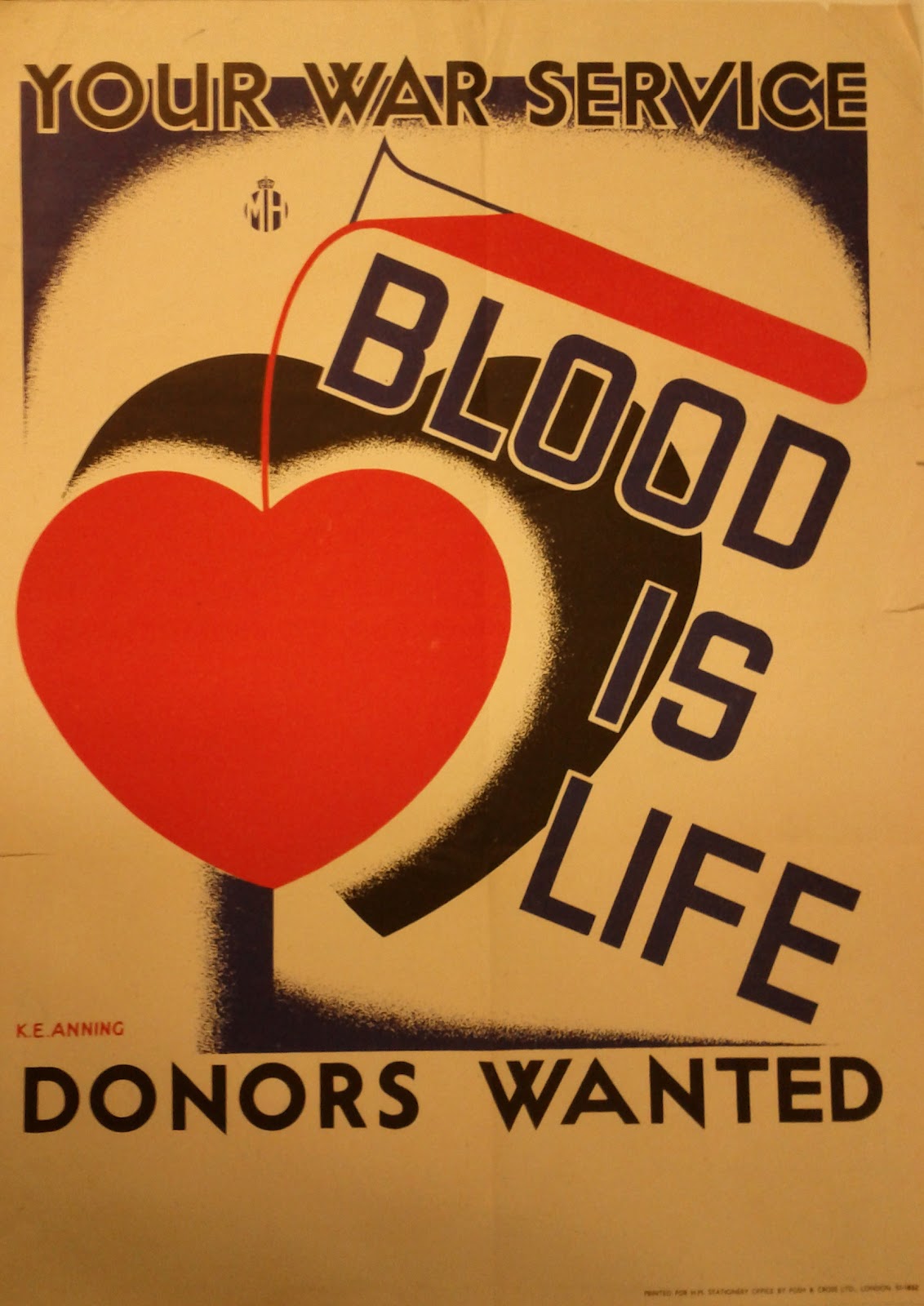
Proof pulls and storyboards are included as well as finished versions. Named designers include Reginald Mount, K.E. Anning (above), and Abram Games.

The posters are accompanied by a large collection of photographs, drawings, etc. which have not yet been explored, except for one item, a photograph album (Wellcome Library no. 811058i) recording an exhibition from 1948 called Health of the People. This exhibition was put on by the Central Office of Information in Oxford Street, London (but where in Oxford Street?) apparently to publicize the introduction of the National Health Service (NHS) in that year. On display from May to June 1948, the exhibition was an ambitious attempt to communicate the history of public health and the difference that the NHS would make between the past and the future. Much attention was given to new laboratory-based services.

The photographs makes it look like a halfway-house between Britain can make it at the V&A in 1946 and the Festival of Britain on the South Bank in 1951. No names of contributors (commissioners, writers, designers, manufacturers) are given, but surely they must be recorded somewhere; possibly in the unexplored parts of this same collection. The script which accompanies the album makes much reference to the Public Health Act of 1848, the centenary of which was being celebrated.

Did this period see the high-water mark of state involvement in health in the British Isles? If so, our successors will no doubt look on these documents with incredulity. Only time will tell. 
Displays in the Health of the People exhibition, 1948. Left, "the health team, consisting of the family doctor, dentist, nurse etc". Above, stands on protection of towns, water supply etc. Top, the staircase between floors.

Saturday, March 24, 2012

Item of the Month, March 2012: 'How the Department of Health of the city of New York is fighting tuberculosis'

To mark World TB Day 2012, we're travelling back to the United States at the turn of the 20th century to look at tuberculosis prevention in New York.

In 1882 Robert Koch announced his discovery of the tuberculosis bacillus, formally placing pulmonary tuberculosis (or consumption) among other communicable but preventable diseases. Responses to this varied. In New York the sanitary authorities didn’t make any major steps towards sanitary regulation and prevention using Koch’s work until 1894.
Hermann Michael Biggs (1859-1923), M.D. and from 1902, New York General Medical Officer, had initiated concerns and started a campaign to change the local approach to stopping the disease as early as 1887 when he was a consulting pathologist, urging notification, registration and surveillance of the disease as well as education of the public involving leaflets, press, exhibitions and lectures.  
These measures were all brought in eventually and disinfection was additionally suggested as a vital part of the campaign as well as free sputum analysis tests offered by the Dept. of Health’s bacteriological laboratory. Epidemiological cluster studies recorded on maps showed where local concentrations of the disease were, enabling targeting of available health resources.
This new approach caused angry controversy within the medical profession, but continued. In 1896 land for a tuberculosis sanatorium was bought at Otisville, 75 miles away in the Shawangunk mountains, offering free treatment for New York City residents. Special tuberculosis wards were set up in one of the New York Hospitals in 1903. Specialised clinics were opened with trained staff between 1904 and 1907. 
A scrapbook of 134 pages with 116 items of assorted stationery pasted into a continuous narrative about the city’s battle to prevent and control tuberculosis was compiled specially for the 1908 conference on tuberculosis in Washington, D.C. A footnote on the title page would appear to indicate that “250 sets” were produced. The Wellcome Library has one of these scrap books in its printed medical ephemera collection.

The scrapbook includes ‘A brief history of the campaign against tuberculosis in New York City’ by Biggs and preserves a very comprehensive range of campaign publications which includes simple forms, cards, envelopes, letterheads as well as samples of the pamphlets and leaflets that were distributed to people. The material is primarily in English, but with certain items translated into other languages reflecting the diverse ethnic population of New York City in 1908.
Four small maps also show detailed epidemiology of the disease, building by building in Lower New York in 1894-1898 and 1899-1908. Procedures for sanitary supervision and registration are given in detail with the relevant forms pasted in situ. Leaflets used in the campaign are here in a variety of languages explaining what the disease is, how it is spread (spitting is given as the chief cause), the importance of hygiene (disinfection and fumigation), what hospital and other health services were available to people and the need to report cases to the authorities. Information for health professionals is also included. The work of the bacteriological diagnosis laboratory is outlined as are the procedures for the collection of sputum samples.
The book documents a turning point in how tuberculosis was treated in New York and also the efforts of Hermann Biggs, fighting against the authorities to get them to change their approach in the light of Koch’s recent discoveries.
Tuberculosis features throughout the Wellcome Library’s collections. A general search in the online catalogue will yield much more in the way of books, journals, pictures and ephemera: this sources guide outlines our manuscripts and archive collections pertaining to the disease. [2] 

Images:
- Hemrnan Biggs, (From 'Plagues and People' website University of California, Irvine)
- Images from 'How the Department of Health of the city of New York is fighting tuberculosis' scrapbook
Author: Stephen Lowther

[1] It had previously been in the Medical Department Library of the British Local Government Board, responsible for overseeing administration, public health, sanitation etc. at a local level in England and Wales between 1871 and 1919 when it was abolished by the Ministry of Health Act.

[2] The Ephemera Collection in particular has numerous examples of colourful Christmas fund-raising stamps or seals from around the world which were sold every year to raise money for charities working with people suffering from TB. They had no postal value but made Christmas card envelopes look brighter and more cheerful. Many countries funded services and help for people with tuberculosis by placing a small surcharge on their actual postage stamps once a year. The money raised by this went specifically to help organisations and charities. We have many of these and they can be found within the Wellcome Library's stamp collections.

Friday, February 24, 2012

Here Comes Good Health!

Here Comes Good Health! is a new exhibit in the Lightbox which showcases some of the health propaganda films and other health promotional activities devised by Bermondsey Borough Council during its hey-day of civic activity between 1920-1939. Originally, the films were taken out into the streets of Bermondsey and back projected from a specially customised ‘cinemotor’ van. The films were also shown repeatedly in schools, clubs and other institutions so they became familiar fixtures. However, after the Second World War, the films became relatively obscure. The display includes the rear of a recreated cinemotor together with seating so that the films can be viewed in a sympathetic environment. The films are also available to view online via Wellcome Film and YouTube. The four digitised films in the exhibition have been acquired with permission from the Southwark Local History Library and Archive and the British Film Institute where the film masters are held.

The health manifesto Better Than Cure, 1927 by Medical Health Officer, D. M. Connan set out the proposed programme of activities in Bermondsey together with its rationale. It had been proven that ‘propaganda’ films had already been successfully brought to other interested audiences (the London General Omnibus Company and the Conservative Party had received large audiences). The issue for Bermondsey was scientific content:
“the number of suitable films to be obtained on any of the subjects mentioned is very small [preventable diseases, housing, personal hygiene, food and diet and industrial diseases]; we have seen a considerable number of films for sale or hire dealing with some of these subjects, and in some cases the cost has been prohibitive and to others the films themselves have been made by people who obviously had no special medical knowledge and were in many respects quite unsatisfactory for our purpose.”

After proving the concept with a prototype van, they embarked on making their own films. By 1938 there was a total of 33 films on the catalogue, according to one of the Medical Health Officer annual reports, although only about 20 were made under the aegis of the borough. Some of these are now lost. A key feature of all the Bermondsey films is the addition of a section of the film devoted to science and great pains were made to use the correct biomedical terminology. In Health and Clothing 1928, the nature of cotton and wool clothing is compared with their absorbent qualities, which are then demonstrated onscreen; weights and measures underline the empirical facts. In Where There's Life There's Soap 1933, the importance of sebaceous glands and hair follicles is explained using poetic verse. This latter film was designed for younger audiences to better understand cleanliness.

Some Activities of Bermondsey Bourough Council 1931 was the most frequently screened film by the Public Health Department and over the course of its 26 minutes it provides a catalogue of available amenities; the magnificent municipal buildings of the borough's flagship health centre at Spa Road, the Gardens and Beautification Department, leisure services such as well-tended public gardens, play areas with swings shown teeming with children and the horticultural estate at Fairby Grange. The net effect of this it to give the impression of an area of pleasant empty boulevards with very few people and scarcely any vehicles. New housing was low-rise and airy with large windows; a typical street had young trees planted along the road. This was somewhat distant from the truth but was instrumental in creating civic pride.

The rapid drop in mortality in the borough is pointed out in the film; this achievement was attributed to the successful activities of the Public Health Department as a result of tackling infectious disease. (In fact, after 1911, the trend in England & Wales was for a reduction in mortality rates overall.) Biomedical science had significantly contributed to the accurate diagnosis of a number of infectious and potentially fatal diseases such as diphtheria and tuberculosis. A bacteriological laboratory is seen in this film with the technician peering down a microscope. The perils of contracting diphtheria, a serious yet preventable disease is shown in another film in the display; The Empty Bed 1937 (a joint production between Bermondsey and the London Borough of Camberwell). Part fiction, part fact, the boy in the film dies horribly because he was not immunised (hence the empty bed), although a considerable part of the film is taken up with scenes of laboratory work and the immunisation of children.

Mass immunisation was only tackled nationwide as a result of the Second World War a few years later; the Ministry of Health also aimed to win hearts and minds using film in its health propaganda; an example of the government-led diphtheria campaign can be viewed online. Incidentally, behind the scenes, the Wellcome Physiological Research Laboratories at Langley Court, Beckenham in 1945 were engaged in producing anti-toxins during wartime and commissioned a film expressly to illustrate this important contribution to the war effort, although it is probable that the film appealed to a limited audience.

Together with diphtheria, the other scourge of the period was tuberculosis. Bermondsey developed the novel treatment of rentable outdoor garden tuberculosis shelters that allowed sufferers to sleep outside. Apparently, this regime was not popular, perhaps for want of outdoor space. A film made by Bermondsey was entitled Consumption (Tuberculosis of the Lungs) and claimed to tackle the subject ‘optimistically’. Another film from the US of the period, Tuberculosis, shows a child being taken to a 'preventorium' or sanatorium in the countryside to avoid further infection and receive a few months of 'intensive health training'. The government-sponsored film Defeat Tuberculosis, 1950 shows how much progress was made in the proceeding years through the case study of two sisters with examples of treatments and the National Health Service's radiography campaign for people to have chest x-rays.

Another key initiative in evidence in the film was mother and baby clinics; the Maternity and Child Welfare Department had 12 centres, holding 84 health sessions per week. Provision for this was in the community; the clinics were well-attended and the film shows a baby being weighed and checked. A fuller sense of maternity services in London can also be gleaned from another film from London Maternity: a film of Queen Charlotte's Hospital, 1935 . This film has mid-wives on bicycles, younger siblings awaiting the birth of a new baby sitting on the steps of a tenement building and, despite its light tone, bleak shots of grave stones emphasising the mortality rates as a result of infection. At the end, a life-like doll being used in a training session for nurses is suddenly dropped on the floor. Bathing and Dressing, 1935 part one and part two made not far away in Shoreditch by the National Council for Maternity and Child Welfare and Carnegie Welfare Centre, may well have been a familiar feature in other London-based Public Health Departments as well as mothers-to-be; it shows the care of a new-born infant.

Bermondsey was unique in developing such a varied programme of health propaganda (the word had none of its contemporary pejorative sense). Throughout the inter war years the socialist visionaries in the Labour-run council and its Public Health Department worked under the leadership of husband and wife Alfred and Ada Salter, MP and Mayor for Bermondsey respectively. Under their direction and Dr D. M. Connan, Medical Officer of Health, the task of healthcare provision and its promotion was approached with missionary zeal. The films were specially shot by the Public Health Department to fulfil a specific need; to promote the health and social welfare services available to the local hard-working population typically engaged in the dockyards and food factories of the borough. Health propaganda was designed to modify behaviour and offset some of the social problems experienced by low and unstable income coupled with the ever present threat of debilitating ill-health. Universal healthcare was not available until after the introduction of the National Health Service, the wonders of which are set out in the Central Office of Information sponsored animation Charley your very good health, 1948.

More details about the display are on the Wellcome Collection website:
http://www.wellcomecollection.org/whats-on/exhibitions/here-comes-good-health.aspx
The films run from 22nd February until the 3rd June 2012.

The films and photographs in the display have been supplied courtesy of Southwark Local History Library and Archive. For more details contact Southwark Local History Library and Archive, 211 Borough High Street, London, SE1 1JA. T: 020 7525 0232 E: local.history.library@southwark.gov.uk

Angela Saward, Wellcome Film

You can learn about the Wellcome Film project here. If you would like to make use of this archive footage in your own projects, please visit the Wellcome Library catalogue to download the original files, which are distributed under a Creative Commons Attribution-Non-Commercial 2.0 UK: England & Wales licence.

Monday, February 6, 2012

Happy Birthday, Charles Dickens

There can’t be many of our readers in the UK who are still unaware that this year is Charles Dickens’ bicentenary. 2012 sees exhibitions in Portsmouth, Dickens’ birthplace; in London, the city with which he is most closely associated; in Kent, where he lived at various times in his life and where he died, and, doubtless at any other place fortunate enough to claim kinship. 2012 was not even started when the Christmas season saw a flurry of Dickens adaptations on television. Throughout the year there will be events to mark this anniversary of one of our greatest writers; but today, February 7th, is the actual bicentenary, Dickens’ birthday, and it’s only right that today we look a little at Dickens and medical history.

It's fair to note that medicine is not the first profession one thinks of in connection with Dickens' fiction. Lawyers and their clerks, of course, march through his fiction in be-wigged crowds, trailing legal dust behind them. Merchants and shop-keepers and, again, their clerks (think of Bob Cratchit in A Christmas Carol), are not far behind. Dickens also has a particular eye for appalling customer service: his descriptions of horrible meals and surly staff in the Mugby Junction railway station will ring bells with many travellers (and have seldom been approached in fiction: W.G. Sebald's excruciating description of eating fish and chips in an out-of-season hotel in Lowestoft, in The Rings of Saturn, is their closest modern equivalent). The hard-core Dickens-fan will recall that Esther Summerson, in Bleak House, marries a doctor, Allan Woodcourt. Sarah Gamp, in Martin Chuzzlewit, summarises nicely the image of the drunken nurse before Florence Nightingale got to work on the profession. As regards patients, there are some penetrating descriptions of extreme mental states in his work (Miss Havisham in Great Expectations; Bradley Headstone in Our Mutual Friend), and some touching descriptions of characters with learning difficulties (Smike, in Nicholas Nickleby, or Mr. Dick in David Copperfield). However, medical personnel are generally few and far between in his work, and his description of the patients mentioned above is not clinical: one would struggle to identify particular syndromes from his descriptions, as they are used imaginatively, as symbols rather than detailed illustrations of actual conditions.

It would be a mistake, though, to think that Dickens and medical history have little connection. If the Wellcome Library's holdings teach us anything, it is that "medical history" goes far, far beyond what the official medical profession does, embracing the wider fields of public health, mortality, demography and so forth. If nothing else, the fact that Dickens' characters suffer the usual mortality-rates of the Victorian novel, with children dying young (Little Nell, Paul Dombey), young women wasting away (Dora Copperfield), and in general a lower chance of people making it through to their three-score and ten, would raise questions about the difference in health-care between his time and ours, the extent to which his fictional mortality rates mirror those of nineteenth-century society or are a matter of plot convenience, and so on.

But Dickens goes further than this, of course. He is a novelist as campaigner par excellence, using his fiction to drive debates about public health, the distribution of wealth and the interconnectedness of society: the agenda that drove the great nineteenth-century movements towards mass education, slum clearance, public ownership of utilities and, in the new century, unemployment benefit and eventually the National Health Service. Like much creative writing in the early nineteenth century (see, for example, other writers of "Condition of England" novels such as Elizabeth Gaskell), he is in revolt against Utilitarianism and the small-state Manchester School economics of the time, convinced of the value of social bonds, solidarity and empathy against a vision of society as atomized and competitive, in which the weakest go to the wall. The bleak calculus of Thomas Malthus had set out a demography in which food supply increases arithmetically but population increases geometrically until, outstripping food supply, it is reduced by famine or disease until the surplus population has gone. (Works on demography, including Malthus, can be found in the library at shelfmark EH and its subdivisions.) The long shadow of Malthus hangs over much fiction of the time: when Scrooge, before his reformation, snarls that the poor "had better [die], and decrease the surplus population", it is to this that he is alluding. Dickens, throughout his works, protests against this view of humanity in the mass, in which the poor in particular are seen only in the aggregate, as "surplus population", the death of a few thousand of which is of no great moment in the bigger scheme of things. Public health is a key element in this argument.

Visitors to our Dirt exhibition last year will remember the key role that concepts of cleanliness and dirt play in health and culture. With that in mind it is instructive to read the first paragraphs of Bleak House and to count up the references to dirt:

LONDON. Michaelmas term lately over, and the Lord Chancellor sitting in Lincoln’s Inn Hall. Implacable November weather. As much mud in the streets, as if the waters had but newly retired from the face of the earth, and it would not be wonderful to meet a Megalosaurus, forty feet long or so, waddling like an elephantine lizard up Holborn Hill. Smoke lowering down from chimney-pots, making a soft black drizzle with flakes of soot in it as big as full-grown snowflakes – gone into mourning, one might imagine, for the death of the sun. Dogs, undistinguishable in mire. Horses, scarcely better; splashed to their very blinkers. Foot passengers, jostling one another’s umbrellas, in a general infection of ill temper, and losing their foot-hold at street-corners, where tens of thousands of other foot passengers have been slipping and sliding since the day broke (if this day ever broke), adding new deposits to the crust upon crust of mud, sticking at those points tenaciously to the pavement, and accumulating at compound interest.


Fog everywhere. Fog up the river, where it flows among green airs and meadows; fog down the river, where it rolls defiled among the tiers of shipping, and the waterside pollutions of a great (and dirty) city.

At the very beginning of the novel, Dickens presents a world spiralling into entropy, all intellectual categories collapsing - Is it day or night? Is that a living animal or a mound of mud? Are we in the present or the time of the Dinosaurs? Dirt and decay are central to this vision, and as the novel progresses they concentrate in the slum, Tom-all-Alone's. In chapter 46, in his description of the slum, Dickens uses disease - and the prevalent miasma theory of infection, ascribing it to bad air rather than to microbes - as he argues against views of society as atomised and demands an acknowledgement of human interrelatedness:

But [Tom] has his revenge. Even the winds are his messengers, and they serve him in these hours of darkness. There is not a drop of Tom's corrupted blood but propagates infection and contagion somewhere. It shall pollute, this very night, the choice stream (in which chemists would find the genuine nobility) of a Norman house, and his Grace shall not be able to say Nay to the infamous alliance. There is not an atom of Tom's slime, not a cubic inch of any pestillential [sic] gas in which he lives, not one obscenity or degradation about him... but shall work its retribution, through every order of society, up to the proudest of the proud, and up to the highest of the high.

Read Dickens looking not for men with stethoscopes and bottles of medicine, but for the wider issues of medical history as understood by Henry Wellcome, embracing public health, hygiene, nutrition, poverty, all the factors that bind together a society in ways that go far beyond the purely economic: medical history issues understood thus recur over and over in his works, and are strongest in the greatest novels (Bleak House is the obvious example). It is no surprise, then, that some of Dickens' papers have found their way to the Wellcome Library. MS.7774 is a collection of various letters and other documents by Dickens or related to him, whilst MS.7775 is a group of papers related to Dickens' relationship with the maverick physician John Elliotson, pioneer of mesmerism. (Dickens, of course, operated metaphorically within a circle of stage fire all the time, and took particular delight in casting a spell over rapt audiences when doing readings of his works: he would have been fascinated by mesmerism.) To mark the bicentenary, do come and experience handling papers by Dickens himself. But you also mark his anniversary by taking a wider interest in medical history, by looking at what he would have seen as the ties of common humanity that straddle social classes: health, hygiene, poverty, nutrition, crime... all the headings you find in the Library's guide to its shelfmarks. The key themes of Dickens' great sprawling panoramas of Victorian society are often our stock in trade. Happy Birthday to him: in another two hundred years, people will still be reading.


Images:
Dickens near the end of his life, from Wikimedia Commons - click for copyright information.
Dickens as a young man, from Wikimedia Commons.
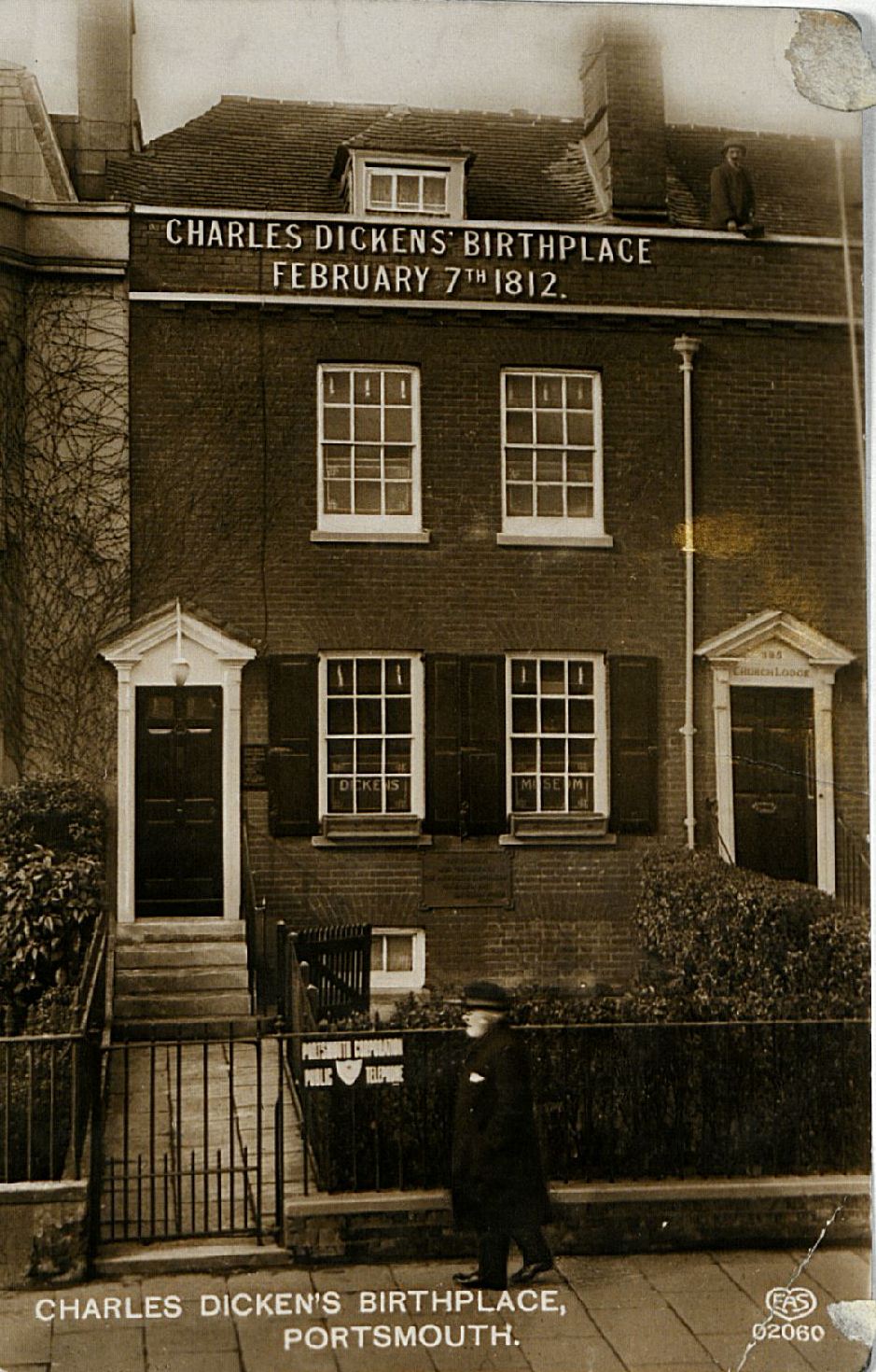
Postcard showing Dickens' birthplace, from MS.7774.
Dickens' signature, from MS.7774.

Wednesday, December 28, 2011

If not here, where?

It was the proud boast of London’s Windmill Theatre that “We never closed”: that throughout the Blitz, as bombs rained down on London, the theatre continued to provide nude tableaux for the entertainment of lonely servicemen and their like. The list of ways in which the Wellcome Library resembles the Windmill is a short one: limited, most of us would think, to being in London and beginning with W. The beauty of the digital age, however, is that we can add a third to this list and say that in a sense we too never close: even if the Library’s doors may be shut, all manner of online resources remain available, 24 hours a day, for as long as our web-servers have power.

In the past various resources such as online journals or the Hospital Records Database have been highlighted in blog posts. A less well-known project whose data can be used via the Library website, was the Medical Archives and Manuscripts Survey, or MAMS.
When the Wellcome Library began collecting modern archival material in the 1970s, it rapidly became one of the first ports of call for researchers trying to locate the papers of particular individuals, or on particular subjects. The Hospital Records Database, a collaborative project between the Library and the National Archives, grew out of the need to answer questions like this. However, as its name suggests it deals only with hospital documentation, and as regular Library users will know the range of material that can be considered “medical” goes far beyond that – beyond the records of practitioners of scientific medicine and into issues such as nutrition, hygiene, demographics, complementary medicine, and so forth. The Medical Archives and Manuscripts Survey began in the latter 1980s by sending questionnaires out to repositories, and then, when it became apparent that the respondents could not be expected to spot the potential medical implications of every possible source in their holdings, moved in the early 1990s to sending Library staff out to survey archives in situ. By the mid-1990s, well over 100 London institutions holding archives had been surveyed: some, like the Royal Colleges, specialising in medicine; some, like the various Borough record offices, covering a wide range of subjects but limited to a specific geographic area; and others still drawn from all manner of specialisms, from the Alpine Club to the Zoological Society of London via the Marx Memorial Library and any number of other points between.

The 1990s, of course, was a time of radical change in information management and presentation. When MAMS began the aim was to publish the results as a printed directory, like a specialised and more detailed version of Janet Foster and Julia Sheppard's British Archives. By the mid-1990s it was apparent, as the infant World-Wide Web took off, that the way forward for these projects was as web-mounted databases rather than print. To recast the data gathered into granularised database fields, however, rather than the freetext reports that were its current form, would have meant a level of editing work almost as lengthy as the initial survey process had been. As the Web developed, too, increasingly direct access to archive catalogues was possible, and although this did not provide the sort of considered bringing together of medical sources that was achieved by the Library’s surveys, it was another factor in reducing the project’s attractiveness to publishers. In the end the Library decided that at the very least it could make all the information gathered available to researchers in a quick and simple fashion by mounting the various survey reports on the Library website, both as single documents – for those interested in sources available at a particular venue – or as one unified searchable listing, for people interested in a particular topic wherever it was to be found.

So, to the data. The terms of reference were simple: material of some medical or health relevance (“relevance” defined as widely as Sir Henry Wellcome would have done: very widely indeed), between the years of 1600 and 1945. 1600 was chosen as the start date reasoning that material before this tended to be used by a more narrowly defined research community (for example, before this date a knowledge of Latin is increasingly important); 1945, since the post-war landscape of health and medicine was radically different, most notably because of the setting up of the National Health Service. Between these two dates, pretty much anything went. The reader should be aware that the reports are now over 15 years old for the most part and that new material will have come in, contact details may have changed and so forth: but at its core the survey records a great tranche of hugely varied material awaiting the medical historian.

There are, of course, long reports for the obvious sources: the National Archives, the various Royal Colleges for the medical specialisms, the Wellcome Library itself (an overview of archive sources necessary at the time because this predated our online catalogue) and London Metropolitan Archives. These hold the riches that the researcher would expect. The beauty of the MAMS project, however, is in the unexpected material it throws up in those repositories that may be off the beaten track for the medical historian. The numerous borough record offices of the capital hold, as well as the expected local government material (administration of drainage and sewerage, Medical Officer of Health reports, and so forth) and local hospital records, a wide variety of other papers, both business and personal. Examples, plucked at random from the typescripts of completed entries, would include: the 1696 probate inventory of a Dorking physician held at the Minet Library, Lambeth; or the Bryant and May Company records that deal with employees’ conditions and phosphorus poisoning, held at Hackney Archives Department. Croydon Archive Service holds the transcripts of a court case brought against Croydon Corporation following an outbreak of typhoid in the borough in 1938. In the same year, the International Union of Local Authorities met at Finchley sewage works, a brochure and menu from the occasion being held by Barnet record office.

One item in Lewisham’s archives department serves as a splendid illustration of the way in which archival material can travel far from its place of creation, making a guide like this necessary: the personal papers of M.H. Hogg, Medical Superintendent of Grove Park Hospital in the borough, include lecture notes taken at Aberdeen University. Similar examples of travelling material, which may or may not be explained by simple administrative or personal links, occur in other borough record offices: descriptive notes about Tooting Bec Asylum at Lewisham, or the 1914 annual report of Enfield Cottage Hospital at Sutton.

Most satisfying was the discovery of relevant material in specialist repositories whose remit was not ostensibly medical: the type of unexpected find that makes a subject survey essential. A historian of medicine might not think to check a repository whose slant is religious, but papers relating to doctors who were religious non-conformists may be found in the archives of the Religious Society of Friends or in Dr. Williams’s Library. The subjects discussed in the extensive correspondence held by the Royal Geographical Society include the health implications of different climates and medicinal plants from around the world. Finally, one can be reasonably certain that a historian of medicine in Bradford would not automatically head for the British Architectural Library at RIBA, yet there one may find a Bradford apothecary’s recipe book.

Less overtly medical material can also be fruitful for the researcher: for example, the papers of the banker Hastings Nathaniel Middleton (1781-1821), held by the City of Westminster Archives Centre, turn out to go into some detail on the mental illness of his mother.

The survey is, of course, the tip of the iceberg. Similarly varied material will exist in repositories outside London: it was the intention to carry MAMS beyond the capital, but the changing technical landscape halted the project before this happened. More material will have arrived at record offices since these surveys were carried out. There will, also be material from outside the date-span of the survey. In this last category comes a favourite example of the sheer unpredictability of medical archive sources: in the London Borough of Hillingdon’s archives at Uxbridge Library is a report, dating from the 1970s, on the movements of foxes in the borough. The medical relevance is that the fox is the main carrier of the rabies virus in continental Europe: the report was prepared to assess the rapidity with which rabies might spread by this means if the virus gained a foothold in Britain. As this illustrates, the medical implications of archive material may not superficially be obvious; but once one’s eyes are opened, almost all repositories will hold something worth recording and worth pointing out to the researcher. There is a wealth of material out there and much of it is recorded in the MAMS reports – we recommend readers to start exploring.

Note: contact details given in the MAMS reports were accurate at the time of the survey but may have changed since: for up-to-date information on addresses, telephone numbers, e-mail and web addresses, etc., readers should consult the National Archives' Archon directory.

Images, all repositories covered by the MAMS project. From top:
1/ Battersea Library, home of Wandsworth Heritage Service. Photograph copyright Christopher Hilton, made available under Creative Commons Licence via the Geograph website.
2/ The Royal College of Surgeons of England, c.1813: painting by George Dance, from Wellcome Images.
3/ Bishopsgate Institute. Photograph copyright David Bradbury, made available under Creative Commons Licence via the Geograph website.
4/ Minet Library, home of Lambeth Archives. Photograph copyright Stephen Craven, made available under Creative Commons Licence via the Geograph website.
5/ Dr Williams's Library, Gordon Square (a near neighbour of the Wellcome Library). Photograph copyright David Hawgood, made available under Creative Commons Licence via the Geograph website.

Saturday, August 20, 2011

From the Game of Goose to Snakes and Ladders

Amongst the more surprising items in the Wellcome Library’s collections, are a small selection of board games produced across the past three centuries. While they may seem a little drab in comparison with more modern pastimes, the board games of the past can provide an important and useful insight into historical social beliefs and concerns, and even allow us to some extent gauge the amount of enjoyment derived from watching a grown man bark like a dog...


The games this brief foray into a very specific material history will focus on are by and large 'race games' derived from the Game of Goose, an Italian import from the Middle East played by rolling dice and advancing around the board in a circuit. Newe and most Pleasant Game of the Goose, translated into English for the first time John Wolfe in 1597, is widely credited as the progenitor of the particular type of board game in our collections. While not all of our games attempt to be educational, those that are attempt to address geography, morality and health, and in this respect they are fairly representative of larger thematic groups of historical board games. [1]


Given the variety of historical games in the Library it makes sense to try to address them thematically. Our oldest geographical game, Le Iev Desnations, published in the 17th century, is an educational race game featuring the spiral structure and 63 places common to games of goose. The game purports to teach the "morals, fashions and customs” of the nations of the world, which are presented to educate those "curious about history and geography". The modern player would likely find the descriptions of the depicted nations more interesting than the playing of the game itself which is a straightforward game of chance. The game describes the French as being "of advantageous size" with "beautiful head[s]", claims that French women are "charming [in] body and spirit", and states that the nation is "faithful to their king, courteous to foreigners and very Catholic". The English on the other hand are "blonde, well made", while "the mob [is] impudent, beautiful and harsh". Native Canadians receive a harsher treatment, described as being a "medium size" people "with little thought for the future" who "believe and consult often their god Cadouagny". The game is otherwise notable for its other early colonial descriptions of contemporary human cultures and for its miniature maps depicting a (to the modern eye) inaccurately large “Terre Austrelle”, and that label the Antarctic region "incognue" - unknown.


Another thematic group of games is less educational: The Game of Chance or Harlequin Takes All is a straightforward race around the board in which players try to win tokens added to a kitty, each position on the board entailing some sort of illustrated forfeit or prize, usually simply raising the stake by adding to the kitty but sometimes requiring more unusual actions. Position 9 for example requires the player to pay 6 into the game’s kitty (a relatively hefty fee in context) and for them to “look at the Turk”, a forfeit which seems to have lost its contemporary significance. Other actions include missing two turns sitting in a chair, being fined for “breaking a pitcher”, or being trapped awaiting “rescue from a wood”. Particularly interesting is the forfeit for stopping at position 23; the unfortunate player loses all stake in the game and must “bark until it is over”, like a dog. Dying though is a mere setback: players must “give way to the corps, pay 9 for ye grave and begin the game again” upon landing at 31. Strangely, the game can only be ended once a player has landed at position 13, the Harlequin, illustrated by a figure in the characteristic chequered costume leaving a house with a club and a sack, at which point they collect the kitty and end the game. The publisher, Laurie and Whittle of London, would reuse many of the images and mechanics of The Game of Chance in their later New and Entertaining Game of the Goose. This game is significant for its reintroduction of the goose motif from the game’s heritage without the punitive trappings imposed in The Game of Chance. Though some of the more mature positions have been removed or reworked, most notably the “drink to your friend” tile, the death tile remains, perhaps suggesting that the publisher recognised its value as a memento mori.


The third group of games represented are ‘morality games’ that sought to impart contemporary morality to the players through a simple system of reward and punishment. Perhaps the most elaborately named of the games discussed here is Laurie’s Instructive Moral and Entertaining Game of the Mansion of Happiness. The game’s moral tone is far from subtle; the playing board itself has the tag-line “virtue rewarded and vice punished,” and the rules admonish players in possession of “Audacity, Cruelty, Immodesty or Ingratitude” to “not even to think of Happiness, much less partake of it.” For other attributes the game has more specific and contemporaneously appropriate forfeits; “Whoever becomes a PERJURER must be put in the pillory and pay a Fine of one.” Punishments at the infamous Bridewell prison, in the stocks or at the whipping post are also instructed. Some significance might be found in the production of this exceptionally upstanding morality game from the publisher of The Game of Chance that rewarded drinking and incorporated a stronger element of gambling; Laurie, whose name the company still used and who would have overseen the production of The Game of Chance, left the business in 1815, possibly allowing for a change in direction toward more educational games, though it may be the case that the game is simply a product of the emerging market for morally educational titles. [1]


Interestingly, a second morality game held by the Library, a late 18th century Indian game titled Jnana Bagi; the Game of Heaven and Hell was one of the influences on the the western board game Snakes and Ladders. A tool for teaching ethics, the 82 hand drawn and coloured squared are inscribed with symbols denoting living creatures and moral attributes. Significantly, the longest ladder on the board is from position 17, labelled “compassionate love”, to position 69, “the world of the absolute.” Compared with the later western morality game, the Game of Heaven and Hell is much richer in symbolism; the rewards and setbacks posed by the snakes and the ladders illustrate an understanding that life is fraught with successes and challenges, perhaps a more complex lesson than the didactic moral certainties illustrated by the Mansion of Happiness.


The final category of games is that of the ‘health game’. Building on the historical precedent of games as vectors for educational ideas, health games have been produced at various times to support campaigns confronting contemporary health concerns. See how they won: the game of good health, is a departure from the previous games discussed so far, in that it isn’t strictly a board game, though remains worthy of consideration through its value as a record of contemporary concerns.


A ball and maze puzzle with hazards, dating from the 1930s, the game charts the player’s progress from “slumdom”, highlighting contemporary fears of urban degradation, past the many health risks threatening young people in the early twentieth century urban environment; lack of sunlight, rickets and pneumonia, amongst others, toward “The Great Goal, Good Health”. Given its context the game’s subject matter is not at all surprising; it was produced to raise funds for the Vincent Square Infant’s Hospital in London, a charitable children’s hospital that would have directly confronted the problems created by poor living conditions in the city.


Sixty years later, another health game confronts a later public health concern: the spread of HIV/AIDS in modern America. TrianguAIDS, a book cover designed as a board game played in much the same way as the other ‘race games’ in the collection; players move around the triangular board by rolling dice, trying to avoid the hazards (in this case a “Hooker”, “Pusher” or “Little Action”) which somewhat morbidly increase the player’s chance of contracting HIV. Once a player becomes a carrier a second area of the board is opened up to chart their swift progression with the virus to an inevitable death, and the ability to spread the condition to other players creates an escalating sense of paranoia. In some respects the game owes more to historical morality games than to health games; the instructions’ didactic tone and the penalisation of players for finding themselves in morally questionable positions is characteristic of this particular genre of pedagogical pastime.


References:

[1] Caroline G. Goodfellow, ‘The Development of the English Board Game,

1770-1850’, Board Game Studies,1998, 1: 70-80.

http://www.boardgamestudies.info/pdf/issue1/BGS1Goodfellow.pdf


Images:

- A game involving many of the countries in the world. Engraving by Antoine de Fer after Louis Richer (Wellcome Library no. 35129i)

- A board game with various forfeits, penalties and rewards. Etching. 1794 (Wellcome Library no. 33448i)

- A large goose, with three golden eggs: numbered circles printed on the body of the goose for playing a counter game. Coloured engraving. 1848 (Wellcome Library no. 35130i)

- A layout for a board game, with the rules of the game. Engraving. 1851 (Wellcome Library no. 37628i).

- Game of Heaven and Hell (Jnana Bagi) (Sanskrit Alpha 276)

- See how they won: the game of good health (Oversize ephemera. EPH+13)

- A book cover designed as a board game about safer sex risks by the Walraven Book Cover Company. Colour lithograph, 1992. (Wellcome Libary no. 668792i)


Author Simon Wilson

Friday, July 1, 2011

Archives and manuscripts cataloguing, June 2011

This month’s new cataloguing bulletin from the Archives and Manuscripts department releases a large tranche of material for researchers to work upon: five collections of twentieth-century papers, totalling over 230 archive boxes of material or over 1000 new database records. Our congratulations to the cataloguers! All this material is now not merely catalogued in the online database, but also enabled for online ordering so that researchers can, should they wish, browse the catalogue, click the ordering link and have the material ready to view on Monday.

Although the records’ date is similar – twentieth-century, with a bias towards the latter half - the subjects documented span a wide range, from institutional documentation to personal papers, from hard-core laboratory science to the social implications of health and welfare. The largest and smallest collections are both records of organisations concerned with public health and with communication (in both directions) between citizens and their health-providers.

The records received from the Royal Society for Public Health and its predecessor bodies (SA/RSP) total well over 100 archive boxes and span the widest date-range of any released this month, going back to the foundation of the Sanitary Institute in 1876. The organisation’s history is complex. The Sanitary Institute amalgamated with the Parkes Museum of Hygiene in 1883 (and opened a School of Hygiene), changing its name in 1955 to the Royal Society for the Promotion of Health (the shorter form Royal Society of Health was also used. The Royal Institute of Public Health was founded in 1886 (simultaneously, the same founders set up the College of State Medicine which merged in 1892 with the laboratory founded by the British Institute for Preventive Medicine and eventually became the Lister Institute: see that organisation’s records held as SA/LIS). The third major strand in the organisation’s history is that of the Institute of Hygiene, which was founded in 1903, and merged in 1937 with the Royal Institute of Public Health to form the Royal Institute of Public Health and Hygiene. In 2008 the Royal Society for the Promotion of Health merged with the Royal Institute of Public Health and Hygiene to form the Royal Society for Public Health, bringing all these bodies together. The archives document some strands in the history better than others: the main body of records of the Royal Institute of Public Health and Hygiene were held at its headquarters in the 1990s and surveyed by the Wellcome Library’s archivists then, but had gone elsewhere by the time the newly-unified society presented its historic papers to the Library in 2009. When the missing records are located, they will join the archive here. The collection is, however, already a rich source and includes minutes, examination registers relating to the various qualifications awarded by the societies, publications, financial, legal and administrative material, photograph albums and property records and was first described in an earlier blog posting a few days ago.

A far smaller collection is that of Health Concern (SA/HCN). This body was founded in the mid 1980s with the primary aims of 'campaigning for more resources, co-ordinating comment on Government plans for the NHS and exchanging information on research.' – it was a broad alliance of various member organisations who shared the aim of supporting the NHS by promoting its basic principles and mounting an educational programme on healthcare and treatment. Although non-party in its remit, it clearly operated at a time when the whole concept of socialised healthcare versus the market was a political hot issue (and indeed was founded by Lord Ennals, who had been a Labour minister under Harold Wilson) so its activities were inescapably political in their context. The papers, dating from the 1980s, document its founding and administration during these crucial years.

Turing to personal papers, the records created by Professor Tim Lang and held as PP/TLA are also of major importance regarding public health issues. Tim Lang’s work has been in the field of public understanding of the food supply chain and the issues raised by what we eat and how we get it. His archive, totalling seventy boxes, documents his extensive involvement and role in the field of food policy, nutrition, environment and public health from the late 1970s up until 2000, and also provides a significant record of the development of food policy as a topic for discussion, notably in the UK, during this period. Organisations such as the London Food Commission, Parents For Safe Food, the National Food Alliance and the Sustainable Agriculture Food and Environment (SAFE) Alliance are documented, as well as Tim Lang's wide-ranging writings on food; subject files cover some of his interests such as meat production standards, a school meals campaigns in Lancashire (early 1980s) as well as the national school meals campaigns in the 1990s, low income and food poverty, the Food Safety Act 1990, the salmonella and the listeria 'scares' in the late 1980s, and the impact of General Agreement on Tariffs and Trade (GATT) reform and the Common Agricultural Policy (CAP) on the food trade, health and safety, the environment and the developing world.

Finally, two collections relating to laboratory scientists conclude this month’s round-up. The papers of Robert Race and Ruth Sanger relating to their work on blood groups (PP/SAR, complementing the organisational records held in SA/BGU) were described in a separate blog posting earlier today. Like Race and Sanger, Dr Shirley Ratcliffe (PP/SRA) was involved in work at a Medical Research Council Unit, in this case the Edinburgh Cytogenetics Unit Study of Long Term Outcomes for Children Born with Sex Chromosome Abnormalities which in 1967 embarked on a longitudinal study of children born with these abnormalities, to establish the conditions’ incidence and long-term prognosis. The study – which also looked at a control group of children without these conditions – ran until the mid-1990s, but Dr Ratcliffe’s papers on the subject continued to be generated until 2010, the very year in which they were transferred to the Library. Much of the material, clearly, is made of clinical patient data that for the moment is closed under the Data Protection Act; however, there is much material on the conditions in general that is available for consultation now, with more to come of course as the years pass.

Image: a man with Klinefelter Syndrome, in which an extra X chromosome is added to the normal male XY pairing; the work of Shirley Ratcliffe looked at children born with this type of chromosomal abnormality, among others. In this picture, taken from Wellcome Images, the subject - who has undergone testosterone replacement therapy to enable development of male secondary sexual characteristics such as development of muscle bulk - is working out to avoid the development of osteoporosis, a common problem in males with his particular Syndrome.

Monday, June 27, 2011

Fighting the Filthy Reality of Everyday Life


The archives of the Royal Society for Public Health are now available at the Wellcome Library. Whilst the current Wellcome Collection exhibition, Dirt, shows the filthy reality of everyday life, this collection demonstrates how people have worked to combat dirt, in its many forms, over the years.

Originally founded following the Public Health Act of 1875, the Society works to educate people about health and hygiene. The society offers courses leading to qualifications in subjects such as food hygiene, and health and safety, as well as advocating for improvements in public health. In the past, they ran courses of public lectures on subjects as diverse as meat and food inspection, birth control, and forensic medicine, as well as running a number of laboratories and the Parkes Hygiene Museum. The museum, which closed in 1962, was used for teaching and demonstrations, allowing public health workers and the public to see examples of different public health solutions, and examine their construction and defects.

Over the years the society has responded to the needs of the time, becoming involved in the design of respirators to protect the public in the event of a gas attack in World War I, for example. A gradual decline in membership throughout the 20th century has recently been reversed, as events such as the recent E. coli outbreak demonstrate that public health education and advocacy is just as important today.

The papers of the Royal Society for the promotion of Health are part of the Wellcome Library's Archives and Manuscripts collection. The catalogue can be searched via our online catalogue, using the reference SA/RSP.

Picture credit: Neil Leslie, Wellcome Images, B0003318