Showing posts with label recipes. Show all posts

Thursday, March 1, 2012

Dydd Gŵyl Dewi Hapus / Happy St David's Day

In honour of St David's Day, the national day of Wales, today we focus on one of the Library's Welsh holdings.

One of the fascinations of archive material in particular is the way that it makes things specific: takes large, overarching topics and presents them in terms of particular instances, anchored to real people and real places. Today, of course, we will be looking at an item that takes us to Wales: to Rhagatt Hall in the valley of the River Dee / Afon Dyfrdwy, just downstream of the small town of Corwen.

Over the years this blog has featured extensive coverage of the Library's seventeenth century recipe books. Those are, however, simply the tip of the iceberg: manuscript recipe books continued to be compiled throughout the eighteenth century and on into the nineteenth, finally beginning to fade from common use in the second half of the century (although they are by no means extinct even now). Like the seventeenth-century volumes, these later examples mingle medical, culinary and household management instruction, in varying proportions according to the compilers' preoccupations. Their main point of difference from the earlier books is in their greater use of printed cuttings: as time passes we see people less willing to transcribe every recipe in longhand, when they can cut out something from a printed source and paste it into the recipe book, and some from this late period are composed almost entirely of cuttings.

Today's Welsh item is a recipe book from this late period. MS.8459 is a small volume containing some 130+ pages of medical recipes and other very assorted material, which was formerly owned by Jane Margaret Lloyd (1822-1912) of Rhagatt Hall, daughter of Edward Lloyd of Berth and Rhagatt, and Frances Madocks, daughter of John Edward Madocks of Fron Iw, Denbighshire. It is unclear whether she had the volume compiled or simply came into ownership of it at some stage. Within the volume are recipes for medicines, including homoeopathic ones, and some reports on experiences of their use; there are also recipes for the treatment of cats and dogs. Inserted items include prescriptions: one, dispensed by a chemist in Rhyl, is for a Mrs. Ffoulkes, probably Jane Lloyd herself, since in 1861 she married the Ven. Henry Powel Ffoulkes, archdeacon of Montgomery. There are various cuttings, including at least one in Welsh, the latter forming part of a collection of material on the use of violet leaves to treat cancer. Another cutting provides the lyrics to some popular songs, one of which - "The Lum Hat" - takes us into the realm of broad Scots dialect. Finally, taking us a very long way from Wales indeed, there is an invitation from the Officers and Council of the Japan Society to a Mr Herbert Tinker, asking him to an event also attended by His Excellency the Japanese Minister in the United Kingdom (this would be Count Hayashi Tadasu, who served as Minister from 1900 to 1905 and then as Ambassador for a further year). The presence of the last item, without any explanation, is evidence of the sheer unpredictability of archive material!

Archive material may be unpredictable: but one thing that one can predict, without much fear of contradiction, is that the Library's holdings are sufficiently various for pretty much any subject or part of the world to be represented somewhere in them. This one item is, of course, just a little sample of our Welsh material: the full list of hits on the words "Wales" and "Welsh" in the archives catalogue comes to over 8000. (Our sources guides on British Local History and Topographical Photographs provide a more manageable introduction.) On this day of all days, have a look through them.

Images:
1/ Daffodil, copyright Albert Bridge; from the Geograph website and licensed for reuse under this Creative Commons Licence.
2/ Title page and start of contents, MS.8459.
3/ Material on treatment of cancer, MS.8459.
4/ Inserted prescription envelope, MS.8459.
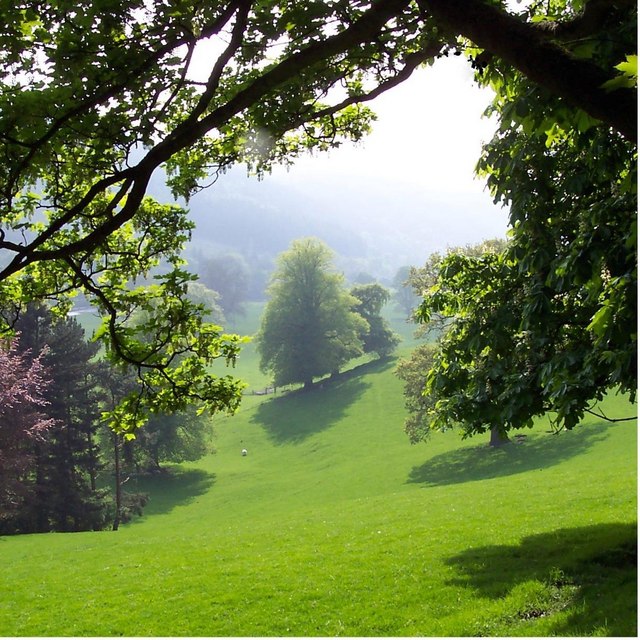
5/ Valley of the River Dee, near Rhagatt Hall, copyright Jonathan Billinger; from the Geograph website and licensed for reuse under this Creative Commons Licence.

Thursday, January 12, 2012

‘What’s cooking? Food and eating at home’ conference


Friday 9 March 2012, Brunei Gallery, SOAS, London, 9.30 – 17.00
Jim and Jayne Turner at the kitchen table eating dinner with their pet cat ‘Chang’, Pinner, Middlesex, 1962-63 ©The Geffrye Museum of the Home

In association with the Wellcome Library, the Histories of Home Subject Specialist Network will be holding its 4thannual conference on the theme of food within the domestic setting in the UK.

Papers will explore the changing feelings and meanings attached to kitchens; gender and identity issues around cooking, feeding and kitchens; the transmission of culinary knowledge; patterns of food consumption at home as well as the impact of design and new technologies on the use of virtual and real foodspaces. There will also be a presentation on interpreting food preparation spaces and food consumption within a historic house setting.


The conference programme reflects the interdisciplinary approach of the Histories of Home SSN and will draw on social geography, food history, sociology, social gerontology, design, digital and social anthropology as well as artistic and museum practice. 
Keynote
Peter Jackson (University of Sheffield): Anxious appetites: researching families and food
Speakers
Ines Amado (De Montfort University): Story-telling, exchange and observations of the everyday

Stephanie Baum (Institute of Education): An analysis of cooking from the perspective of hegemonic masculinity in transformation
Maria das Graças Brightwell (Royal Holloway, University of London): Food consumption and the practice of everyday life in two Brazilian mixed households in Harlesden, London
Manpreet K. Janeja (University of Cambridge):Feeding and eating ‘proper meals’ at home and beyond 
Alysa Levene (Oxford Brookes University): Margarine, social class and the home: exploring the ‘margarine mind’ in rationed Britain
Angela Meah (University of Sheffield): “Of course I know that; you told me that years ago”: the acquisition of culinary knowledge in British families
Anne Murcott (SOAS & University of Nottingham): A century of English cookery books: examining what they can reveal about trends in food preparation, recipes and eating at home
Lida Papamatthaiaki (UCL): Digital symposiakotita @ new foodspaces
Sheila Peace (Open University): Continuity and change: aspects of the food environment across the life course
Sara Pennell (University of Roehampton) & Victoria Bradley (Ham House, National Trust): Foodways in the heritage house 
Rachel Scicluna (Open University): Is the kitchen as ‘hub of the household’ a myth? Or is it the hub of politics and social change?

For more information and booking details, please go to

Saturday, October 22, 2011

The Cook's Tour

Fed up of the cold already, and wishing you could get away from it all?  Why not sign up for a free Cook's Tour on Tuesday 25 October at 3.00-4.30pm, and journey around the world exploring the historical role of food, remedies and global interchange in our medical and cultural lives?

As part of our Recipes and Remedies series, this free event will investigate the tensions underlying the contents of the kitchen cabinet, and place 21st-century debates around localism and healthy eating in a historical perspective.

The event will consist of a tour of Wellcome Collection's permanent galleries followed by an illustrated talk in the Wellcome Library, plus a chance to view items from the library's Special Collections.

Speakers:

  •  Richard Aspin, Head of Research and Scholarship, Wellcome Library.
  • Valerie Brown, Visitor Services Assistant, Wellcome Collection.
  • Helen Wakely, Archivist, Wellcome Library.
For details of how to attend please see the Wellcome Collection website.

Tuesday, August 30, 2011

Recipes and Remedies: an Autumn Almanac

This autumn Wellcome Collection will be holding a special series of Recipes and Remedies events exploring the connections between food, health and life.


Inspired by the intriguing collections of hand-written recipes and remedies in the Wellcome Library, we will be asking if food can cure, rooting through the history of culinary medicines and exploring contemporary scientific and cultural responses to food.


The series will gravitate around a edible experiment where, as the winter evenings draw in, we will challenge a chef to cook up a cure for melancholy, following the suggestions for food, drink and lifestyle in Robert Burton’s seminal 1621 text The Anatomy of Melancholy.


Elsewhere we will be investigating the future of food, the loaded relationships between food, class and morality, and how to navigate a healthy course between food science, social policy and the food industry in the face of ever-changing advice.


There will also be plenty of opportunity to get up close to Wellcome Collection’s unique treasures in sessions exploring topics such as localism and healthy eating then and now, how food remedies have allowed women to challenge male medical orthodoxy, and whether the bloggers of today can find counterparts in the recipe swappers of 400 years ago.


Dates for your almanac:


Gut Reactions. Thursday 15 September 2011

Bad Behaviour In The Kitchen. Thursday 29 September 2011

Packed Lunch: Breastfeeding. Wednesday 5 October 2011

Healthcare and Housewifery. Thursday 6 October 2011

Library Insight: Nourishing the Nation. Thursday 13 October 2011

Library Insight: The Cook’s Tour. Tuesday 25 October 2011 & Thursday 3 November 2011

Supper Salon: Future Food, with Stefan Gates. Wednesday 26 October 2011

A Feast to Cure Melancholy. Friday 11 November & Saturday 12 November

Reading Between the Lines. Thursday 17 November 2011


Everyone eats, so come along to share your views and delight your mental palate.


Friday, June 3, 2011

Would you like a Flake with that?

Here in central London it's another warm, sunny day as a record-breaking dry spring shades into summer. The approach of the weekend, of course, gives the British climate the chance to spring a downpour on us all at the time of maximum inconvenience; but let's not harbour such negative thoughts. (Let us also, for the moment, put aside the nagging worry about what a long dry spell like this means for climate change.) Let's focus, instead, on how the weather has turned out perfectly for the UK's National Ice-Cream Week.

We've written many times on this blog about the Wellcome Library's holdings relating to food: pies, curry (twice: here and here), chocolate, cheese, sausages.... the list goes on. It's no surprise, then, that ice-cream also features in our holdings. What is special is that, as far as food historians know, the Library holds the oldest recipe for ice-cream in this country - so in a sense National Ice Cream week, the choc-ice, the 99 and the Mivvi all start here.

Our seventeenth-century recipe-book collection (now digitised) is a wealth of food-historical facts, and it's here that we find the ice-cream recipe: in the recipe book of Lady Ann Fanshawe (1625-1680), MS.7113. Lady Ann was the wife of Sir Richard Fanshawe (1608-1666), a prominent Royalist who had undergone imprisonment and exile during the Commonwealth and was rewarded for his dedication to the Stuart cause, on the Restoration of the monarchy, with the position of Ambassador to Spain. (This was the first permanent resident embassy sent abroad by the English crown: previous ambassadors had been sent as envoys to carry out particular negotiations and had then returned home.) Lady Ann travelled with him and the recipes she compiled show the signs of her Spanish experiences, with New World products such as chocolate entering her kitchen. A more detailed description of her recipe compilation can be found in an article by David Potter in the the journal Petits Propos Culinaires (David Potter, “The Household Receipt Book of Ann, Lady Fanshawe”, Petits Propos Culinaires, 80 (March 2006), pp. 19–32) within the Library: for now we will focus on one particular recipe, that for ice-cream. It sounds serviceable, although some of the flavouring is a little strange to modern tastes:

To Make Icy Cream

Take three pints of the best cream, boyle it with a blade of Mace or else perfume it with orang flower water or Ambergreece, sweeten the Cream, with sugar[,] let it stand till it is quite cold, then put it into Boxes, e[i]ther of Silver or tinn, then take, Ice chopped into small peeces and put it into a tub and set the Boxes in the Ice covering them all over, and let them stand in the Ice two hours, and the Cream Will come to be Ice in the Boxes, then turn them out into a salvar [salver = dish] with some of the same seasoned Cream, so sarve [serve] it up to the Table.

Provided that you have some of the best cream available, there's a project to try out over the weekend: we will, however, excuse you if you choose to flavour the ice-cream with something more to your taste than mace, ambergris or orange-flower water. We would be remiss if we didn't point out that ice-cream can be a vehicle for bacteria, and that it should be prepared and stored hygenically. The twentieth-century papers of Sir Herbert Chalke (1897-1979), held as GC/200, include sobering information on potential contamination: for example, his 1939 article "The chemical and bacteriological examination of ice cream samples" (in Medical Officer, 24 Jun 1939), held as GC/200/D/2/6). Wash your hands well. Let's not end on a negative note, however. Still amongst our twentieth-century papers, we find Sir Weldon Dalrymple-Champneys (1892-1980) (papers held as GC/139) giving in 1951 what is described as the "Inaugural address at the 2nd National Conference of the Ice Cream Alliance" (GC/139/F.19). That's an organisation that, in the current hot spell, most of us would sign up to.

Images:
1/ Girl eating an ice-cream (British readers will recognise this as a 99; some day, food historians will puzzle over why a cornet with a Flake was called this), from Wellcome Images (N0031317).
2/ Lady Ann Fanshawe's ice-cream recipe, from MS.7113. (A digitised image of the entire opening can be seen here.)

Monday, November 1, 2010

The Sausage follows the Flag

Draw up a list of iconic British foods: menu items that radiate comfort and Britishness to the native and the outsider alike. The chances are that sausages will be somewhere on that list – not, perhaps, as charged with emotional meaning as the roast beef of old England, the haggis or the nice cup of tea, but somewhere well up in the top ten. When Dennis the Menace or his contemporaries tuck into a slap-up meal, it’s likely to feature a huge pile of mashed potatoes with sausages sticking perkily out of it. When C.S. Lewis brings his characters back to Narnia after dangerous adventures in the frozen north and a sinister underworld in The Silver Chair, it’s a meal of piping-hot sausages bursting with meat that really signify a return to home, safety and comfort.

British Sausage Week, running from Monday 1st to Sunday 7th November, celebrates this key component of the national cuisine. For regular readers of this blog it will come as no surprise that the Wellcome Library has relevant holdings: diet is a major contributor to health or ill-health, and what we eat, accordingly, has always been well represented in the Library.

We can begin, as so often when food is the subject, with our recipe books, and in particular with the mostly seventeenth-century ones now digitised. Searching these for “sausage” yields no hits but all this indicates is a need to take one step back: look for “force meat” and the search is more fruitful. To take an example, MS.7998 – one of a series of recipe books from the Godfrey and Faussett families of Heppington, Nackington, Kent – describes how meat is chopped fine and mixed with suet, breadcrumbs and spices to make a substance that can be rolled into meatballs and cooked that way, or – of course – put into a tubular casing (at this stage, probably the animal’s own intestines) and made into sausages. The presence of breadcrumbs, incidentally, is a demonstration to our coeliac readers of why it can be so hard to find gluten-free sausages; the ratio of bread and other padding to meat, of course, is an indicator of the quality and cost of the sausage.

Coming right up to date, the Library’s Ephemera collection continues to document the British diet, in part by scooping up supermarkets’ flyers and leaflets. From 1994 we hold a leaflet issued by Tesco to promote their Superior Sausage Selection and offering membership in the British Sausage Appreciation Society. The varieties span the globe: Tandoori Pork, French & Garlic, Mexican (featuring chilli and mixed beans as well as meat) and Venison Game, as well as the Traditional Pork Sausage and the Hot Mustard Porker. Fast forward to this year, and another Tesco leaflet gives the recipe for a sweet potato, red onion and sausage frittata (rather appetising, we must say, although one blenches at how Dennis the Menace might react to the word “frittata”). Notably, by now the recipe comes with indications of its precise dietary content, with fat, salt and so forth carefully calibrated.

It’s been said that the slap-up feeds enjoyed by characters in British comics reflect their origins in the years of war and austerity, when abundance of food was a distant memory or a dream of the remote future. The Narnia books mentioned earlier, too, have their roots in these years: the initial adventure, The Lion, the Witch and the Wardrobe, takes place when the children in it are evacuated to a country house to avoid the Blitz. When describing the sausages in The Silver Chair, Lewis states explicitly that these were proper sausages, simply full of meat and not mostly bread and sawdust, expecting his readers to recognise that war and austerity had not been good for sausages and had led to a need to make a little meat go a very, very long way by increasing dramatically the amount of padding in the mixture. It’s been pointed out by many historians that government control of supplies, coupled with the scientific input of nutritionists (see, for example, the papers of Robert Alexander McCance and Elsie May Widdowson in the Library’s archives and manuscripts collection) meant that the British public was better fed during the Second World War than before it. There was little spare for luxury or self-indulgence, however. Also in our Ephemera collections is a Ministry of Food leaflet “Suggestions for Breakfast”. The leaflet makes it plain that today’s office workers breakfasting on coffee at the station in the course of their commute would be frowned upon:
A good breakfast every day is the first rule in the book of health.
Get up early enough to enjoy breakfast. A cup of tea and a morsel of toast gulped down with one eye on the clock is no use to anyone. Breakfast is an important meal for all of us, but especially important for growing school children and young factory workers.

The leaflet sets out various ways of getting sufficient protein other nutrients, some rather surprising: the “Summer Breakfast Dish”, for example, is actually a proper Swiss Bircher-Muesli, as devised by Dr Maximilian Bircher-Benner (a world away from the dry commercially produced muesli now available in packets), not something that fits with clichéd ideas about the insular British diet of this time. Meat, however, occurs mostly in the form of bacon, eked out with a lot of potato or flour to make it go further. The sausage packed too concentrated a meaty punch to be easily permissible or possible at this time, except in the disappointing form described by C.S. Lewis: restoration to its rightful role in the full English breakfast would have to wait for the end of austerity.

With occasional interruptions like this caused by force majeure, however, the sausage has had pride of place in the full English wherever British stomachs have followed the Union Jack. In the years between the First and Second World Wars Sir Robert McCarrison served in the Indian Medical Service in what is now the state of Tamil Nadu. A photograph album in his papers at the Wellcome Library illustrates his lifestyle – the bungalow in wooded hills, the gravel drive, the garden combining British floral borders with tropical foliage and palm trees. It’s a window into the last days of the Raj, a scene familiar to anyone who has read Paul Scott’s novels or seen the television adaptation of The Jewel in the Crown. Amongst his correspondence, we find a letter further demonstrating how a little bit of Britain was maintained in the subcontinent. The letterhead proudly spells out that this correspondence comes from “H. Cooter, Ham and Bacon Curer, Sausage Manufacturer, Direct Importer of Danish Bacon, Hunters’ English Hams and Half Hams, Maypole Dairy Company’s Margarine, Jams and Marmalade.” Also based in Tamil Nadu, Mr. Cooter could provide most of the components of the full English breakfast from one source. He proclaims his firm to be under the no-doubt-grateful patronage of the Governor of Madras – and, one presumes, many other colonials keen for a taste of home.

We mentioned at the start the iconic role of the sausage in British cuisine. There is, of course, another culinary tradition in which the sausage is perhaps even more important, that of Germany. German cooking includes a huge variety of types of Wurst - xenophobic stereotyping in Britain reduces the German diet to beer, sausages and sauerkraut. Another item in the Ephemera collection, from another British colony, perhaps acknowledges this primacy. Irvine and Stevenson of Dunedin, New Zealand, proudly proclaim in a late 19th-century flyer that they manufacture “Real German Sausages… prepared by an approved German Expert”. As well as being “A Perfect Food – A Real Delicacy”, these are also “Guaranteed perfectly pure of the finest materials and free from all sinews and indigestable [sic] matter.” You can’t ask for more than that. However, the nervous Briton might well cast his or her mind back to an article in the Edinburgh Medical Journal in 1856 in which W.H. Michael set out a “Case of fatal poisoning by German sausage.” There is, no doubt, a new Richard Hannay adventure to be written around this tragedy, featuring dastardly plots for the control of Europe, sinister Continental masterminds foiled by a sock to the jaw, and a rousing affirmation of the superiority of British pork products.

Images, from top:
1/ 19th century image of a butcher's shop, from Wellcome Images.
2/ MS.7998, page showing force meat recipe.
3/ Tesco recipe leaflet, 2010 (detail), from the Library's Ephemera collection.
4/ Ministry of Food leaflet “Suggestions for Breakfast”, from the Library's Ephemera collection.
5/ Sir Robert McCarrison (right), Lady McCarrison and a friend, in Southern India: from a photograph album in the McCarrison papers in the Library's Archives and Manuscripts collection.
6/ Irvine and Stevenson advertising leaflet, late 19th century, from the Library's Ephemera collection.

Wednesday, October 13, 2010

Montezuma's gift

How many words of Nahuatl do you know – the language of the Aztecs?

And how many words of this complex, agglutinative language (spoken in various modern forms by about 1.5 million people across Central America today) do you think have made it into English?

Well, you know one at least, although you may not have known its source. When the Spanish conquistadors arrived in Mexico, like explorers throughout history they encountered plants, animals and products that they had never seen before, and the simplest way to refer to them was to borrow the native name for them. Among these products was a dark, bitter drink made by fermenting the fruit pods of a small tree, Theobroma Cacao. This they named “chocolata”: according to the most common theory, a rendering in Spanish of the Nahuatl word Xocolatl, “bitter water”. (There are other theories: one derives it from chicolatl, “beaten drink”, describing the way that it was beaten to a froth before drinking. However, its Mesoamerican roots are not in dispute.)

The original Xocolatl was a bitter, spicy drink, flavoured with vanilla, chilli and other spices such as achiote (a natural red food colourant). From that to today’s sweet chocolate bar is a long way, but the basic ingredient and its preparation remain the same. The cacao pods (now mostly grown in West Africa) are fermented, then roasted, and the resulting product liquidised to form cocoa butter. From this basic substance, the world makes food or drinks, dark or milky, sweet or bitter, according to what is added to it and the processes through which the mixture goes. In the UK this week, National Chocolate Week celebrates this variety. In the Wellcome Library, needless to say, we hold numerous relevant items that can contribute to the festival…

As we said above, the first Europeans to encounter chocolate were the Spanish conquerors of Mexico, and it is thus through Spain that chocolate enters the European diet and other European languages. Unsurprisingly, then, one of the earliest mentions of it in our manuscript holdings comes from someone based in Spain. Lady Ann Fanshawe, whose husband was posted by Charles II as ambassador to Madrid as a reward for his loyalty during the Civil Wars, compiled a book of recipes which is now held here as MS.7113: many of the recipes are annotated to record that she learned them in Spain. On August 10th 1665, according to the marginal note, she transcribed a recipe for chocolate. The recipe is crossed out, perhaps indicating that it was unsatisfactory, but pinned to the page is a little sketch of “the same chocolaty pottes that are mayd in the Indes”, a little round-based pot with a long handle to take in one hand whilst one whips the mixture with the whisk shown next to it. Other chocolate recipes, which the compilers seem to have found more satisfactory, occur in the recipe books of Philip Stanhope, 1st Earl of Chesterfield (1584-1656) (MS.761), compiled from the 1630s onwards, and an anonymous recipe book compiled from 1650 onwards (MS.6812). As is so often the case, our digitised seventeenth century recipe books are a fertile source of recipes.

There are good physiological reasons for chocolate’s popularity. It contains alkaloids such as theobromine and phenethylamine, which have been linked to increased serotonin levels in the brain: the Aztecs believed it to fight fatigue, doubtless for this reason. The feelgood effect of a chocolate hit is no illusion. Like most foreign substances that become a craze, however, it has been the subject of considerable suspicion over the years. We know that over-indulgence in our modern solid chocolate can lead to obesity, due to the sugar that is added in the manufacturing process. However, the core ingredient itself, the cocoa butter, has also been suspected (and indeed the theobromine in it does make it toxic to some animals, cats and dogs in particular). In our rare books collection, we hold a 1662 publication by Henry Stubbe, The Indian nectar, or, A discourse concerning chocolata, in which, as Stubbe says, the nature of the cacao-nut, and the other ingredients of that composition, is examined, and stated according to the judgment and experience of the Indians, and Spanish writers, who lived in the Indies, and others. Stubbe is particularly exercised by the fattiness of the nut, and also by its heat-producing qualities, discussing in detail whether it should be drunk hot or cold (“I found it [when cold] to offend my stomach” – p.113) and the correct time of day to take it:
As to the time of taking it, it is held (by the Spaniards) the most fit time to take it in the Morning, and Supper being digested, and the Body fresh, and the Stomach empty to receive it. (p.114)

A cup of chocolate is no light matter, it is clear, and due precautions must be taken: the Spanish, he notes, say that
after [they] have drunk Chocolata, they strictly prohibit all manner of Drink; for when Beer or Wine be drunk after it, there do frequently ensue very dangerous Diseases, and Symptomes. (p.117)


A similar caution is expressed in a work by M. Duncan published in Leipzig in 1707, Von dem Missbrauch heisser und hitziger Speisen und Geträncke, sonderlich aber des Caffes, Schockolate, und Thees (stated to be a translation of a French work). Chocolate and other hot drinks are seen as unhealthy fads, which fashion-victims indulge in only to their long-term detriment: the frontespiece shows young women gathering to drink these fashionable beverages even though, as the alarmist verse beneath claims, they are coming close to death by doing so.

Who would have thought that the humble cup of cocoa could be such a walk on the wild side? We seem, as a culture, to have overcome any scruples about the dangerous American bean pretty thoroughly by now. Indeed, by the late nineteenth century chocolate is being used as a vehicle to make medicines palatable. In the archives of Henry Wellcome’s drugs company we find a large certificate of merit (WF/M/C/13) awarded by the Sanitary Institute of Great Britain for various Burroughs Wellcome products involving extract of malt. Anyone who has read Winnie the Pooh knows how unpalatable that could be, so it is no surprise that one of the mixtures involves chocolate. If Milne had made Kanga offer Roo his extract of malt in this form, it might well have gone down more easily (and Tigger might have been poisoned by the theobromine rather than finding he liked extract of malt: so, a narrow escape).

From dangerous drug to emotional crutch for anyone having a Bridget Jones day, the European encounter with chocolate has taken some strange turns: a changing relationship that can be tracked in the Library’s collections. As a bonus Nahuatl fact, we can add that other words to make it into English from the language of the Aztecs include chilli, avocado and tomato. It will be no surprise to our readers, we suspect, that whenever National Chilli Week or British Avocado Month take place, we will have items from the collection to illustrate both…

Images, from top:
1/ Chocolate, from Wikimedia Commons.
2/ Lady Ann Fanshawe's recipe book, MS.7113: detail, MS.7113/87.
3/ The Indian Nectar... by Henry Stubbe, title page.
4/ Von dem Missbrauch heisser und hitziger Speisen und Geträncke, sonderlich aber des Caffes, Schockolate, und Thees, frontespiece.

Tuesday, March 2, 2010

The crust of it!


This week is National Pie Week in Great Britain, celebrating the long history of pies and pasties in British cookery. Although the haggis and the Roast Beef of Old England occur more in song and story, food wrapped in pastry is a running motif in the story of British cookery, eaten by kings and labourers alike. The Wellcome Library’s holdings relating to food are extensive – we have already mentioned, for instance, our large number of manuscript recipe books, of which the seventeenth-century items are now online. Browsing through these, the reader comes across all manner of pies: penny-plain or decorative and fancy, basic and nutritious or figurative and metaphorical, palatable or disgusting. Here we highlight some pastry-wrapped delicacies from our collections.

All manner of recipes for savoury pies occur in the manuscript collection. For the modern reader, used to the dominance of a few types of meat as pie fillings, their variety comes as a surprise: in particular, seafoods are a common filling, with oysters, lobster and shrimps (the last-named being measured in quarts rather than by weight: a heroic quantity) all being used. We, however, will highlight another recipe, one that sheds incidental light on a common turn of phrase. We speak still of someone “eating humble pie” when we mean that they have been humiliated: the expression comes ultimately from a French word for the entrails of a deer, Humble Pie (or Umble Pie, as it was originally) being made from these less choice cuts after the more sought-after parts of the animal had been taken. In our MS.3769, compiled by a Mrs Jane Parker around 1651, we find a pie slightly further down the social scale than this, even: an ersatz Humble Pie to be made from lamb’s meat.

To bake a lams head and portinance [viscera] in a pie to eat like the Umbles of a dear

Take a lambs head and portenance and parboyle it a litell and then Chop it small as you doe for minst [mince] pies with a po[u]nd of beefe suet, a pou[n]d corrance [currants] [and] a few sweet herbs[;] season it with peper and salt and so bake it[.] When it comes out of the oven you may put a litell sack [sherry] with a litell sugar and a litell boter [butter] and warme it and put it into the pie.

How to make the pastry case, in this recipe, is seen as too obvious to bother mentioning. Noticeable also in seventeenth century recipes is the absence of timings or oven temperatures – these are refinements that only come in when items are cooked in predictable gas or electric ovens. Working on an old-fashioned kitchen range, whose temperature would differ from house to house and from day to day, the cook would simply put the item in and let it bake until it was done, testing frequently and adjusting in the way we still do now with items cooked on the top of the stove.

The British pudding, in which beef suet can be used in a sweet dish, often startles people from other countries. It is interesting to see the same combination of suet and fruit in this savoury dish, suggesting that we are misguided in drawing a sharp line between sweet and savoury dishes when looking at these traditional recipes. The recipe book of Hannah Bisaker (née Buchanan), dating from 1692, endorses this view, with the many pies listed in its opening pages including, next to each other, “Veale Pye Savery” and “Veale Pye Sweete”. As we noted in an earlier blog posting, however, Bisaker’s recipe book is of particular interest for the attention it pays to the outside of pies as well as their content. For Jane Parker, the pastry case was something not even worth mentioning in the recipe. Hannah Bisaker, in contrast, gives up several whole pages to templates for elaborate pastry shapes. Whatever the content of her pies – and as well as the two veal recipes mentioned above, she cites hare, venison, mincemeat (using real meat) steak and “stump pie”, a sweet recipe combining meat, sugar and dried fruit, just in the first few pages – they would be housed with appropriate care and ceremony.

From pies literal to pies figurative, and a much less palatable recipe. On the shelves of the Library's Reading Room, Howard W. Haggard's 1929 history of medicine Devils, Drugs and Doctors reproduces a caricature by Robert Cruickshank (brother of the more famous George) in which a corpulent doctor tucks into "Cholera Pie". The image reflects the belief that an epidemic that was disastrous for the public was good financial news for the doctor: his pie here rests on a table labelled "Board of Wealth", a pun on "Board of Health". For the ultimate in unsavoury pies, however, we must go to Fleet Street and the story of Sweeney Todd, the famous barber whose customers reputedly ended up in the products of his neighbour's pie shop. Sweeney Todd: the real story of the demon barber of Fleet Street sits on the Library's shelves at shelfmark KM.43 (and in passing, how many of our readers know that this shelfmark takes them to a long rank of works on famous British murderers?). Mercifully, it contains no recipes.

The image at the head of this posting is an engraving after Hogarth, whose details can be seen here.

All recipes cited here are tried strictly at the cook's own risk; and pies containing human flesh, of course, should not be made at all.

Wednesday, February 24, 2010

Quick fixes, saints and symbolism: a rare surviving devotional recipe manuscript from the early 15th century. Item of the Month - February 2010

Oak panels of manuscript showing stitching binding
It is rare to find a manuscript from the early 15th century that combines folk remedies with religious iconography and a royal heritage to boot - even more rare is to find one that has been heavily defaced.

Such a manuscript exists in the Archives and Manuscripts collection at the Wellcome Library - MS.5262. Lara Artemis, former conservator here at the library, uncovered the manuscript as part of her MA in Medieval History. In the process, she unpeeled the layers of what turned out to be a fascinating and possibly unique insight, not only into medieval medicine, but of religious symbolism at a time of particular spiritual turmoil - the reformation.

Inscription of Andrewe Wylkynson
Although the dating remains speculative, it is believed to be from around the early 15th century partly because of the dedications within. There is proof of its 16th century ownership in the form of 'Andrewe Wylkynson Surgeon'.

More intriguing is the fact that it belonged to Henry Dyngley of Worcestershire who died in 1589 and came from a line of staunch catholics and rural famers working as doctors. Dyngley married Mary Neville, the daughter of Knight Sir Edward Neville who not only held a long list of prestigious roles within the court of Henry VIII, but who descended from Edward II and Queen Isabel of England in the 13th century. Isabel was a keen patron of medicine and was famously paranoid about her health. It is no suprise then to find the health regimen, a sweet wine tonic, is dedicated to her at the end of the manuscript.

Equally fascinating is the manuscript's association with oak. Not only is it bound in oak but the religious images feature oak trees and acorns in all but one. Traditionally a pagan symbol, the oak was re-interpreted by Christians to represent Christ, a symbol of endurance and strength in the face of adversity. Given the possible date of the manuscript, and the significant damage to the religious images only, suggests this manuscript is a rare survivor of Henry VIII's iconoclastic reformation when vast quantities of religious materials were destroyed in a protestant bid to rid the country of any visible signs of catholicism.

Why did the iconoclast stop at the religious images only? The explanation seems to be clear: this was too useful a manuscript full of day to day 'quick health fixes' that would have been invaluable to a well-to-do family like the Dyngley's. This was an era where university educated medical practitioners were in short supply, particularly in rural areas and folk remedies proved invaluable.

The practical recipes include how to reduce the swelling of the scrotum: "Who so hap ache or swellynge In his balloke" - the solution, a poultice from pounded barley and cumin mixed with honey applied to the offensive area. Another common but potentially harmful ailment was a skin disorder which is described 'Who so hap pe wilde fire...", in other words, ergotism, also known as St Anthony's fire. This was a reaction to ergot fungus in barley meal, a common source of food in the medieval period, which famously caused bewitchment. The suggested cure involved applying cooked and strained leeks to the face in addition to white wine, rye meal, and eysel. Ergot contained a chemical that made sufferers go beserk, largely because it caused gangrene and eventual loss of hands, feet and fingers. If not treated, and it rarely was in the Middle Ages, the poisoning led to the sensation of being burned at the stake. St Anthony's association with the ailment comes from the monks of the Order of St Anthony who achieved relative success at treating victims. To fund their charitable work, the same monks reared swine which partly explains the presence of the pigs in the image of St Anthony within the manuscript.
Saint Anthony

Saint Anthony is the first to appear in the front of the manuscript. While the oak trees, acorns (traditional fodder for pigs and many other birds and animals), and a deer (another sign of conception, growth and thereby health) are clearly visible, the rest of the saint is clearly scrubbed out. If it were not for the red liturgical colour (for martyrdom) of his robe and the presence of the pig (a common attribute), his identity would remain a mystery. Although further investigation is necessary to establish any underlying drawing that may have been obscured, as well as dating evidence, it is clear that this, and the other religious images, have been destroyed quite deliberately.

St James
He is followed by St James who chops down an oak tree with his bare hand (presumably to reveal the medicinal properties of the bark), St John the Baptist, also with an oak tree and, this time, rabbits (possibly to suggest the Christians and the persecuted church, or at least Christians fleeing temptation), and lastly, a Bishop.

While St John is left off lightly by the iconoclast, mysteriously, the Bishop gets the worst treatment leaving only the 2 candles either side visible, symbols of Christ's divine and human natures.

St John the Baptist
Bishop
The manuscript also includes catchword illustrations, possibly charms that were copied and cut into a piece of bark (no doubt oak) of apple peel and placed on the wound as a health-inducing charm.

A cockerill illustrating a recipe for staunching blood
The manuscript offers a fascinating glimpse of medieval medical practice in English history. From ailment to treatment, it provides a practical medical resource to the practitioner, through both its scholastic and its 'folk' medical content. Further research is clearly needed to establish just how unique this manuscript is, more evidence of why it was partially destroyed and, if others exist like it.

Friday, January 15, 2010

The best things in life

What would you consider to be the most valuable objects in your home? Your laptop? Photo albums? Favourite clothes? Probably not the contents of your bathroom cabinet. But for Elizabeth Freke, living in Norfolk at the turn of the 17th century, the ‘best things’ in her house included her large stockpile of homemade medicinal drugs.

You can find out why, and learn about the range of healthcare options available to people in the late 17th and early 18th centuries, in Elaine Leong’s article ‘Sickness, salves and skillets’ in the January 2010 issue of BBC History Magazine (also available to listen to as a podcast interview).

To explore recipes and remedies further, go to Warwick University’s new Recipes, Remedies, Receipts website for contextual articles and links to online resources (including the Wellcome Library’s fine collection of 16th-19th century recipe manuscripts), plus the chance to share information on your own pre-modern recipe collection, if you are lucky enough to own one! The website is continually being updated, so keep checking back for new articles, links and events.

Tuesday, December 1, 2009

Item of the month – December 2009

As the season of good cheer inexorably draws nearer, it is customary to be bombarded with ‘essential’ lists of what to wear, buy or cook. If you fancy jumping off the consumerist bandwagon but would still appreciate a little festive guidance, why not print out and keep our Top 10 Tips for Surviving Christmas - 17th century-style.


1. How to reduce Subtraction of Money? Difficult in the short term, try making a New Year’s resolution and in the meantime if necessary resort to a syrup for melancholy
2. Surprise visitors with your idiosyncratic mince pie designs


3. If the mince pie pressure gets to you, try a spoonful of Lady Allen’s cordiall water (comforting and good for passions of the heart)
4. Or alternatively a bracing glass or two of cowslip wine
5. Hangover cure ‘for one that is paralettick’ – self-explanatory
6. Rejuvenate complexions dulled by too many mince pies and wine with a frog sperm and mercury face wash (‘Another water for the face’ on p.110)
7. House a mess? Your in-laws will be able to eat Christmas dinner off the floor after a wipe down with Mrs Mason’s spermaceti and camphor soft soap
8. But just in case, stock up with a good purge for any gastric problems
9. How to cook a husband - in case you leave it too late to order the turkey and have to make do with what's to hand
10. And for when it all inevitably gets too much… laudanum

For further top tips, try browsing the digital versions of the library’s 17th century domestic recipe manuscripts.


Friday, November 27, 2009

A Friday night curry

We are what we eat. This is most obviously true in the physical sense, but also culturally: our diet expresses our society and encodes a wide variety of cultural influences. Not only does our food say who we are now as a society; it also tells us of where we have been, of the history of our society and its encounters with other cultures, other gastronomic spheres, over time.

This is National Curry Week in the United Kingdom, and it would be hard to find a better example of food as a route into social history. The dominance of curry in the British diet – the Roast Beef of Old England is now eclipsed by Chicken Korma as a favourite dish – is of course the result of Britain’s encounters, by trade and then imperialism, with the Indian Subcontinent. As curry was assimilated into the British diet, it was transformed and becomes a cultural hybrid, located somewhere between the two culinary cultures. The delicate flavours that come from using fresh spices are eclipsed when the nearest fresh cumin is several thousand miles away and the cook is working with dried powders or paste: instead, we end up with a thicker, hotter sauce which becomes, at its most extreme, the brick-red paintstripper favoured as a rite of passage by the weekend beer monster.

It can be a surprise to see how early curry recipes begin to appear in domestic recipe books: long before Britain had a formal empire in India and long, long before mass immigration from the Subcontinent. One of the most influential early cookery books, Hannah Glasse’s The art of cookery, made plain and easy (1748), contains recipes for curries and pilaus:

"To make a Currey the India Way"
TAKE two Fowls or Rabbits, cut them into small Pieces, and three or four small Onions, peeled and cut very small, thirty Pepper Corns, and a large Spoonfull of Rice, brown some Coriander Seeds over the Fire in a clean Shovel, and beat them to Powder, take a Tea Spoonful of Salt, and mix all well together with the Meat, put all together in a Sauce-pan or Stew-pan, with a Pint of Water, let it stew softly till the Meat is enough, then put in a Piece of Fresh Butter, about as big as a large Walnut, shake it well together, and when it is smooth and of a fine Thickness dish it up, and send it to Table. If the Sauce be too thick, add a little more Water before it is done, and more Salt if it wants it. You are to observe the Sauce must be pretty thick.


This is no isolated exotic recipe: below it are two recipes for Pellow (pilau). Each ends with a note of hard-won, presumably bitter experience: the first one reads

"You must be sure to take great Care the Rice don't burn to the Pot."


By the nineteenth century, the British love affair with curry is well established. Recipe books in the collection such as MS.7111 contain instructions on how to mix spices to make curry powder. The powder might be applied to a wider variety of meats than we now expect, as we learn from the Johnson family recipe book (MS.3082) compiled during the 18th and early 19th century: on page 148 of this, we read

"A curry may be made of Meat, a Rabbit, Fowl or Lobster, cut in limbs or cucumbers. First [fry?] them a light brown, then put it in the Gravy to stew with the Juice of a Large Lemon, a little Salt and one Onion chopt small when almost finished stir in it nearly a large Spoonful of curry powder … Either dish your Rice up by itself or put it on a Dish & put your Curry in the middle – You may Thicken the Gravy with a few Blanchd Almonds."

It is doubtful whether this would be recognised as curry by anyone east of Suez, but such recipes added variety to the native diet and hinted at the great networks of trade and empire that fanned out from Britain at this time. Within this country, recipes would be exchanged and disseminated. One of the Library's quietly evocative items is a collection of loose recipes collected by a Mrs Turnbull in the mid-19th century (MS.5853): internal evidence suggests that in the 1820s she had been in India, but was now resident back in Surrey. The recipes, for things such as Dhall Bhât (MS.5853/86) or "Colonel R's curry" (MS.5853/91), speak of old India hands swapping recipes and of memories of the Subcontinent kept alive by cookery. It can surely only have been nostalgia that led her to preserve the recipe for a lethal compound to be spread on furniture as a preservative against termites, which has as one of its ingredients "1 quart of the worst Bazar Mustard" (MS.5853/85); unless Surrey has changed beyond all measure in the last 150 years.

The top illustration shows the frontespiece to Hannah Glasse's The art of cookery, made plain and easy, in an edition dating from c.1770. The lower illustration shows a curry powder recipe from MS.7111.

Friday, September 25, 2009

17th Century Recipe Book project completed

As we mentioned some time ago in a previous blog post, the Library has digitised 76 medical recipe books from its collections, and has now made available all the transcriptions of the recipe titles (transcriptions were created by Backstage Library Works). These titles are searchable via the Archives and Manuscripts catalogue. There are now tens of thousands of recipe titles containing original spelling and associated Library of Congress or MeSH subject headings to enable researchers to search within the text of these fascinating manuscripts. Individual pages and entire manuscripts are also available online in PDF format.

The following is MS 1, a manuscript of medicinal and culinary recipes (including a recipe for roast peacock, and another to cure bedwetting), from 1621. You can use Scribd to download this PDF as well. For best results, go to "More - View Mode - Slide mode" and view full screen.

MS1Acton_Grace

Wednesday, August 26, 2009

Cooking in the City

The Wellcome Library has recently acquired the "Book of Receipts for Cookery and Pastry 1732 & c." (MS.8687) started by Sarah Tully, who married Richard Hoare of the London banking family in 1732, and continued by other hands, presumably following her early death in 1736. The early pages of this volume are written out in a very fair hand and it seems quite likely that this was done either by Sarah Tully herself or a relative as a preparation for her wifely duties in running her husband’s household. Richard Hoare later became Lord Mayor of London and was knighted in 1745.

The volume contains the usual mixture of medical, household, veterinary and culinary recipes, and includes, pasted inside the front cover advertising broadside, printed in English in Venice, for the famous theriaca fina or Venice treacle, a honey- or molasses-based composition thought efficacious against poisoning, sold at the "Aquila Nera" [At the Sign of the Blak Eagle] in the Merceria San Salvatore.

The culinary recipes indicate a cosmopolitan and sophisticated household. Some connection with India, or at least the East India Company, is suggested by recipes for "A Loyn of Mutton Kebob’d" "pilau after the East Indian Manner", "currie powder" and “Indian pickle”. There is some evidence for European travel or contacts, with instructions on how "To make mackrony' [macaroni] - including "Parmason cheese", specified, and to prepare "Fromage Fondu". There are also details of how "To make Chocolate as prepared for the King". Whether these somewhat exotic items were actually prepared within the Hoare household may possibly be revealed by consulting the archives of C. Hoare and Co., private bankers, which include ten boxes of bills and receipts relating to Richard Hoare’s household expenditure, 1727-1754.

The medical recipes include "An Excellent rect. [receipt] for ye heartburn brot from Italy by the Duke of Shrewsbury", "Dr Radcliffe's Specifick for the Cholick"; "A Tincture for the Gout or Cholick in the Stomach" also ascribed to Dr Radcliffe, and "Mrs Masham's universal Purge" - which may or may not reflect the after-effects of the rich and exotic dishes described.