Showing posts with label receipt books. Show all posts

Thursday, March 1, 2012

Dydd Gŵyl Dewi Hapus / Happy St David's Day

In honour of St David's Day, the national day of Wales, today we focus on one of the Library's Welsh holdings.

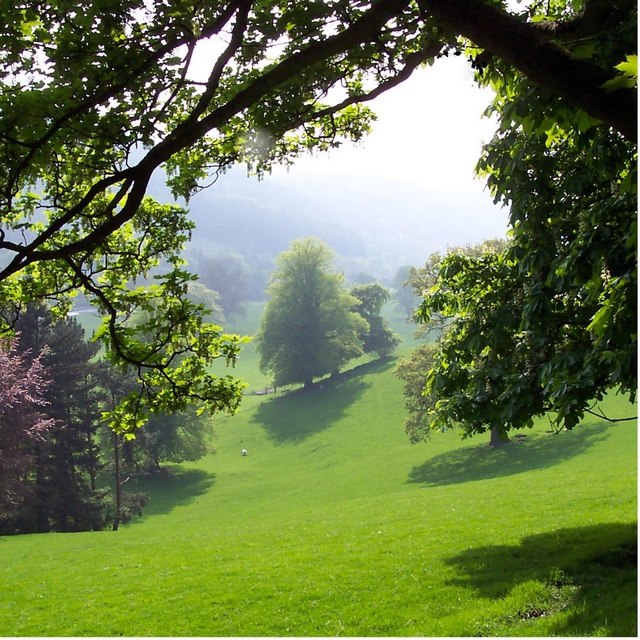
One of the fascinations of archive material in particular is the way that it makes things specific: takes large, overarching topics and presents them in terms of particular instances, anchored to real people and real places. Today, of course, we will be looking at an item that takes us to Wales: to Rhagatt Hall in the valley of the River Dee / Afon Dyfrdwy, just downstream of the small town of Corwen.

Over the years this blog has featured extensive coverage of the Library's seventeenth century recipe books. Those are, however, simply the tip of the iceberg: manuscript recipe books continued to be compiled throughout the eighteenth century and on into the nineteenth, finally beginning to fade from common use in the second half of the century (although they are by no means extinct even now). Like the seventeenth-century volumes, these later examples mingle medical, culinary and household management instruction, in varying proportions according to the compilers' preoccupations. Their main point of difference from the earlier books is in their greater use of printed cuttings: as time passes we see people less willing to transcribe every recipe in longhand, when they can cut out something from a printed source and paste it into the recipe book, and some from this late period are composed almost entirely of cuttings.

Today's Welsh item is a recipe book from this late period. MS.8459 is a small volume containing some 130+ pages of medical recipes and other very assorted material, which was formerly owned by Jane Margaret Lloyd (1822-1912) of Rhagatt Hall, daughter of Edward Lloyd of Berth and Rhagatt, and Frances Madocks, daughter of John Edward Madocks of Fron Iw, Denbighshire. It is unclear whether she had the volume compiled or simply came into ownership of it at some stage. Within the volume are recipes for medicines, including homoeopathic ones, and some reports on experiences of their use; there are also recipes for the treatment of cats and dogs. Inserted items include prescriptions: one, dispensed by a chemist in Rhyl, is for a Mrs. Ffoulkes, probably Jane Lloyd herself, since in 1861 she married the Ven. Henry Powel Ffoulkes, archdeacon of Montgomery. There are various cuttings, including at least one in Welsh, the latter forming part of a collection of material on the use of violet leaves to treat cancer. Another cutting provides the lyrics to some popular songs, one of which - "The Lum Hat" - takes us into the realm of broad Scots dialect. Finally, taking us a very long way from Wales indeed, there is an invitation from the Officers and Council of the Japan Society to a Mr Herbert Tinker, asking him to an event also attended by His Excellency the Japanese Minister in the United Kingdom (this would be Count Hayashi Tadasu, who served as Minister from 1900 to 1905 and then as Ambassador for a further year). The presence of the last item, without any explanation, is evidence of the sheer unpredictability of archive material!

Archive material may be unpredictable: but one thing that one can predict, without much fear of contradiction, is that the Library's holdings are sufficiently various for pretty much any subject or part of the world to be represented somewhere in them. This one item is, of course, just a little sample of our Welsh material: the full list of hits on the words "Wales" and "Welsh" in the archives catalogue comes to over 8000. (Our sources guides on British Local History and Topographical Photographs provide a more manageable introduction.) On this day of all days, have a look through them.

Images:
1/ Daffodil, copyright Albert Bridge; from the Geograph website and licensed for reuse under this Creative Commons Licence.
2/ Title page and start of contents, MS.8459.
3/ Material on treatment of cancer, MS.8459.
4/ Inserted prescription envelope, MS.8459.
5/ Valley of the River Dee, near Rhagatt Hall, copyright Jonathan Billinger; from the Geograph website and licensed for reuse under this Creative Commons Licence.

Wednesday, July 13, 2011

New issue of Wellcome News

Published four times a year, Wellcome News contains up-to-date articles highlighting the Wellcome Trust's wide-reaching science and public engagement activities, grant schemes, policies and more.

The latest issue's 'From the Archive' feature, highlights one of our digitised recipe manuscripts (MS.7113), compiled by Lady Ann Fanshawe in the 17th century.

The issue also contains an extra supplement, Wellcome News 1936, to tie in with the Trust's 75th anniversary. The supplement imagines how Wellcome News might have looked in the year of the Trust's founding, and is inspired by material from the Library's collections.

Both Wellcome News - and its 1936 supplement - are available to download from the Wellcome Trust's website.

Friday, October 1, 2010

Say cheese!

One of those quotations that comes up again and again is General de Gaulle’s complaint about the impossibility of uniting France: “How can anyone govern a nation that has two hundred and forty-six different kinds of cheese?” For the serious gourmet, of course, the riposte is, “How could you not want to govern a nation with that much cheese?” France’s cheeses are justly celebrated. Less well-known is Britain’s wealth of cheeses: sweet or strong, creamy or crumbly, pale or orange red, with or without the blue that comes from mould and yes, made from various milks (contrary to common belief, one does not have to cross the Channel to meet cheese made from sheep or goat’s milk). The heritage is a long one: Cheshire, Britain’s oldest cheese, dates from at least the eleventh century and is mentioned in the Doomsday Book - it was old enough and famous enough for London to have pubs named the Cheshire Cheese before Camembert was even thought of. This is British Cheese Week, a week of events to celebrate this wealth (for more information, visit the appropriately named British Cheese Board or simply Google to find recipe sites such as this one). With apologies to any lactose-intolerant readers, today’s posting exploring the Wellcome Library holdings takes as guiding principle the words of the nation’s favourite eccentric plasticine inventor: “Cheese, Gromit! That’s it! We’ll go somewhere where there’s cheese!”

First, make your cheese. As has been mentioned before, the Wellcome Library’s manuscript books of recipes often contain not merely medical advice, but information on anything that might help to run a household. One such mixed bag is the book compiled in the late seventeenth century by the Boyle family (one of the writers is apparently Katherine Boyle, afterwards Lady Ranelagh (1614-1691), who was the sister of the physicist Robert Boyle). (MS.1340, complete digitised facsimile here.) Most of the recipes are medical but we also find many culinary ones, including several for cheese. We will pass over the recipe for “slipcoat cheese” as a little complicated for beginners and instead give the one for “a winter cheese”, to give our readers something consoling to read as the British weather begins to bite:

Take the Mornings Milk Strained, and the Cream of the morning and night before strained into it, if it be too cold warm some of the Milk: Put a little quick Rennet into it the less the milder it will be, Cover it and let it come [= curdle] leisurely[;] when it is come turn it gently with a thin disk, pressing it down with warm hands, Whey it [= drain off the whey] and heave it into a Cheese vate [= vat], laying a plank on it press it by degrees, Cloth it and turn it as you See cause, about 4 hours after when it is well wrung turn it out of the vate into a clean tubb and with a long knife Slash it in thin pieces and wipe them dry with a cloth and put them in fair water in another tubb, then dry them in a cloth and put them in the former tubb, Mash it all to crumbles, and having saved 3 pints or less of the Nights Cream not put into the Cheese before pour that Cream into the Crumbled Cheese now, Mix it very well and then heave it gently into the Cheese-vate; having a wett Cloth in it, Lay the plank very warily and weight very little at first, turn it that Night in Moist Cloths and next day you may put on more weight but with care Salt it. Some like Butter in stead of Cream in the Mashing. It may be made from the beginning of May till the latter end of August. (The recipe is split between two pages, beginning on MS.1340/67 and continuing on MS.1340/68.)

Just the thing to bring out in the dark days of winter, though the recipe has its frustrating aspects. These are recipes written as an aide memoire, or a note to future generations of the family: they are not a complete step-by-step guide for a stranger to follow, and so assume a great deal that is not made explicit, dodge back to expand on things mentioned before, and generally have a more conversational tone than today’s instruction manuals. How much swearing there would be from anyone who tried to follow this recipe from scratch without reading it through first: that casual mention two-thirds of the way through of “having saved 3 pints or less of the Nights Cream not put into the Cheese before” would derail almost everyone.

Having made your cheese, some would say that this is all you need – well, that plus some crackers or wine to accompany it. The many recipes that you can make using cheese, however, also occur in our holdings. A quick search of the archive catalogue reveals several recipes for cheesecake. A modern recipe for this tends to involve one buying commercially-produced curd cheese but of course these recipes date from a time when that basic ingredient was also something that you would have to make yourself, so the process begins right back at the milk stage. This version of the recipe comes from a book compiled by the Gibson family (MS.311, complete digitised facsimile here) in the seventeenth century:

Take 5 quarts of new milk and one of creame, sett it to sam [ = curdle], then whey it [ = drain off the whey] and rub it well that there be no lumps in it, then take almost half a pound of butter melted[,] ten yolks of eggs, mix these all together with a little rose water, then sweeten it to your tast[e], and to fill them, you may put in currents or what spices you please. (MS.311/53)

As mentioned above, these recipes take a lot for granted: only by looking at the next recipe in the book, also for cheesecake, would you know that the final stage is to put this mixture in a dish lined with pastry and then to bake the cake! The seventeeth-century oven, of course, was not predictable: the heat came from a fire and individual ovens would differ radically, even from day to day. We must not, therefore, look to recipes from this period for precise instructions on oven temperature and cooking time – and readers trying these at home should be prepared for many instances of trial and error…

Turning from sweet to savoury, MS.1325 (complete digitised facsimile here), a largely anonymous compilation again from the late seventeenth century, includes a recipe for “an Amlett of Cheese”:

Take Eight Eggs & break – grate a Nutmeg in a little Salt. Beat them well. Take a pound of Parmasan Cheese & grated put to the Eggs. Then take a [penie = penny?] of Butter & put into a ffrying pan & Melt it Then take half the butter & put it to the Eggs & Stirr them well about. Then put in the Eggs into the ffrying pan and ffry it on One Side[;] w[i]th a hott frie Shovell warme your Amlett on th’other Side. Then ffould it up ffoure Square and put it on a Plate. Squeese an Orring over it and Garnish with Orring. (MS.1325/87)

Cheese, of course, is not to everyone’s taste. We would be unfair if we did not mention this, sad though the present writer finds that concept. A piece of medical ephemera in the collection sums up this dichotomy. The early nineteenth-century humorous broadside “The Physician’s Receipt” describes a how a patient with fever may be treated with soup made from leeks and toasted cheese. If the patient is Welsh, this will cure him – Welshmen, in jokes from at least the sixteenth century onwards, being depicted as loving cheese almost as much as they do leeks. If he is English, it will kill him. Well, de gustibus non est disputandem [there’s no accounting for tastes]: you don’t have to be Welsh to love cheese (although British Cheese Week does include quite a few events in Wales) and you don’t have to come from east of Offa’s Dyke to dislike it. For those of us who find it irresistable, the Wellcome Library’s holdings provide plenty of ways to think about it and while away the time until one gets home and can raid the cheese-board.

Wallace and Gromit footnote fact: according to this interview, the word “Cheese” even shaped Wallace’s face: the way that his mouth projects beyond his cheeks was suggested by the way that actor Peter Sallis said “cheeeese” when he voiced the character.

Images, from top:
1/ Cheese and crackers: from Wellcome Images (image N0028321)
2/ Presses, including a cheese press top left: from the Library's Iconographic Collections and also visible on Wellcome Images as image V0023780.
3/ Another recipe for cheesecake, this time from the eighteenth century: MS.7747 by Mrs Frances Ranson. Also visible on Wellcome Images (image L0031621).
4/ The Physician's Receipt: reproduced from Wellcome Images (image L0003617)

Monday, March 15, 2010

Institute of Historical Research Seminar

Tomorrow evening (Tuesday 16th March), as part of the Spring Term 'Archives and Society' Seminars at the Institute of Historical Research (IHR), Senate House, London; the Wellcome Library's Helen Wakely (Archivist) and Julianne Simpson (Rare Books Librarian), will be giving a talk entitled 'The secret ingredient: Hunting early modern recipes and their context in print and manuscript'.

The seminar is free, begins at 5.30pm and for those wishing to attend, more details are available through the IHR's website.

Tuesday, March 2, 2010

The crust of it!


This week is National Pie Week in Great Britain, celebrating the long history of pies and pasties in British cookery. Although the haggis and the Roast Beef of Old England occur more in song and story, food wrapped in pastry is a running motif in the story of British cookery, eaten by kings and labourers alike. The Wellcome Library’s holdings relating to food are extensive – we have already mentioned, for instance, our large number of manuscript recipe books, of which the seventeenth-century items are now online. Browsing through these, the reader comes across all manner of pies: penny-plain or decorative and fancy, basic and nutritious or figurative and metaphorical, palatable or disgusting. Here we highlight some pastry-wrapped delicacies from our collections.

All manner of recipes for savoury pies occur in the manuscript collection. For the modern reader, used to the dominance of a few types of meat as pie fillings, their variety comes as a surprise: in particular, seafoods are a common filling, with oysters, lobster and shrimps (the last-named being measured in quarts rather than by weight: a heroic quantity) all being used. We, however, will highlight another recipe, one that sheds incidental light on a common turn of phrase. We speak still of someone “eating humble pie” when we mean that they have been humiliated: the expression comes ultimately from a French word for the entrails of a deer, Humble Pie (or Umble Pie, as it was originally) being made from these less choice cuts after the more sought-after parts of the animal had been taken. In our MS.3769, compiled by a Mrs Jane Parker around 1651, we find a pie slightly further down the social scale than this, even: an ersatz Humble Pie to be made from lamb’s meat.

To bake a lams head and portinance [viscera] in a pie to eat like the Umbles of a dear

Take a lambs head and portenance and parboyle it a litell and then Chop it small as you doe for minst [mince] pies with a po[u]nd of beefe suet, a pou[n]d corrance [currants] [and] a few sweet herbs[;] season it with peper and salt and so bake it[.] When it comes out of the oven you may put a litell sack [sherry] with a litell sugar and a litell boter [butter] and warme it and put it into the pie.

How to make the pastry case, in this recipe, is seen as too obvious to bother mentioning. Noticeable also in seventeenth century recipes is the absence of timings or oven temperatures – these are refinements that only come in when items are cooked in predictable gas or electric ovens. Working on an old-fashioned kitchen range, whose temperature would differ from house to house and from day to day, the cook would simply put the item in and let it bake until it was done, testing frequently and adjusting in the way we still do now with items cooked on the top of the stove.

The British pudding, in which beef suet can be used in a sweet dish, often startles people from other countries. It is interesting to see the same combination of suet and fruit in this savoury dish, suggesting that we are misguided in drawing a sharp line between sweet and savoury dishes when looking at these traditional recipes. The recipe book of Hannah Bisaker (née Buchanan), dating from 1692, endorses this view, with the many pies listed in its opening pages including, next to each other, “Veale Pye Savery” and “Veale Pye Sweete”. As we noted in an earlier blog posting, however, Bisaker’s recipe book is of particular interest for the attention it pays to the outside of pies as well as their content. For Jane Parker, the pastry case was something not even worth mentioning in the recipe. Hannah Bisaker, in contrast, gives up several whole pages to templates for elaborate pastry shapes. Whatever the content of her pies – and as well as the two veal recipes mentioned above, she cites hare, venison, mincemeat (using real meat) steak and “stump pie”, a sweet recipe combining meat, sugar and dried fruit, just in the first few pages – they would be housed with appropriate care and ceremony.

From pies literal to pies figurative, and a much less palatable recipe. On the shelves of the Library's Reading Room, Howard W. Haggard's 1929 history of medicine Devils, Drugs and Doctors reproduces a caricature by Robert Cruickshank (brother of the more famous George) in which a corpulent doctor tucks into "Cholera Pie". The image reflects the belief that an epidemic that was disastrous for the public was good financial news for the doctor: his pie here rests on a table labelled "Board of Wealth", a pun on "Board of Health". For the ultimate in unsavoury pies, however, we must go to Fleet Street and the story of Sweeney Todd, the famous barber whose customers reputedly ended up in the products of his neighbour's pie shop. Sweeney Todd: the real story of the demon barber of Fleet Street sits on the Library's shelves at shelfmark KM.43 (and in passing, how many of our readers know that this shelfmark takes them to a long rank of works on famous British murderers?). Mercifully, it contains no recipes.

The image at the head of this posting is an engraving after Hogarth, whose details can be seen here.

All recipes cited here are tried strictly at the cook's own risk; and pies containing human flesh, of course, should not be made at all.

Tuesday, December 1, 2009

Item of the month – December 2009

As the season of good cheer inexorably draws nearer, it is customary to be bombarded with ‘essential’ lists of what to wear, buy or cook. If you fancy jumping off the consumerist bandwagon but would still appreciate a little festive guidance, why not print out and keep our Top 10 Tips for Surviving Christmas - 17th century-style.


1. How to reduce Subtraction of Money? Difficult in the short term, try making a New Year’s resolution and in the meantime if necessary resort to a syrup for melancholy
2. Surprise visitors with your idiosyncratic mince pie designs


3. If the mince pie pressure gets to you, try a spoonful of Lady Allen’s cordiall water (comforting and good for passions of the heart)
4. Or alternatively a bracing glass or two of cowslip wine
5. Hangover cure ‘for one that is paralettick’ – self-explanatory
6. Rejuvenate complexions dulled by too many mince pies and wine with a frog sperm and mercury face wash (‘Another water for the face’ on p.110)
7. House a mess? Your in-laws will be able to eat Christmas dinner off the floor after a wipe down with Mrs Mason’s spermaceti and camphor soft soap
8. But just in case, stock up with a good purge for any gastric problems
9. How to cook a husband - in case you leave it too late to order the turkey and have to make do with what's to hand
10. And for when it all inevitably gets too much… laudanum

For further top tips, try browsing the digital versions of the library’s 17th century domestic recipe manuscripts.


Friday, November 27, 2009

A Friday night curry

We are what we eat. This is most obviously true in the physical sense, but also culturally: our diet expresses our society and encodes a wide variety of cultural influences. Not only does our food say who we are now as a society; it also tells us of where we have been, of the history of our society and its encounters with other cultures, other gastronomic spheres, over time.

This is National Curry Week in the United Kingdom, and it would be hard to find a better example of food as a route into social history. The dominance of curry in the British diet – the Roast Beef of Old England is now eclipsed by Chicken Korma as a favourite dish – is of course the result of Britain’s encounters, by trade and then imperialism, with the Indian Subcontinent. As curry was assimilated into the British diet, it was transformed and becomes a cultural hybrid, located somewhere between the two culinary cultures. The delicate flavours that come from using fresh spices are eclipsed when the nearest fresh cumin is several thousand miles away and the cook is working with dried powders or paste: instead, we end up with a thicker, hotter sauce which becomes, at its most extreme, the brick-red paintstripper favoured as a rite of passage by the weekend beer monster.

It can be a surprise to see how early curry recipes begin to appear in domestic recipe books: long before Britain had a formal empire in India and long, long before mass immigration from the Subcontinent. One of the most influential early cookery books, Hannah Glasse’s The art of cookery, made plain and easy (1748), contains recipes for curries and pilaus:

"To make a Currey the India Way"
TAKE two Fowls or Rabbits, cut them into small Pieces, and three or four small Onions, peeled and cut very small, thirty Pepper Corns, and a large Spoonfull of Rice, brown some Coriander Seeds over the Fire in a clean Shovel, and beat them to Powder, take a Tea Spoonful of Salt, and mix all well together with the Meat, put all together in a Sauce-pan or Stew-pan, with a Pint of Water, let it stew softly till the Meat is enough, then put in a Piece of Fresh Butter, about as big as a large Walnut, shake it well together, and when it is smooth and of a fine Thickness dish it up, and send it to Table. If the Sauce be too thick, add a little more Water before it is done, and more Salt if it wants it. You are to observe the Sauce must be pretty thick.


This is no isolated exotic recipe: below it are two recipes for Pellow (pilau). Each ends with a note of hard-won, presumably bitter experience: the first one reads

"You must be sure to take great Care the Rice don't burn to the Pot."


By the nineteenth century, the British love affair with curry is well established. Recipe books in the collection such as MS.7111 contain instructions on how to mix spices to make curry powder. The powder might be applied to a wider variety of meats than we now expect, as we learn from the Johnson family recipe book (MS.3082) compiled during the 18th and early 19th century: on page 148 of this, we read

"A curry may be made of Meat, a Rabbit, Fowl or Lobster, cut in limbs or cucumbers. First [fry?] them a light brown, then put it in the Gravy to stew with the Juice of a Large Lemon, a little Salt and one Onion chopt small when almost finished stir in it nearly a large Spoonful of curry powder … Either dish your Rice up by itself or put it on a Dish & put your Curry in the middle – You may Thicken the Gravy with a few Blanchd Almonds."

It is doubtful whether this would be recognised as curry by anyone east of Suez, but such recipes added variety to the native diet and hinted at the great networks of trade and empire that fanned out from Britain at this time. Within this country, recipes would be exchanged and disseminated. One of the Library's quietly evocative items is a collection of loose recipes collected by a Mrs Turnbull in the mid-19th century (MS.5853): internal evidence suggests that in the 1820s she had been in India, but was now resident back in Surrey. The recipes, for things such as Dhall Bhât (MS.5853/86) or "Colonel R's curry" (MS.5853/91), speak of old India hands swapping recipes and of memories of the Subcontinent kept alive by cookery. It can surely only have been nostalgia that led her to preserve the recipe for a lethal compound to be spread on furniture as a preservative against termites, which has as one of its ingredients "1 quart of the worst Bazar Mustard" (MS.5853/85); unless Surrey has changed beyond all measure in the last 150 years.

The top illustration shows the frontespiece to Hannah Glasse's The art of cookery, made plain and easy, in an edition dating from c.1770. The lower illustration shows a curry powder recipe from MS.7111.

Friday, September 25, 2009

17th Century Recipe Book project completed

As we mentioned some time ago in a previous blog post, the Library has digitised 76 medical recipe books from its collections, and has now made available all the transcriptions of the recipe titles (transcriptions were created by Backstage Library Works). These titles are searchable via the Archives and Manuscripts catalogue. There are now tens of thousands of recipe titles containing original spelling and associated Library of Congress or MeSH subject headings to enable researchers to search within the text of these fascinating manuscripts. Individual pages and entire manuscripts are also available online in PDF format.

The following is MS 1, a manuscript of medicinal and culinary recipes (including a recipe for roast peacock, and another to cure bedwetting), from 1621. You can use Scribd to download this PDF as well. For best results, go to "More - View Mode - Slide mode" and view full screen.

MS1Acton_Grace

Wednesday, August 26, 2009

Cooking in the City

The Wellcome Library has recently acquired the "Book of Receipts for Cookery and Pastry 1732 & c." (MS.8687) started by Sarah Tully, who married Richard Hoare of the London banking family in 1732, and continued by other hands, presumably following her early death in 1736. The early pages of this volume are written out in a very fair hand and it seems quite likely that this was done either by Sarah Tully herself or a relative as a preparation for her wifely duties in running her husband’s household. Richard Hoare later became Lord Mayor of London and was knighted in 1745.

The volume contains the usual mixture of medical, household, veterinary and culinary recipes, and includes, pasted inside the front cover advertising broadside, printed in English in Venice, for the famous theriaca fina or Venice treacle, a honey- or molasses-based composition thought efficacious against poisoning, sold at the "Aquila Nera" [At the Sign of the Blak Eagle] in the Merceria San Salvatore.

The culinary recipes indicate a cosmopolitan and sophisticated household. Some connection with India, or at least the East India Company, is suggested by recipes for "A Loyn of Mutton Kebob’d" "pilau after the East Indian Manner", "currie powder" and “Indian pickle”. There is some evidence for European travel or contacts, with instructions on how "To make mackrony' [macaroni] - including "Parmason cheese", specified, and to prepare "Fromage Fondu". There are also details of how "To make Chocolate as prepared for the King". Whether these somewhat exotic items were actually prepared within the Hoare household may possibly be revealed by consulting the archives of C. Hoare and Co., private bankers, which include ten boxes of bills and receipts relating to Richard Hoare’s household expenditure, 1727-1754.

The medical recipes include "An Excellent rect. [receipt] for ye heartburn brot from Italy by the Duke of Shrewsbury", "Dr Radcliffe's Specifick for the Cholick"; "A Tincture for the Gout or Cholick in the Stomach" also ascribed to Dr Radcliffe, and "Mrs Masham's universal Purge" - which may or may not reflect the after-effects of the rich and exotic dishes described.

Monday, July 6, 2009

Search our recipes by title


We announced in April that the Library’s 17th century recipe books have been digitised in their entirety and mounted online via the Wellcome Library Archive and Manuscript Catalogue. Now we are in the process of making the recipe title transcriptions available to enable deeper searching into the actual text of the manuscripts.

Each image has now been described in the catalogue. This comprises the fully transcribed recipe titles (using original spellings) visible on that image, and the appropriate Medical Subject Headings and/or Library of Congress subject headings.

Each record contains a link to a PDF of the image in question, which can be reused under a Creative Commons license. To see the complete cover-to-cover PDF of a manuscript, and/or the other pages contained in it, click on “See this in context” near the top of the record.

So far over a dozen manuscripts have been described in this way, with the rest coming online over the summer.

For examples, see Lady Ayscough’s Receits of phisick and chirurgery, dated 1692, including such recipes as: For the Piles being outward, For ye wormis for A child, Wind Collicke, and To expell ye Pox and preserve ye heart.

Wednesday, April 8, 2009

Bon Appetit


The Wellcome Library is pleased to announce that its entire collection of 17th century receipt (recipe) books - 75 manuscripts in total - have been made available online. They are currently available as PDFs from our catalogue records. We have further information on this project on our Library website digitisation pages and in our latest edition of Wellcome News.

In order to keep the PDF file sizes down, they have been compressed, and in many cases, blank pages have been left out. We also store high-resolution images of every page of these manuscripts, and if required you can order these by visiting Wellcome Images.

Mounting the images online is only half the project - stay tuned for our announcement regarding the indexing of the recipe titles, which is currently in progress.

Tuesday, February 17, 2009

Kitchen sink dramas

Is it just me, or does recipe-swapping seem to be spreading across the media like a benign virus? Every weekend paper worth its salt has a recipe-exchange corner nowadays, while online you’re spoilt for choice, from the reassuring videos on What's Cooking Grandma? to the erudite and frankly surreal offerings on Ken Albala’s Food Rant.

Recipes have long been a staple of the print media, but perhaps the economic downturn is sharpening our appetite? Recipe-swapping is just so comforting – it gives us a warm glow to imagine ourselves thrifty cooks using up those leftovers, to recall beloved family and friends through meals shared, to enter a virtual community of fellow swappers.

Popular interest in recipes is matched by a growth in academic research into historical recipe collections. You would expect to find food history and material culture on the menu, but recipe collections provide rich pickings for a wider range of themes including women as medical practitioners, cultural and economic trends, and the literary role of recipes in life-writing.

Research by Elaine Leong and Sara Pennell on recipe exchange as a form of currency highlights just how familiar our recipe-swapping would seem in early modern England. 17th century housewives didn’t blog, but their recipe collections were as interactive as any wiki, the frequent amendments and annotations reflecting their compilers’ social, familial and economic networks.

The issue of trust spans the centuries - both manuscript and online swappers need to make judgements about the reliability of the recipe’s source. As Leong and Pennell show, the same criteria came into play then as now – do we know the source personally? If not, do we have a friend in common? Or is the source trustworthy by professional reputation?

Well, I’ve think I’ve talked myself into swapping some recipes. As my cooking is definitely not worth trusting, I’ll share some from the Wellcome Library’s manuscript collection. Digital images of the 17th century recipes are now available online, so to tempt you into exploring this rich resource and to test your kitchen skills to the limit, I’ll be posting 17th century recipes here from time to time. To start things off, I’ll do a little name-dropping with a recipe for ‘Sugar Cakes’ from Lady Ann Fanshawe, the wife of Charles II’s ambassador to Portugal and Madrid:

‘Take 2 pound of Butter, one pound of fine Sugar, ye yolkes of nine Egs, a full Spoonfull of Mace beat & searsed [sifted], as much Flower as this will well wett making them so stiffe as you may rowle it out, then with the Cup of a glasse of what Size you please cutt them into round Cakes & pricke them and bake them.’ (Reference MS.7113, p.286)


Let us know how you get on…

Friday, December 19, 2008

17th century recipe books online - call for testing

Please take a moment to test out our exciting new digitisation project. The Library’s first venture into full-text digitisation is underway with the photography of 17th century manuscripts from our collection of recipe ("receipt") books. These manuscripts contain household medicinal and culinary recipes, often written by women. The project will not only produce cover to cover digital surrogates, but create a rich index to the level of individual recipes.

Four examples of entire manuscripts have been made available for viewing online and we would welcome your feedback. You can use the comments section of this blog, or email us direct at SystemsStrategy@wellcome.ac.uk.

MS 1
MS 108
MS 144
MS 1791