Showing posts with label history of pharmacy. Show all posts

Thursday, February 23, 2012

Pills and Potions at Royal Holloway


This Saturday (25th February) Wellcome Library Research Officer Ross MacFarlane will be speaking at Pills and Potions, Royal Holloway University’s 2012 Science Open Day.

The title of Ross’s talk is Henry Wellcome: Invisible Ink to Pills and Potions and in it he will explore Wellcome’s career as a pharmaceutical entrepreneur, from boyhood dabblings in his Uncle’s pharmacy store to the pioneering work of the drug business he co-founded.


Royal Holloway’s Science Open Day showcases the extensive research and outreach of the College’s science departments. Events include talks, demonstrations, visits, and hands-on workshops. So, if you fancy learning about the chemistry of ice cream, making a model of your own DNA or even discovering the healing power of tomatoes, come along.

More details on the Royal Holloway Science Open Day (25th February, 10am-4pm) – including a full programme- are available on the University’s website.

Saturday, June 25, 2011

The lost world of Snow Hill


The image above captures the popular conception of London's reaction to the Blitz, which was arguably at its most fearsome during May and June 70 years ago. During the night-time bombings, lives were lost and buildings were destroyed. But come the morning... a cyclist trundles by, a roadsweeper brushes up: life goes on.

The remains of the building you see here are actually enormously important to the story of our founder Henry Wellcome, as this is the corner of Snow Hill and Holborn Viaduct in London, the site of the head office of the pharmaceutical company he co-founded, Burroughs Wellcome & Co.


Opened in 1883, three years after Silas Mainville Burroughs and Henry Wellcome entered into partnership, the scale of their head office matched the expectations Burroughs and Wellcome had for their nascent pharmaceutical company.

The imposing building was constructed of red brick, with granite pilars guarding the entrance. The tiled mosaic floor of the was illustrated with images of Commerce and Industry and the rich wood used for the walls was best American Walnut. [1]


Henry Wellcome was personally involved in designing and furnishing the interior of the building: no easy task given the building's curved shape. As the image above shows, Moorish curves were ideal for a building Wellcome himself described as having "not a single right-angle". The interior arrangements were executed under the direction of Christopher Dresser, now regarded as Britain's first industrial designer. Snow Hill was also one of the first business houses in London to be lit using electric light.

The interior alluded to Burroughs and Wellcome's country of birth with models of the Statue of Liberty and the American Eagle (visible towards the back of the image above) and the building captured something of the entrepreneurial get-up-and-go of these two salesmen.

The building also hinted at another aspect of Wellcome's personality: his growing interest in collecting. This is how Wellcome's office was described in a praiseworthy report on the building in Chemist and Druggist:

"It is furnished as a library, although hunting trophies, works of art from countries visited by the occupant...and a varied selection of general literature give it less the look of a commercial room and more the appearance of a bachelor's den". [1]

Fast forward to 1941 and it seems this example of late Victorian architecture was no longer fit for the purposes of twentieth century business: five years after Henry Wellcome's death, the Wellcome Foundation still retained Snow Hill as offices, but sought to build new premises elsewhere in London.

On the night of 10-11 May 1941, during one of the heaviest nights of the Blitz, the Snow Hill building was destroyed. Afterwards, staff were temporarily moved to other Wellcome owned sites - such as the main warehouse where Wellcome's collection was stored in Willesden and to the Wellcome Research Institution on Euston Road (which is now, of course, where the Library and the rest of Wellcome Collection is situated). Not ideal accommodation, but just as for the figures beside the bombed out Snow Hill offices shown above, life had to go on for the employees as well.

But with its carefully designed interior - and his collection-rich office - the lost world of Snow Hill captures something of Henry Wellcome's - often elusive - personality.

[1] Clues to the furnishings of the Snow Hill office remain through drawings which survive in the papers of the Wellcome Foundation Archive, WF/CA/P/01
[2] Chemist and Druggist, 28th January, 1888

Images:
- Burroughs Wellcome & Co Headquarters, Snow Hill, London, after being destroyed in the Blitz, 1941 (Wellcome Images, M0020173)
- Burroughs Wellcome & Co Head Office, Snow Hill, London (Wellcome Images, M0007868)
- Interior of the Burroughs Wellcome & Co building, Snow Hill, London (Chemist & Druggist, 28th January 1888)

Monday, September 27, 2010

Item of the Month, September 2010: Articles of Partnership

Today marks the anniversary - 130 years ago today - of the signing of this legal contract by two young American pharmaceutical salesmen: Henry Solomon Wellcome and Silas Mainville Burroughs.

The document described the business partnership that the two men entered into. The business formed - Burroughs Wellcome & Co (BW&Co) - would by 1900 establish itself as a multinational pharmaceutical company. Indeed, the monetary means for Henry Wellcome to acquire his collections - and the existence of the Wellcome Trust itself - can be traced back to the partnership described in this six page document.

We have previously - and will no doubt continue to in the future - write posts on different aspects of Wellcome's life, so it seems appropriate on this particular anniversary to say a little more about the man he entered into business with.

Born into relative prosperity in Medina, New York, Burroughs was the son of Silas Mainville Burroughs, Sr, an American Congressman. After working as a travelling pharmaceutical salesman Burroughs (Jnr) graduated from the Philadelphia College of Pharmacy in 1877.

Employed as a salesman for the American pharmaceutical business John Wyeth & Bros - leaders in the new field of compressed pills - in 1878 Burroughs travelled to London and founded Burroughs & Co. This deal gave Burroughs sole rights to sell Wyeth supplied products outside the USA and also allowed Burroughs leverage to market and a range of other products under his own name.

As Burroughs's sales exapnded, he sought help from a peer from the Philadelphia College of Pharmacy - Henry Wellcome. Wellcome at this time was working as a salesman for another pharmaceutical firm in the USA - McKesson & Robbins - and was building up a promising reputation amongst his peers. Through a series of letters from late 1879 to early 1880 - and now preserved in the Wellcome Library - Burroughs convinced Wellcome to move to London, perusading Wellcome that entering into partnership with him in England offered more prospects for success than continuing to work in the US.

No doubt due to the fact that he died in 1895, leaving Wellcome in sole charge of Burroughs Wellcome & Co - and perhaps also from the fractious business relationship the two men had by the time of Burroughs' death - Burroughs' role in the partnership has until recently been underrated.

Wellcome has traditionally been regarded as the marketing mastermind behind the company's success. However, Burroughs was no mean salesman himself. For instance, it was Burroughs who introduced to the pharmacy trade in this country the notion of 'detailing' - explaining face-to-face to doctors and chemists the company's products and passing on to them free samples.

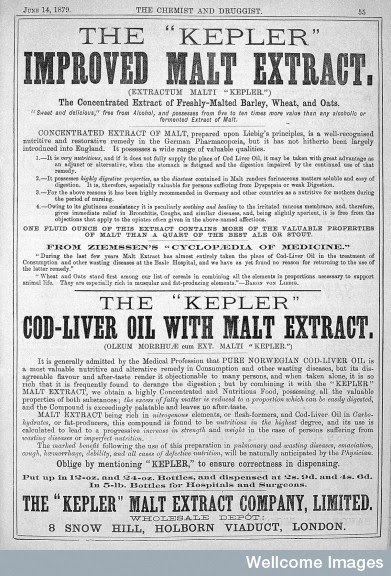
Also, before their partnership, Burroughs had added to the list of products he sold, two brands which would prove to be among the most successful for Burroughs Wellcome & Co: Hazeline (an extract of witch hazel, marketed as face cream) and Kepler malt extracts (to provide nutritional sustenance).

So, when the two men added their signatures to the document shown above, Burroughs was very much the senior partner: he had persuaded Wellcome to move across the Atlantic to London and had put up £1200 in relation to Wellcome's £800. Over the next fifteen years however, and as their business would flourish, their personal relationship would wither. So let's leave Burroughs and Wellcome in September 1880 with the ink still drying on their agreement and their futures ahead of them. The disintegration of their relationship can wait for another Blog post.

Images:
1/ Articles of Partnership between Silas Mainville Burroughs and Henry Solomon Wellcome, 27 September 1880 (WF/E/02/01/02/27)
2/ Silas Mainville Burroughs, photographed in 1885 (Wellcome Library no.
14368i)
3/ Advertisement for Kepler from 'Chemist and Druggist', June 14th, 1879


(For more on Burroughs the salesman, see the following article: Roy Church, 'The British Market for Medicine in the late Nineteenth Century: The Innovative Impact of S M Burroughs & Co', Medical History 2005 July 1; 49(3): 281–298 (available online through PubMedCentral) and the book Burroughs, Wellcome & Co.: Knowledge, Trust, Profit and the Transformation of the British Pharmaceutical Industry, 1880-1940 by Roy Church and E. M. Tansey (Crucible Books, 2007)).

Tuesday, August 17, 2010

Norman Heatley OBE (1911-2004) - The unsung hero of Penicillin

In May 1940 Norman Heatley applied for the Philip Walker Studentship in Pathology, University of Oxford. He wrote:

“Since October 1939 I have been helping Professor Florey (in collaboration with Dr E. Chain) in the investigation of the naturally occurring bactericidal agent “Penicillin”, which is formed by a certain species of mould. This material was first reported in 1929, but in spite of its obvious practical importance, --- for it seems to be completely non-toxic to mammalian tissues, --- practically no further work on it has been published. It is possible that during the last decade several people have begun work on this problem but have been discouraged by its apparent instability, or the difficulty of obtaining it, or the laboriousness of measuring its activity. During the last six months a technique has been worked out in this laboratory by which a steady and increasing supply of the material is assured; at the same time a method of assay many times quicker than that used previously has been evolved, and already a considerable purification of the active principle has been achieved. We have shown that enormous doses of the material can be injected intravenously into mice without harmful effects, and it is known that certain pathogenic bacteria are inhibited or destroyed by very low concentrations of it. At worst, penicillin will be a valuable bacteriological reagent for the isolation and cultivation of certain difficult bacteria; at best, it may turn out to be a therapeutic agent of the highest immediate importance (e.g. for the treatment and prevention of infection in war wounds)” (Letter contained in PP/NHE/B/2/3).

The way in which Heatley, (as part of the team that developed penicillin), continued the “investigation of the chemical, pharmacological and bacteriological properties of penicillin” and the enormous impact the results had on millions of lives throughout the world is documented in the recently catalogued Heatley archive.


Originally consisting of just one box of material, listed and deposited in the Wellcome Library in the early 1980s (and given the collection reference GC/48), the collection was greatly enlarged by the donation of additional material from Mercy Heatley, following her husband’s death in 2004. Now comprising 30 boxes and catalogued with the collection reference PP/NHE the Heatley archive informs researchers in three main regards: it records the career of Norman George Heatley, biochemist and experimental pathologist; it forms an important source of original and retrospective material on the history of penicillin and antibiotics; undoubtedly, it conveys Heatley’s exceptional skills as a scientist as well as his personality - meticulous, modest, courteous and infinitely helpful.

The collection includes:
• Norman Heatley’s laboratory research notebooks, including those recording
breakthrough work with Howard Florey on the therapeutic effects of penicillin, in Oxford May 1940 (see PP/NHE/A/2/1/4).
• Correspondence and papers relating to Heatley’s work in the USA during 1941 and 1942 on the development of penicillin and promotion of its large scale production.
• Notebooks and papers relating to Heatley’s other biochemical research work, including his design and development of a new microrespirometer from the 1930s onwards, research on non-ionic detergents in the early 1950s, work in Oxford on Staphylococcal Delta-Haemolysin in the mid-1960s, and secondments to laboratories in the USA to work on secretin and pancreozymin, 1962-1963 and 1968.
• Publications and writings by Norman Heatley spanning his entire career.
• Publications and writings by scientists working in the same field notably series of articles by Howard Florey and by Edward P Abraham and other scientists based at the Sir William Dunn School of Pathology, University of Oxford.
• Section C, entitled ‘Telling the Story of Penicillin’, comprises material collected by Norman Heatley during his lifetime, much of which was generated via his contribution to or participation in antibiotic related histories, anniversaries, exhibitions, publications and broadcasts. As such, Section C may be of particular interest to those who wish to study the ways in which the discovery, development and history of penicillin and antibiotics has been recounted and portrayed in various media.

The catalogue of the Heatley archive can be searched online at through our archives and maunuscript catalogue and the papers are available to researchers at the Wellcome Library from 18 August 2010.

Stop Press: The Heatley archive is scheduled for photography as part of the Wellcome Library Digitization Project, 'Modern Genetics and its Foundations', between mid-September 2010 to mid-April 2011 and will be unavailable to library users during that period. Researchers who wish to consult the collection before Spring next year should therefore hurry along to the Wellcome Library within the next few weeks!

Images:
1 - Photograph of Norman Heatley, used in a BBC News article on Heatley
2 - Illustration of apparatus used for producing penicillin (PP/NHE/A/2/1/5)

Author: Amanda Engineer

Friday, July 16, 2010

Victorian Pharmacy


Last night on BBC2 saw the start of a new four part documentary series, Victorian Pharmacy.

Doing what it says on the (medical) tin, the series aims to reconstruct life in a 19th century pharmacy. Each week historian Ruth Goodman, Professor Nick Barber and PhD student Tom Quick will seek to re-enter the world of medicine in the 1800s.

In the first episode, the team got to grips with leeches and scarifiers, tried to use a bronchial kettle to cure coughs and discovered the medical origins of Indian tonic water and Worcester Sauce.

The next three weeks promise more medical history reconstructions and readers are encouraged to tune in: not only to learn more about how our great-great-grandparents sought to cure their ills, but to keep an eye out for images from the Wellcome Library's collections which will appear in the series.

All four episodes will be available to watch for seven days in the UK through the BBC iPlayer.

Tuesday, March 23, 2010

Sir James Black (1924-2010)


Sir James Black, Nobel-Prize winning pharmacologist, died on Sunday at the age of 85.

Between 1978 and 1984, Black was Director of Thereapeutic Research at the Wellcome Research Laboratories (these laboratories being part of the research wing of the Wellcome Foundation, the pharmaceutical business co-founded by Sir Henry Wellcome).

His Nobel Prize - awarded in 1988 for Physiology or Medicine - was shared with Gertrude B. Elion and George H. Hitchings, for their work on drug development (Elion and Hitchings also had strong ties to the Wellcome Foundation, working for almost all of their professional careers for the American wing of the business).

Obituaries have hailed Sir James Black's achievements, particularly his work on beta-blocker drugs (Black is credited with discovering them in 1962). Such drugs now play in a vital role in the treatment of heart attacks and angina.

The Wellcome Library holds a number of items relating to Black. The Wellcome Foundation Archive contains a selected amount of material, with editions of Foundation News (the organisation's in-house publication) contextualising Black's work during his 6 years with the Foundation.

Black also contributed to two Wellcome Witness seminars: Peptic Ulcer: Rise and Fall (Vol. 14) and Clinical Pharmacology in the UK, c. 1950–2000: Influences and institutions (Vol. 33), (these being seminars at which "...significant figures in twentieth-century medicine are invited to discuss specific discoveries or events in recent medical history"). Copies of these works are held by the Wellcome Library and are also freely available online.

Monday, July 20, 2009

Wellcome in Space


Over the last few weeks, there have been many commemorations in the media of the 40th anniversary of the first manned mission to land on the moon. We thought we would add to this by flagging up an item from our collections. So – what’s the connection between the Wellcome and this lunar scene?

Shown here is the packaging for the Wellcome drug company’s product, ‘Marzine’, which was used as a precaution against travel sickness. Ships from the Apollo Space programme carried the product, and – as illustrated - the company later utilised this fact in the design of its packaging.

'Marzine' wasn’t the only Wellcome product used in the US space missions: 'Actifed' - for the relief of nasal congestion - was also widely used, as was 'Neosporin' (to clear up bacterial infections of the eye). Indeed, on one mission in the 1970s, Skylab carried a medical kit which included seven products provided by Burroughs Wellcome Co (USA).

It’s rather fitting that the exploration of space in the mid twentieth century utilised Wellcome products, given in the late nineteenth century, Burroughs Wellcome & Co medicine kits were essential components of many expeditions to the farthest flung corners of the Earth - Stanley, Scott and Shackleton all set forth with the company's products.

(The 'Marzine' packaging is a small part of the Wellcome Foundation Archive, which consists of material relating to the Wellcome drug business. As a result of flotations and mergers, the Wellcome drug business itself is no longer in existence. A summary of this is available).

Tuesday, July 7, 2009

Roll up! Roll up! Event on Friday 10 July

Street traders in a market square. Oil painting, ca. 1850.
Wellcome Library no. 45034i

BBC News has put on the web an attractive slideshow with audio commentary on the history of Quacks and Cures. The "quacks" are medicine vendors who use methods derived from the marketplace to sell their goods and services (irrespective of the quality of the products), as distinct from the controlled profession of the pharmacist or apothecary. The "cures" are due to products which relieve the symptoms of disease, which were widely regarded as synonymous with the disease itself.

The webpage forms a curtain-raiser for a free event which anybody who can be in London on Friday 10 July 2009 and is interested in the history of medicine or pharmacy would not want to miss.

Created by Alex Julyan, the Quacks and cures event will include a panel of three doctors from different centuries giving their diagnoses and prescriptions, an "Orthodox" versus "Alternatives" quiz, a Victorian medicine show, and other spectacular presentations of medical history, accompanied by music and fortified by tonics. It draws on the resources of the Wellcome Library and some of the star talents of the Wellcome Trust Centre for the History of Medicine at University College London.
In language and typography appropriate to the occasion:

Roll up for this SINGULAR EVENT which has NEVER been seen
in ANY TOWN OR CITY in the WHOLE WIDE WORLD before!!!
Admission price NOT £5, NOT £4, NOT £3 NOT £2 NOT £1
but for THIS night only FREE!!!

(No booking is required, drop in at anytime.)

FRIDAY 10 JULY 19.00-23.00 AT THE WELLCOME BUILDING,
183 EUSTON ROAD, LONDON NW1 2BE

This may be your only opportunity to see this REMARKABLE PERFORMANCE!!!
Let it slip now and you will REPENT EVER AFTER!!!