Showing posts with label anna botsford comstock. Show all posts

Tuesday, June 19, 2012

Summer Tree Study - Following Up on Cottonwoods

This week we were determined to complete our Cottonwood Tree Study as part of the Outdoor Hour Challenge. It is hard to get motivated when it is really hot outside but we persevered....most of our study was indoors anyway so we had no real excuse. Once we started it was very enjoyable, gleaning much from our reading in the Handbook of Nature Study and then direct observation.

Our neighbor had a cottonwood tree in their front yard until a few years ago when they cut it down to make room for some other landscaping. I remember there were certain times of years I did enjoy having that tree next door. It was MESSY. The "cotton" would cover our deck and yard as it blew over in our direction.

So without a specimen nearby, we had to travel across town to view another cottonwood tree that I noticed along the edge of a big field. It really is a very pretty tree with a nice shape and growing sort of tall. The trunk is easy to recognize once you know what to look for.

Cottonwood
My treasures from my walk at Anna Comstock's cottage.

We had the chance to observe a cottonwood tree when we visited Anna Comstock's cabin in New York last May. I gathered a bit of cotton to include in my nature journal. I wrapped it up in a paper towel and folded into the front of my journal for safe keeping. We took the opportunity with this challenge to examine the cotton closely.

Cottonwood seeds up close
We examined the seeds with our magnifying lens and it was truly amazing to see the structure of this catkin with its seeds.
"The little pointed pods open into two or more valves and set free the seeds, which are provided with a fluff of pappus to sail them off on the breeze; so many of the seeds develop that every object in the neighborhood is covered with their fuzz..." Handbook of Nature Study, page 656
Pappus was a new word to us so we looked it up. A pappus is the flower-like structure on the top of the akene. (Remember your dandelion study?) You can see a variety of kinds of pappus on this website: Who's Your Pappus? I also found information at the bottom of this page on Backyard Nature. I need to add the word to my journal entry so I don't forget it.


Cottonwood study Nature Journal
My new nature journal has a larger page size and I am finding it more difficult to work in.

So here is my journal after I finished with it. I found an envelope (glassine envelopes for scrapbooks) for the cottonwood seed fluff sample and the pressed flower that I had collected from the woods. I watercolored around the edges to give it some color and used my metallic gel pens to make a title. I printed a photo of the cottonwood cotton since it is a part of the memory of that early morning walk that I will treasure for a long time to come.

We are going to go back to our local cottonwood tree and take photos for the Summer Photo Challenge and as a guide for our watercolor project for the week.  Mr. B is working on his notebook page from the More Nature Study Book 4 challenge using his field guide for the cottonwood tree. We think ours is a Black Cottonwood so he is doing the research on that species for his challenge.

Another great tree challenge to add to our nature journals...hope to see some of your trees in the upcoming Outdoor Hour Challenge Blog Carnival. Remember that every entry into the June Newsletter carnival is an entry to win the Your Backyard Monarch Butterfly DVD and Study Guide. Last day to submit your entries is June 29, 2012.
OHC Blog Carnival
Don't forget the Great American Backyard Campout!

Great American Backyard Campout
And my Camping With Kids link-up from yesterday.


Wednesday, May 23, 2012

Recollections from a Visit to Anna Botsford Comstock's Lake Cottage

DSCN3691
Anna and Henry Comstock

Every reader of the Handbook of Nature Study (the book) knows who Anna Botsford Comstock is....the esteemed author of our nature study guide and lessons. She wrote the words that have touched my personal life in such a profound way, changing how we view the world in our own backyard. She may have touched your life in a similar way through the pages of the Handbook of Nature Study as you worked through the Outdoor Hour Challenges.

DSCN3675
When the opportunity was offered to me a few years ago to visit and actually stay at her cottage in New York outside Ithaca, I wasn't able to make the trip at that time. It was on my mind a lot through the years so when a last minute trip involved traveling in New York came up last month, I immediately contacted the family that now owns the cottage to see if it was available during our visit. It was! We made arrangements to stay for three days in the cottage that Anna and Henry Comstock built on the shore of Lake Cayuga.
" During the fall of 1906, we were making habitable The Hermitage, our summer cottage on Cayuga Lake. We put a large window in the living room which gave us a wide view of the lake. This room was given a hardwood floor and was ceiled, to make it warm. Here we set up the wood stove that had been in my mother's parlor when I was a child. It had a grate and in the evenings we opened up its front doors; this made it as cheerful as a fireplace." Anna Botsford Comstock
It was just like I imagined it...set in the woods, right near the water's edge. The birds, flowers, and trees were those that Anna wrote about in her books. It was warm and cozy and somehow familiar.


DSCN3684
We sat on the porch and enjoyed the sounds of the woods. The lake glistened as the sunset on that first day. I climbed into bed and thought how it must have been there over a hundred years ago when the Comstocks first built the cottage.

DSCN3711
Sunrise Walk in the Woods

"Harry and I spent weekends there, and on each trip he would walk the mile and a half from Taughannock Station to The Hermitage, carrying on his back a basket filled with materials for fixing the house.The labor my husband performed in and about this place was remarkable." Anna Botsford Comstock
DSCN3708
The next morning I was up early for a walk in the woods. I ventured out alone for the first hike and as I stepped off the porch I heard birdsong and glimpsed a young deer sneaking across the road into a thicket of bushes. The woods woke up as I hiked up the trail and my eyes were trying hard to take in all the sights.


DSCN3706
The green of the new spring leaves, the thin trunks of the trees, the rustlings of birds and the cry of the mourning doves. These were Anna's woods. This was the place that helped inspire her to share her love of nature with teachers and children, bringing them into a relationship with common everyday things in their world.

DSCN3760
There was teasel by the trail...new to me in person but familiar through the pages of the Handbook of Nature Study.  Advanced preparation does work...I recognized it right away and remember that she had called it " a plant in armor".

DSCN3738
Sunrise Paddle

"He added paths and built a fine wharf and a double-decked boat house, in the upper part of which we swung our hammocks, and from which we enjoyed the glory of many sunsets. The Hermitage was always a place where work was play; we dumped our cares at the Ithaca station when we left, but they were always waiting to jump at us on our return." Anna Botsford Comstock
I made my way back to the cottage and by this time the boys were up and ready for the day. My husband and Mr. A took out the canoe onto the morning smooth water of the lake. Exploring a new place by water...leaving their cares behind as they paddled across the surface of the lake in the early morning sunrise.

DSCN3740
Mr. B and I decided to take another hike through the woods and this time we noticed the wildflowers. These were the wildflowers of Anna's books...the ones we don't have in California.

The whole weekend was filled with the opening of eyes and hearts to a magical place, gently teaching us the way of the New York woods in which we found ourselves. One day it rained and we watched the drops fall from our dry spot on the porch. The fragrance of the wet woods was delightful...different than our Northern California woods. The rain stopped and we grilled dinner on the stone fire pit down by the water. We skipped rocks, sat and watched the fisherman go by on their little boats, and we shed our cares, refreshed.

DSCN3751

At the end of the weekend, we had made many entries into our nature journals, took lots of photos, and made some memories of our own at this lakeside cottage.

We will always remember our weekend spent on Lake Cayuga at the Comstock's beloved Hermitage Cottage. Special thanks to Christiana and Alison who graciously opened up their family cottage to our family, making this trip to New York even more special.

I hope my readers enjoyed glimpsing our weekend....we all need to remember to build in our families a rich heritage of outdoor experiences. Who knows who it will touch in the future?

Here is the original webpage that Christiana posted on the Cornell website, Celebrate Urban Birds, that sparked our friendship:
Barb-Harmony Art Mom
Next time I will share our day at Cornell's Lab of Ornithology and Sapsucker Woods! More connections were made to the Handbook of Nature Study.

Monday, April 23, 2012

Nature Study - Living Science Beyond the Books

Every parent hopes their child receives a solid education in science. This is the case whether our children are homeschooled or attending a more traditional school. Many parents, including myself, know we received very little "real" science education growing up and when it comes time to teaching or supporting science learning in our children, we feel inadequate. This doesn't need to be the case.

Jeannie Fulbright wrote on the Apologia Blog, Overcoming the Fear of Science, which I read with interest. It got me thinking about how I have seen my own children gain a real, living science education using books and experiences.

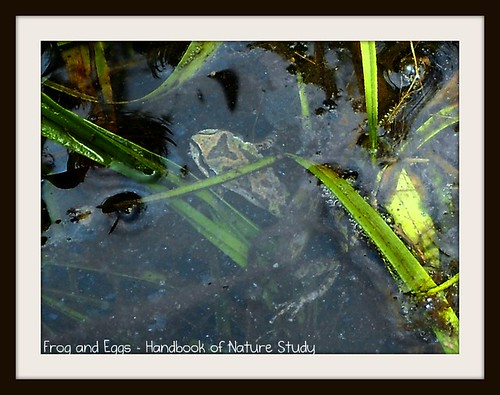
Frog and Eggs in a Pond

For our family, providing the opportunities for science as part of our every day life has been as easy as opening our back door and doing some exploring together.  Books are a wonderful window to the world but true heartfelt science learning takes place when you learn about things you can see, touch, smell, and hear.

Suspected Spotted Towhee Feathers

Birds in a book are great but birds in your very own feeder are a living and breathing example to learn from. We have found what works best is observation first and then facts. For example, we learned more by trying to identify these feathers...using a feather identification key for the first time, reasoning on which birds we see in our backyard, and then narrowing it down to a few bird choices.We had to learn the different kinds of bird feathers and make careful observations about color and pattern. So much to build on from just this simple feather find from our backyard.

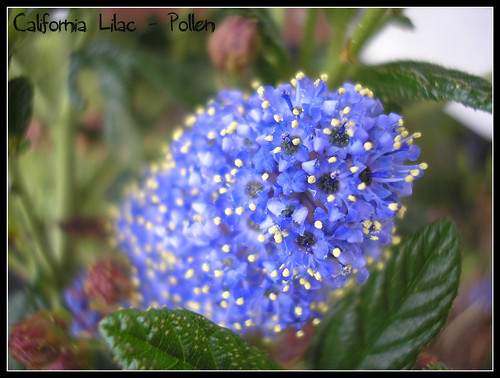
Pollen on the California Lilac

Learning about pollen in a book is interesting but seeing it on a flower, watching a bee covered in it, and then perhaps looking at the flower pollen with a hand lens take it to a whole new dimension. Suddenly you care about the pollen...it means something. My son noticed the little yellow specks on these California Lilacs and we brought them inside for closer inspection...pollen! No wonder the bees are swarming around this plant in our yard!

Garden Spider on a Flower

Mr. A found this spider on a flower blossom and we spent some time watching it together. Direct observation of a spider takes the fear away and allows the awe to settle in for such an amazing living creature. Live and up close is the best kind of learning for science....books are there to support or to generate interest.
"Nature study, as far as it goes, is just as large as is science for "grown-ups". It may deal with the same subject matter and should be characterized by the same accuracy. It simply does not go so far."
Anna Botsford Comstock, Handbook of Nature Study
She supports the idea that beginning with nature study and observation we can build on those ideas and experiences and go farther with more formal science. For a complete picture of how she outlines nature study for families, read the introductory pages of the Handbook of Nature Study (pages 1-24).
"Adults should realize that the most valuable thing children can learn is what they discover themselves about the world they live in. Once they experience first-hand the wonder of nature, they will want to make nature observation a life-long habit. All people are supposed to be observers of nature and there's no excuse for living in a world so full of amazing plants and animals and not be interested in them."
Charlotte Mason, Volume 1
So, I think we are in good company. Thanks Jeannie for the insightful and informative post that got me thinking about this very important topic. We can provide or support science education in our homes if we remember to take advantage of opportunities that present themselves. Open eyes, open hearts, and then open minds...living science.

Blog Logo 1

If you would like some help getting started with nature study using the Handbook of Nature Study, I invite you to read more about the Outdoor Hour Challenges that I offer each Friday here on my blog. The first ten challenges which will help you to become a better nature study guide are all gathered into one convenient ebook along with follow-up nature notebooking pages for you to print. I would love to help you get started on a more meaningful path of science learning.


Thursday, July 14, 2011

Nature Study and Writing

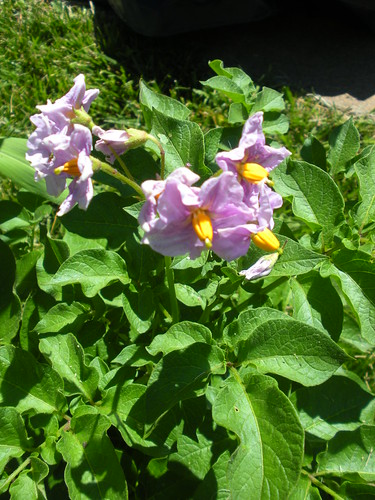
Potato Plant  with Flowers
Always Something to Learn About - Our Potato Plant
"We stifle the desire to write if we first lay down rules and formulas as to how to write. Let the child have a personal experience; then allow it to write. Did you ever have a pupil who could not write a composition, but who could write a letter that was full of originality and personality? Why could it write the one and not the other? Too often, I fear, we prevent children from writing by trying to make them write. Of what use is writing anyway, if it is not self-expressive? So let the child have something real and personal to write.Then when the child has written, throw away the blue pencil and suggest tactfully how the piece may be improved here and there. Do not hinder the child."
As part of the Outdoor Hour Challenge I always suggest and encourage a nature journal entry to follow the outdoor time. I know from experience that this takes the nature study to a higher level and each person can personalize their study by slowing down to record a sketch or some narrative in their nature journal.

I have been reading a lot about nature journals this summer as part of research for a new project and I came across this quote by Liberty Hyde Bailey (contemporary of Anna Botsford Comstock). I have found in our family that what he says is very true. If our children have something they are excited about....they relish the idea of sharing it with someone. They can't wait to talk about it or write about it.

So with this blog entry I am giving you a new idea (it was new to me). After you have your outdoor time and your child has a great experience, have them write a letter to someone about it. They can include sketches or just writing, telling the story of their adventure. Perhaps this will encourage them to dig a little deeper about their subject and since they have plenty to write about....it won't seem like work.

Happy writing!

Barb-Harmony Art Mom

Tuesday, February 22, 2011

Nature Loving in February-It's For the Birds

DSCN7872

"To the nature-lover February is the winter month of special charm. The forests on the snowy hills take on many lovely tints varying from dull to dark blue and from lilac purple to amethyst. The snow is toned with purple shadows and the skies in the morning are dull blue at the horizon and rosy and misty above until the blue of the upper skies is reached. Let us enjoy every day of February whatever the weather and then will our spirit be strong for blustering March."
Anna Botsford Comstock, The Nature Study Review.
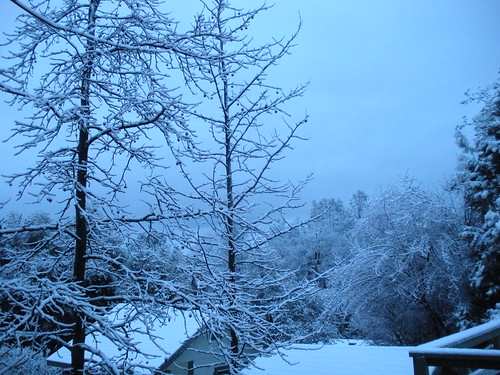
Snow Day 3

Yes, we really do get snow here in our part of California.....not much and it doesn't stick around too long but this was the second of our snowstorms of the season and we are expecting a much bigger storm over the upcoming weekend (predicting 4-8 inches). We will get to enjoy some winter nature study and winter walks in our own neighborhood. 

Snow Day 4

For now our focus outdoors is observing birds as part of the Great Backyard Bird Count but now that the counting time has passed we will continue to enjoy our feathered friends.

Snow Day Bird on the Fence

I already shared our first list of birds spotted on Friday and pretty much our list didn't change for Sunday and Monday except to add Lesser goldfinches and Canada geese. I love sharing my snow day with the birds.

I think part of the charm of participating in the GBBC is that we get to see what other homeschooling families observe along with their list of common birds. Apparently this is something that has held its charm for over a century. I read this excerpt in the Nature Study Review....copyright 1917. It was titled, "A List of Birds That Easterners Would Like To See".
"The editor is recipient of the following record from Miss Barbara Marx, eleven years old, and a member of this bird class."
"I am enclosing the list of birds we have observed. We means the fifth and sixth grades of the Catilleja School of Palo Alto, California. The other morning Miss Hayes, our teacher, divided us up into groups so that we wouldn't frighten the birds away, and it was then we the owl, cedar waxwing and woodpecker. The only peculiarity we have found worthy of note is that the towhee scratches with both feet at once.
White Crowned Sparrow, Gold Crowned Sparrow, Oregon Robin, California Robin, California Towhee, Willow Goldfinch, Bush-tit, California Jay, Crested Jay, Anna Hummingbird, Ruby-throated Hummingbird, Bluebird, Woodpecker, Barn Owl, Cedar Waxwing"
It warmed my heart when I read that little letter. I realized that watching birds was an activity that children enjoyed a century ago and today we still enjoy taking a few minutes to observe the many birds we have in our own neighborhoods. Let's hope that in another hundred years children are still taking time to learn about the birds in their world....whatever that world may look like. 

Barb-Harmony Art Mom

Sunday, August 29, 2010

"From Cruelty to Kindness"

Yosemite Wildflowers

"At Cornell University, it is a well-known fact that those students who turn aside so as not to crush the ant, caterpillar, or cricket on the pavement are almost invariably those that are studying entomology; and in America it is the botanists themselves who are leading the crusade for flower protection.

Thus, the nature study teacher, if she does her work well, is a sure aid in inculcating a respect for the rights of all living beings to their own lives; and she needs only to lend her influence gently in this direction to change carelessness to thoughtfulness and cruelty to kindness."
Anna Botsford Comstock, Handbook of Nature Study, 1911.
I recently read a post that made me start thinking about how we relate to nature once we start looking closely at and understanding the web of life we have all around us. Paula (from Belgium) sent me a link to her post Nature Play II where she talks about how her daughter will give each animal or insect she studies a name, thus helping her to respect it as an individual. I was impressed with this idea and have been thinking about it ever since. (Thanks for the link and post Paula.)

I think this is the same sort of concept that Anna Botsford Comstock is writing about in the quote above. Knowing more about an animal or insect or plant helps us to respect its place in the bigger picture. We become careful observers and see nature not as a whole but as the beautiful intricate balance of life that is amazing testament to a Grand Creator.

If you have not read the section in the Handbook of Nature Study titled "The Nature Study Attitude Toward Life and Death" (page 12 and 13), I highly recommend reading or refreshing your mind with this information.

"The one right way to teach about death is not to emphasize it one way or another, but to deal with it as a circumstance common to all; it should be no more emphasized than the fact that creatures eat or fall asleep."

Barb-Harmony Art Mom

Saturday, December 5, 2009

Fresh Thoughts on Nature Study


For the past two years I have been providing almost weekly challenges for families to complete in their own backyards. There are so many different kinds of families that participate on varying levels. I have come to appreciate that for many families nature study, for a variety of reasons, goes in cycles. The interest may always be there but the time available or the energy that can be spared to complete weekly nature study fluctuates with the week, month, and season.

It is very much the same in our family. Although it may appear that we spend lots of time in nature study, in reality we spend small snatches of time just about each week enjoying the outdoors of our backyard and local area.

I found the following quote to be very encouraging and I am sharing it with you so that you too may be encouraged in some way.
"The great danger that besets the teacher just beginning nature study is too much teaching, and too many subjects. In my own work I would rather a child spent one term finding out how one spider builds its orb web than that he should study a dozen different species of spiders. If the teacher at the end of the year has opened the child's mind and heart in two or three directions nature-ward, she has done enough."
Anna Botsford Comstock, Suggestions for Nature Study Work
Can you feel the weights being lifted and the pressure coming off? She is giving us a vote of confidence if we can look back over time and see that we have helped our children to appreciate only a handful of things in nature over the past term. Anna Botsford Comstock knew that nature study was something that could done without spending oodles of time on lessons and books.

She also says in the same work quoted above, "Nature study should be a matter of observation on the part of the pupils." Notice that she did not say reading lessons, filling in notebooks, or keeping collections. Observation was the key. How simple it is for us to provide the opportunity for observations of nature in our weekly schedule. We can all take a short walk outdoors and do some observations with our children.

This particular article has encouraged me this week. I know that many people look forward to our weekly challenges and the pressure for me to come up with new subjects is overwhelming sometimes. I need to step back and remember that if all we did was go outside, take a few minutes to do some observations, and then talk to our children about the experience, it would be enough.

Here are a few posts that you may be interested in reading that can help you get started with a simple program of nature study in your family.
Nature Study the Gentle Way
How to Naturally Share Nature Study with your Children
Nature Study in Ripples

Thanks again to Anna Botsford Comstock for her well spoken words from a century ago.

Barb-Harmony Art Mom