 A coal tit singing in the city, with a couple of pigeons and me in the audience. It looks very peaceful and rather charming. You know there is a but coming don't you? Well, it's back to the rain again. There's been so much of it that the rats have come up from their hiding holes. Just below the birds was the biggest rat I've ever seen, sitting out in the open, bold as you please. I wasn't keen on hanging around to take its portrait ... so you'll just have to take my word for it.
Showing posts with label birds. Show all posts
Showing posts with label birds. Show all posts
Wednesday, June 13, 2012
City Birds
A coal tit singing in the city, with a couple of pigeons and me in the audience. It looks very peaceful and rather charming. You know there is a but coming don't you? Well, it's back to the rain again. There's been so much of it that the rats have come up from their hiding holes. Just below the birds was the biggest rat I've ever seen, sitting out in the open, bold as you please. I wasn't keen on hanging around to take its portrait ... so you'll just have to take my word for it.

Monday, April 23, 2012
Nature Study - Living Science Beyond the Books
Every parent hopes their child receives a solid education in science. This is the case whether our children are homeschooled or attending a more traditional school. Many parents, including myself, know we received very little "real" science education growing up and when it comes time to teaching or supporting science learning in our children, we feel inadequate. This doesn't need to be the case.
Jeannie Fulbright wrote on the Apologia Blog, Overcoming the Fear of Science, which I read with interest. It got me thinking about how I have seen my own children gain a real, living science education using books and experiences.
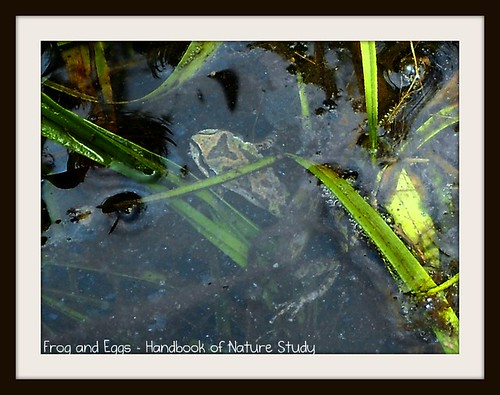
For our family, providing the opportunities for science as part of our every day life has been as easy as opening our back door and doing some exploring together. Books are a wonderful window to the world but true heartfelt science learning takes place when you learn about things you can see, touch, smell, and hear.

Birds in a book are great but birds in your very own feeder are a living and breathing example to learn from. We have found what works best is observation first and then facts. For example, we learned more by trying to identify these feathers...using a feather identification key for the first time, reasoning on which birds we see in our backyard, and then narrowing it down to a few bird choices.We had to learn the different kinds of bird feathers and make careful observations about color and pattern. So much to build on from just this simple feather find from our backyard.
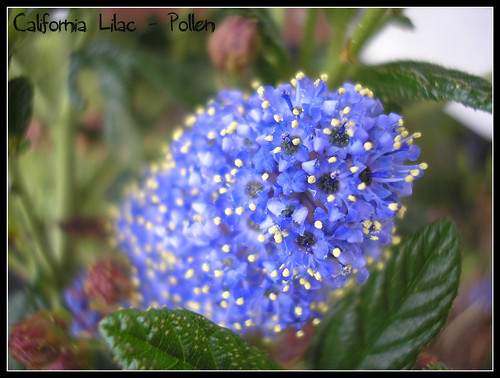
Learning about pollen in a book is interesting but seeing it on a flower, watching a bee covered in it, and then perhaps looking at the flower pollen with a hand lens take it to a whole new dimension. Suddenly you care about the pollen...it means something. My son noticed the little yellow specks on these California Lilacs and we brought them inside for closer inspection...pollen! No wonder the bees are swarming around this plant in our yard!

Mr. A found this spider on a flower blossom and we spent some time watching it together. Direct observation of a spider takes the fear away and allows the awe to settle in for such an amazing living creature. Live and up close is the best kind of learning for science....books are there to support or to generate interest.

If you would like some help getting started with nature study using the Handbook of Nature Study, I invite you to read more about the Outdoor Hour Challenges that I offer each Friday here on my blog. The first ten challenges which will help you to become a better nature study guide are all gathered into one convenient ebook along with follow-up nature notebooking pages for you to print. I would love to help you get started on a more meaningful path of science learning.
Jeannie Fulbright wrote on the Apologia Blog, Overcoming the Fear of Science, which I read with interest. It got me thinking about how I have seen my own children gain a real, living science education using books and experiences.
For our family, providing the opportunities for science as part of our every day life has been as easy as opening our back door and doing some exploring together. Books are a wonderful window to the world but true heartfelt science learning takes place when you learn about things you can see, touch, smell, and hear.
Birds in a book are great but birds in your very own feeder are a living and breathing example to learn from. We have found what works best is observation first and then facts. For example, we learned more by trying to identify these feathers...using a feather identification key for the first time, reasoning on which birds we see in our backyard, and then narrowing it down to a few bird choices.We had to learn the different kinds of bird feathers and make careful observations about color and pattern. So much to build on from just this simple feather find from our backyard.
Learning about pollen in a book is interesting but seeing it on a flower, watching a bee covered in it, and then perhaps looking at the flower pollen with a hand lens take it to a whole new dimension. Suddenly you care about the pollen...it means something. My son noticed the little yellow specks on these California Lilacs and we brought them inside for closer inspection...pollen! No wonder the bees are swarming around this plant in our yard!
Mr. A found this spider on a flower blossom and we spent some time watching it together. Direct observation of a spider takes the fear away and allows the awe to settle in for such an amazing living creature. Live and up close is the best kind of learning for science....books are there to support or to generate interest.
"Nature study, as far as it goes, is just as large as is science for "grown-ups". It may deal with the same subject matter and should be characterized by the same accuracy. It simply does not go so far."She supports the idea that beginning with nature study and observation we can build on those ideas and experiences and go farther with more formal science. For a complete picture of how she outlines nature study for families, read the introductory pages of the Handbook of Nature Study (pages 1-24).
Anna Botsford Comstock, Handbook of Nature Study
"Adults should realize that the most valuable thing children can learn is what they discover themselves about the world they live in. Once they experience first-hand the wonder of nature, they will want to make nature observation a life-long habit. All people are supposed to be observers of nature and there's no excuse for living in a world so full of amazing plants and animals and not be interested in them."So, I think we are in good company. Thanks Jeannie for the insightful and informative post that got me thinking about this very important topic. We can provide or support science education in our homes if we remember to take advantage of opportunities that present themselves. Open eyes, open hearts, and then open minds...living science.
Charlotte Mason, Volume 1
If you would like some help getting started with nature study using the Handbook of Nature Study, I invite you to read more about the Outdoor Hour Challenges that I offer each Friday here on my blog. The first ten challenges which will help you to become a better nature study guide are all gathered into one convenient ebook along with follow-up nature notebooking pages for you to print. I would love to help you get started on a more meaningful path of science learning.
Wednesday, April 11, 2012
Robin Nature Study - Where Have They Gone?
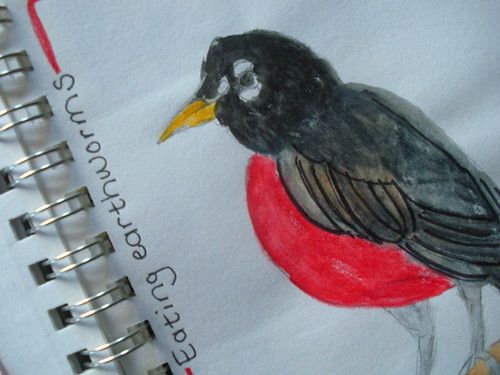 |
| We have studied Robins in the past. |
We were out looking for any birds this morning and we were surprised to see that our neighbor's trees were full of Cedar Waxwings! We have learned that they visit us on their way south and then again northwards. The interesting thing, according to our family's records, we usually see the big flock come through during the GBCC in February. We did not see them this year at all until now. What does that mean? Not sure but it will be interesting to see what happens next year.
Would you like to see our Cedar Waxwings?

They filled three trees and were munching on the "nuts" from the pistache tree that have lasted all winter...just waiting for them to come and polish them off before the next growing season. What a wonderful provider they have!

Yes, we had very gray skies this morning but it wasn't very cold. They sat resting and eating for quite some time and I was able to get up close to take a few colorful photos of them as they sat in the tree. Don't you just love their yellow-tipped tails? I could really hear them making their very unique buzzing sound. Do you want to hear? Here is a link to AllAboutBirds and you can click over and hear what I heard...click the "high pitched hissy whistle" and that is exactly it.
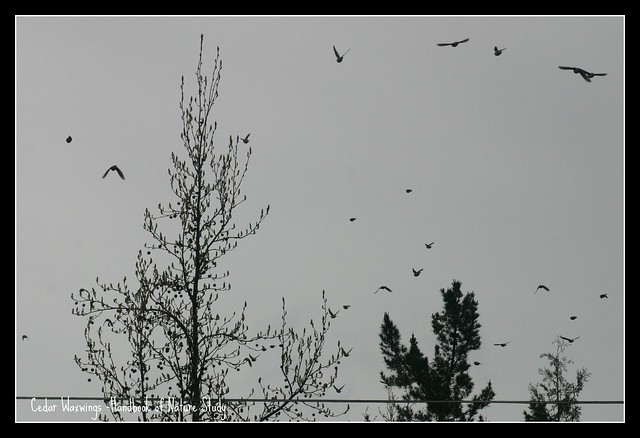
Then in a blink of an eye, they were off again. I was amazed at just how fast they flew away in a flock. What a great experience we had this morning! I am forever grateful for the Outdoor Hour Challenges. I know that if I had not started this adventure with all of you that I would have missed out on so many deeply memorable times with my family.
It spurs me on to get outside and this month I have enjoyed joining in with Debi at Go Explore Nature and her #GetOutside project...a photo scavenger hunt. This simple project has already brought such joy to our family. It has encouraged us to think about how we can incorporate outdoor time each day in the month of April. I hope you will consider jumping in with us and take a few minutes to read more about the way it works on her blog. You can see all my entries in my Flickr Set: April GetOutside Project.

Another great week of nature study with my teenage sons.
Don't forget to share your April Outdoor Hour Challenge blog entries with the Outdoor Hour Challenge Blog Carnival.You can submit entries directly to me if needed: harmonyfinearts@yahoo.com
Friday, April 6, 2012
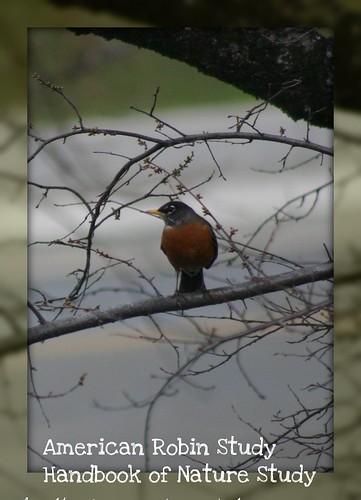
OHC More Nature Study Book 3 - Robin Study
More Nature Study Book 3
Spring Bird and Robin Study
Inside Preparation Work:
- Read the Handbook of Nature Study pages 57-62 (Lesson 11) about the robin. There is so much information about the robin on these pages that it is a little overwhelming. I would read the information and mark any ideas or facts that you are interest in sharing with your child. You don’t have to cover everything this year...save some for next spring as well.
- Supplement the information from the Handbook with information on All About Birds. Make sure to listen to the robin’s song so you can recognize it when you are outdoors. View the videos on the Cornell website for more information: Robins.
- Younger Children: Read Burgess Bird Book Ch. 5 online or listen to an MP3 recording to hear the robin’s story.
- Refer to previous bird challenge: Red Birds and Spring Bird Study. If you do not see a robin this week, you can use the Spring Bird Study to learn more about any bird you see in your yard or neighborhood.
- Spend time outdoors this week observing birds in your neighborhood. If you see a robin, remember some of the interesting things you can observe: the color, the beak, the way it eats, the way it hops, and its song. Encourage your child to be still, listen, and observe any bird that visits your yard. Remember the lesson objective, “To understand all we can about the life and ways of the robin.” You can apply that to any bird you see this week.
- The Handbook of Nature Study has a whole series of questions that relate to the study of the robin. You can answer as many of them as possible or record your own thoughts and observations in your nature journal. Ebook users: Complete the American Robin notebook page or the optional robin coloring page.
- If you didn’t observe a robin but did see another bird, use the Handbook of Nature Study index or a field guide to look up the bird for more information. Record your observations in your nature journal or ebook users can complete the Spring Backyard Bird notebook page.
- Ebook users: Advanced study: Use your field guide to complete the American Robin notebook page.
- Advanced study: Use the link to Journey North (link below) to choose a topic to research for your robin follow-up study. Suggestions include: A Food Chain Mystery and Focus on Feathers.
- Advanced study: Use your field guide or the internet to learn more about the thrush family. Choose one other bird in this family and compare it to the American Robin.
- Here is an excellent supplemental printable on American Robins. (child friendly)
- American Robin—Journey North : Excellent website with loads of information about robins. You can take part in the citizen science project tracking robins in their migration. I highly recommend this website for additional information for children interested in birds and birding. For extra study, click the Will A Robin Choose Your Neighborhood? and follow the directions for a slideshow and printable.
Robin Nature Study-Where Have They Gone?
Don't forget to share your entries with the Outdoor Hour Challenge Blog Carnival. All entries done in April are eligible for the next edition. The deadline for entries is 4/29/12 and you can send them directly to me: harmonyfinearts@yahoo.com.
Thursday, February 23, 2012
Birdcage Press Wild Cards- Review & Giveaway
 |
| Birdcage Press Wild Cards - Cards, Activities, and Instructional Booklet |
Wild Cards - Backyard Birds is a great learning tool for nature study loving families! They are beautiful to look at and full of information that has helped us get to know our backyard birds a little better. The quality of the cards, the images, and the informational booklet has impressed me!
Wild Cards - Backyard Birds
For a bird-loving family like ours, this set of cards and accompanying book is a perfect fit! We have had more fun quizzing each other with these colorful and informative cards.
- This set of 36 cards with clear and beautiful images introduces six types of birds: Tricksters, Songbirds, Woodpeckers, Hummers, Little Chirpers, and Waterbirds.
- The 32 page booklet not only gives more details for each bird in the set but it actually teaches you how to identify birds by looking at different attributes.
- The combination of cards and booklet will give beginning birders as well as experts a fun way to learn more by using them to play games with your family (instructions included).
- The booklet also gives additional ideas for online learning with your cards.
We are going to purchase more of these sets to have on our nature shelf, in our nature pack, and with our card game collection. Fun and learning go hand in hand with this product from Birdcage Press. The Backyard Birds set is only one of thirteen sets available on Birdcage Press. You can click over and see more for yourself: Birdcage Press Wildlife and Nature Products.
Giveaway and Free Shipping Offer
If you would like to order from the Birdcage Press website, you can use the free shipping code until 3/31/12. Shipping code is good for purchase of ANY item on their website. Free Shipping Code: IN12
Now for the details on the giveaway for one set of these amazing cards! If you don't see the Rafflecopter widget in your email subscription, you will need to click over to the blog to enter by leaving a comment. There are other ways to get additional entries. Also, I have teamed up with several other blogs in reviewing Birdcage Press products of all kinds. See the bottom of this post to links to additional reviews and giveaways! Please feel free to enter for ALL the giveaway items...including my review and giveaway on Harmony Art Mom for a set of gorgeous art cards!

If you are new to my blog, I invite you to subscribe to receive each of my nature study related entries in your inbox and my free monthly newsletter with lots of nature study ideas and free printables.
a Rafflecopter giveaway
More Reviews and Giveaway Opportunities for Birdcage Press Products:
Spell Outloud -- Choice of Egyptian Art Cards or Battle Cards-Military Jets
Finding Joy -- Choice of Wild Cards – North American Birds or Art Ditto Game.
Jimmie's Collage --Choice of Impressionist or Renaissance Art Game
Mama's Learning Corner -- Renaissance Art Game
Harmony Art Mom -- Choice of Go Fish for Art or Art Close-Up Cards
The Curriculum Choice -- Art Ditto Memory Game
Hodgepodge -- Go Fish for Wildlife – Sea Creatures
The Traveling Praters -- Choice of Go Fish for Van Gogh and Friends or 52 Amazing Places-National Parks
Get Along Home -- Choice of Wild Cards, Backyard Birds or Renaissance Art Game
Tuesday, February 21, 2012
Great Backyard Bird Count 2012 - Complete!

What a great weekend of bird watching we had as we participated in the Great Backyard Bird Count! We have finished our counting and I thought I would post our results.
- Western Scrub Jay 2
- Oak Titmouse 2
- White-breasted Nuthatch 2
- Spotted Towhee 2
- White-crowned Sparrow 10
- Dark Eyed Junco 11
- House Finch 10
- House Sparrow 14
- California Towhee 1
- American Robin 42
- American Crow 3
- Anna's Hummingbird 3
- Nuttall's Woodpecker 1
- Mourning Dove 5
- Northern Flicker 1
- Sharp-shinned Hawk 2
- Western Bluebirds 4
- Lesser Goldfinches 4
You can see more images of our backyard birds in this post: December Bird List with Two New Birds .

We compared our numbers to the last three year's numbers and there is virtually no change. The only significant bird missing from our list is the Cedar Waxwing. We usually have a flock come through during the GBBC weekend and this year we did not. We were talking about why that may be and the only piece of information that may be significant is that every other year we have had at least one day of snow on the GBBC weekend. We have not seen the flocks of Cedar Waxwings that we usually see this time of year come through yet. What does that mean? Maybe nothing but it is worthy of noting.
Our family really enjoys the bird count each year and now that we are participating in Project Feederwatch we have become very good at recognizing our feeder birds. Learning to identify your backyard birds is easy and you can take it one bird at a time. Don't get overwhelmed and make it fun for the family.
Bird Outdoor Hour Challenges
There is a series of bird nature study challenges here on my blog. Each challenge helps your family get to your own backyard birds. I invite you to use these free challenges as a way to develop a love of birds in your family.
There is a wealth of birding information on the internet but I have not found a more homeschool-friendly site than the ones sponsored by Cornell University. I would love to encourage you all to subscribe to their homeschool blog (click the logo above to pop over there now).
- You can also follow them on Facebook .
- You can download their FREE Homeschool Guide to Project Feederwatch.
- Of course, my favorite resource is their AllAboutBirds website which is a great tool for identifying and learning more about birds in your own neighborhood.
Thursday, February 16, 2012
Reminder: Great Backyard Bird Count!
 |
| Junco, Norther Flicker, and Nuttall's Woodpecker |
Here are some links:
What is the GBBC?
How to Participate.
I encourage you to participate this year!
 |
| Feeder friends... |
You may want to complete the Winter Bird Challenge as part of the GBBC.
Some extra goodies for you: Spell Outloud's Bird Writing Center Ideas
Saturday, January 28, 2012
Winter Snowshoe Hike - Jays, Tracks, and Weeds
 |
| Tahoe National Forest - California |
When I posted on Facebook yesterday that we were going to head out to snowshoe, the weather forecast said something like "partly cloudy, high of 52 degrees, and 10% chance of precipitation". Sounded good to me. Well no one told us that between our house and our hiking spot that there was going to be dense fog, drizzle, and the temperatures were falling into the 30's.
I knew Mr. B was anxious to test out his new snowshoes so I didn't want to disappoint him and we kept going up over the mountain. Once over the mountain it cleared up and we had lots of clouds but no rain.

Needless to say, we kept our eyes on the sky, checking for signs we were going to get rained or snowed. We had the snow to ourselves, not counting the many animal tracks that were visible. So many tracks going so many directions...there must be a whole forest full of animals out there.

Isn't this a surprising sight of brilliant blue on this winter day? Steller's jays are common and this one was posing for my camera. I love the blue feathers on the nose. My field guide says that these jays are "inquisitive, intelligent, and noisy". Yep, that totally describes this bird.

We couldn't resist seeing if we could lure the jay closer and Mr. B had a pocket full of pretzels. One little bit of pretzel and that Steller's jay came swooping down for a tasty treat, making his shook-shook-shook sound as he flew. Here he is flying away back to his perch.

We had to go the long way around since the beavers have now completely dammed up the water in the creek and the resulting pond has spread over the normal trail. This is where we saw the salmon spawning last fall and the mama bear with cubs. No signs of them now, although it smells rather fishy around this bend in the creek from all the dead fish remains.
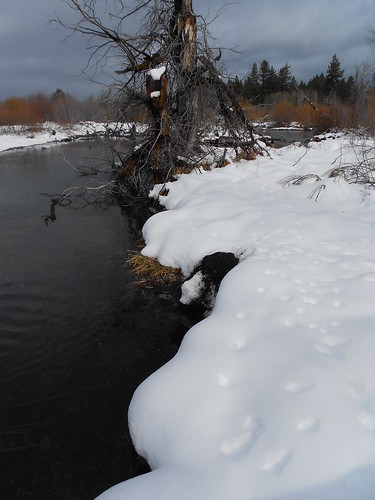
We hiked along the creek a little way and we noticed that there are places where the creek mud is piled up onto the banks. We could see lots of little animal tracks around the mud but I'm still not sure what kind of animal did this and what they were doing. Winter hikes can lead to lots of questions. You can see the muddy sludge...it is the black stuff there along the edge.

I never get tired of looking at the landscape here at Taylor Creek. The patterns of the tree trunks against the Sierra sky in the winter is amazing and beautiful. Some people get to look out their living room windows and view a similar scene and I wonder if they stop seeing the awesomeness of it. I come here a dozen times a year and I never tire of this place.

When you are on snowshoes, you can follow tracks as much as you want but I am always a little afraid of getting out into the forest too far....I have a terrible sense of direction. This area is easy to navigate because I can hear the highway in the distance and I generally know which direction I need to head to get back to the trailhead. Here is an example of a nice clear print in the snow.

We did a little preliminary winter weed study while we were out traipsing around the woods. There were plenty of subjects even with snow on the ground. I just liked the way this one looked. I think it is a corn lily. Next week we plan on doing a whole winter weed study so we will revisit these images then.

So our first real snowshoe of the year is over and we didn't get rained or snowed on. We were bundled up warmly so it was really a delight to be outdoors exploring just the two of us. Mr. B decided his snowshoes were perfect and now we will be able to explore the woods in winter as part of our Outdoor Hour Challenges.
You can read more about hiking in winter on my Squidoo page for tips on how to make it fun:
Winter Nature Walks
Wednesday, December 28, 2011
Handbook of Nature Study - December Bird List with Two New Birds!
December Bird List -
Our Family's On-Going Record of Our Bird Sighting
A Life Project
We have had a busy and full month watching birds in our yard and as part of our December travels. Project Feederwatch has become a natural part of our weekly routine and helps us take a few minutes two days a week to count birds that come to our feeders. First a few interesting photos and then this month's bird list!
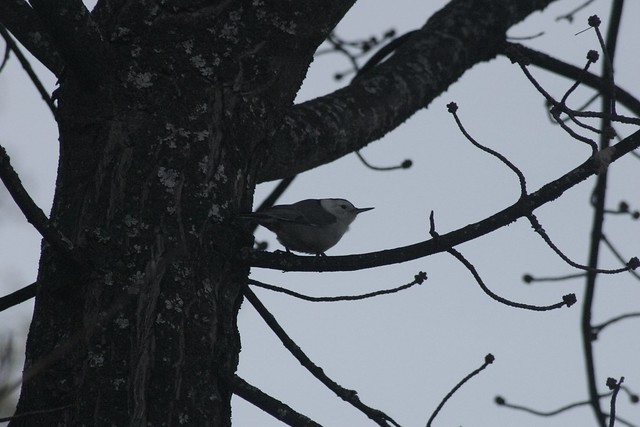
First off, our sweet and fabulous White-breasted nuthatch resident...or at least one of the three that entertain us everyday with their acrobatics on our backyard tree trunks. Ups and downs and lots of pecking are observed as we watch out the window. They also have a very distinct bird sound that they make and we are alerted to look up when we are outside and they are present. If you click the link above and click the Pacific song, you will hear what our nuthatch sounds like (there is an Eastern song as well).
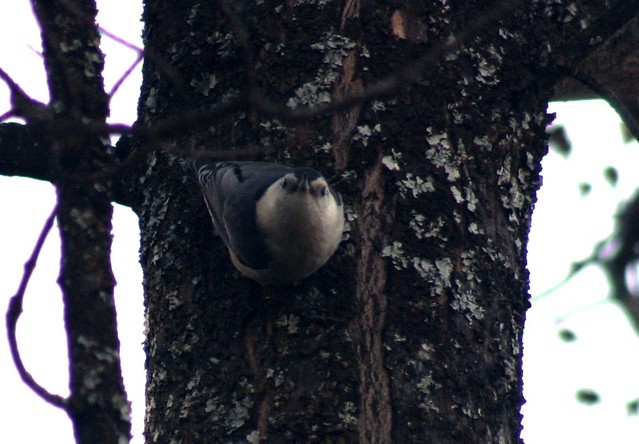
I had to zoom this one in and crop it to show you this cute little guy and his expression.
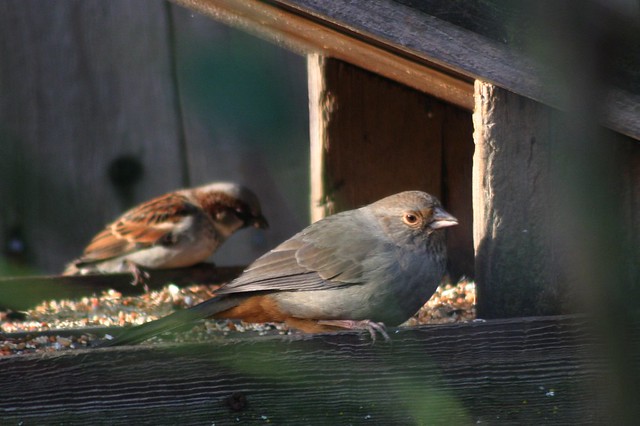
Our beloved California Towhee in the feeder....usually he scratches around under the feeder but today he showed up for pictures. Isn't he interesting with his pink-orange rump and pink-orange around the eye? There is always a pair in the yard and they don't ever stray very far from each other. We learned that the colored patch under the tail is called the "crissum".
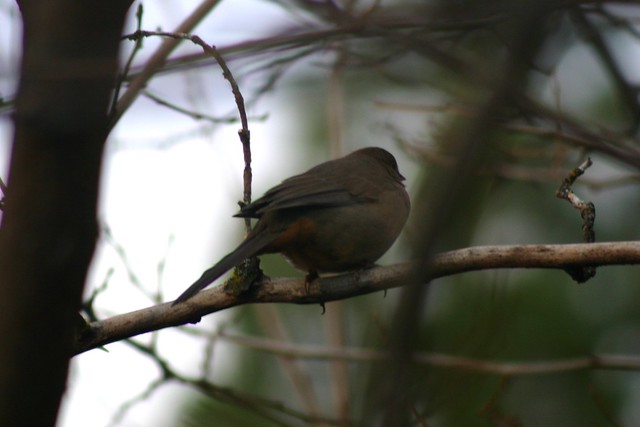
Here is the other half of the pair....up on the branch, waiting for a turn in the feeder. (Males and females look alike.)
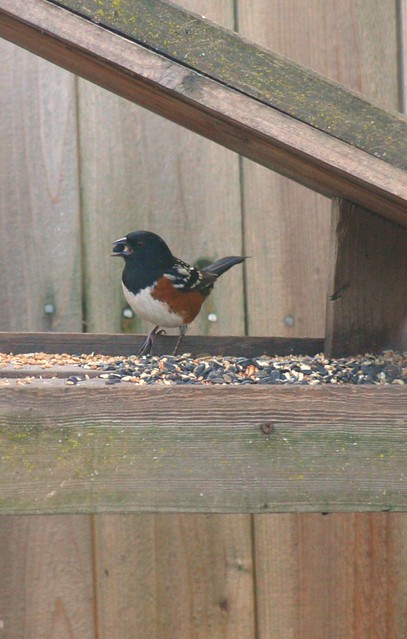
Since we started participating in Project Feederwatch, we have seen three of these Spotted Towhees in the yard. They are strikingly beautiful birds and since they are not year-round residents we try to enjoy them while they are here.
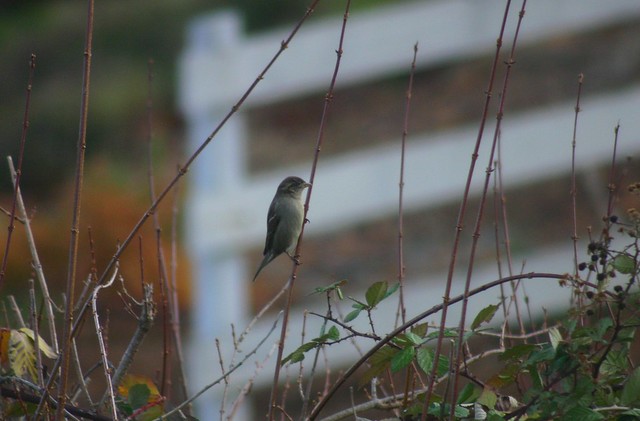
I love the way this bird friend is clinging to the twig and posing. You can see the dried up blackberries on the vine that we left from the summer garden. The birds are seen frequently stopping by for a purple snack.
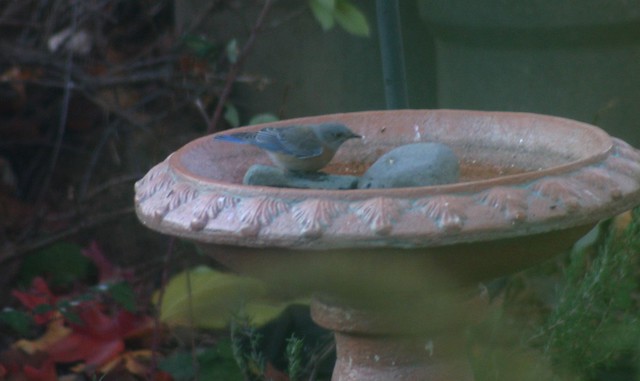
The Western bluebird enjoys a little bath this time in our front yard. I still get excited when he comes to visit. They usually come in a small bunch and then leave all at the same time. Lovely.
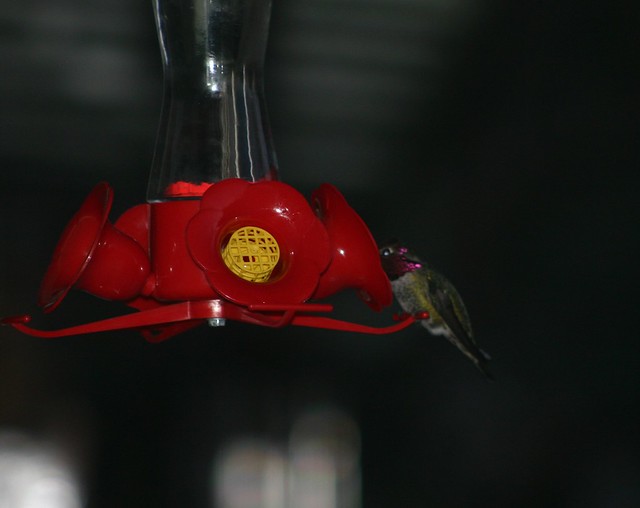
Here is the very best shot of the Anna's Hummingbird at our feeder that I could capture to share. The flash accidentally went off but that really shows his beautiful ruby/pink/iridescent color. We have one or two at a time in the feeder these days, usually a male and a female. There might be more than two since the feeder is emptied frequently even at this time of the year.
In Our Yard - mostly at the feeders
There is a wealth of birding information on the internet but I have not found a more homeschool-friendly site than the ones sponsored by Cornell University. I would love to encourage you all to subscribe to their homeschool blog (click the logo above to pop over there now).
You can also follow them on Facebook .
You can download their FREE Homeschool Guide to Project Feederwatch.
Of course, my favorite resource is their AllAboutBirds website which is a great tool for identifying and learning more about birds in your own neighborhood.
I would love for other families to join ours in watching your feeder birds. It is super easy and you just need to devote a few minutes a week to getting to know your feeder birds one bird at a time. Email me with any questions you have about the program.
So which bird photo did you like the most? I think I like the California towhee in the feeder the best since it is one that I have been trying to snap for awhile now.
Our Family's On-Going Record of Our Bird Sighting
A Life Project
We have had a busy and full month watching birds in our yard and as part of our December travels. Project Feederwatch has become a natural part of our weekly routine and helps us take a few minutes two days a week to count birds that come to our feeders. First a few interesting photos and then this month's bird list!
First off, our sweet and fabulous White-breasted nuthatch resident...or at least one of the three that entertain us everyday with their acrobatics on our backyard tree trunks. Ups and downs and lots of pecking are observed as we watch out the window. They also have a very distinct bird sound that they make and we are alerted to look up when we are outside and they are present. If you click the link above and click the Pacific song, you will hear what our nuthatch sounds like (there is an Eastern song as well).
I had to zoom this one in and crop it to show you this cute little guy and his expression.
Our beloved California Towhee in the feeder....usually he scratches around under the feeder but today he showed up for pictures. Isn't he interesting with his pink-orange rump and pink-orange around the eye? There is always a pair in the yard and they don't ever stray very far from each other. We learned that the colored patch under the tail is called the "crissum".
Here is the other half of the pair....up on the branch, waiting for a turn in the feeder. (Males and females look alike.)
Since we started participating in Project Feederwatch, we have seen three of these Spotted Towhees in the yard. They are strikingly beautiful birds and since they are not year-round residents we try to enjoy them while they are here.
I love the way this bird friend is clinging to the twig and posing. You can see the dried up blackberries on the vine that we left from the summer garden. The birds are seen frequently stopping by for a purple snack.
The Western bluebird enjoys a little bath this time in our front yard. I still get excited when he comes to visit. They usually come in a small bunch and then leave all at the same time. Lovely.
Here is the very best shot of the Anna's Hummingbird at our feeder that I could capture to share. The flash accidentally went off but that really shows his beautiful ruby/pink/iridescent color. We have one or two at a time in the feeder these days, usually a male and a female. There might be more than two since the feeder is emptied frequently even at this time of the year.
In Our Yard - mostly at the feeders
- Spotted towhee
- Dark-eyed junco
- House sparrow
- White-crowned sparrow
- Mourning dove
- Western bluebird
- Mockingbird
- Western scrub jay
- American robin
- White-breasted nuthatch
- California towhee
- House finches
- Lesser goldfinches
- Anna's hummingbird
- Oak titmouse
- Ruby-crowned kinglet
- Acorn woodpecker
- American crow
- Northern flicker
- California quail
- Steller's jay
- Wild turkeys
- Brewer's blackbird
- Pigeons
- White-tailed kite ***New to our life list
- Red-tail hawk
- Barn swallow
- Bewick's wren ***New to our life list
- Downy woodpecker - hanging on a tall weed (more on that later)
There is a wealth of birding information on the internet but I have not found a more homeschool-friendly site than the ones sponsored by Cornell University. I would love to encourage you all to subscribe to their homeschool blog (click the logo above to pop over there now).
You can also follow them on Facebook .
You can download their FREE Homeschool Guide to Project Feederwatch.
Of course, my favorite resource is their AllAboutBirds website which is a great tool for identifying and learning more about birds in your own neighborhood.
I would love for other families to join ours in watching your feeder birds. It is super easy and you just need to devote a few minutes a week to getting to know your feeder birds one bird at a time. Email me with any questions you have about the program.
So which bird photo did you like the most? I think I like the California towhee in the feeder the best since it is one that I have been trying to snap for awhile now.
Sunday, December 18, 2011
Perfect Winter Hike - Looking for Color
Just another day of perfect December hiking and taking in the challenge to find some color. Our winter nature study is shaping up to look more like fall....warm temperatures and dry, dry, dry. We looked at each other after lunch today and everyone was in agreement. We needed to be outside.
I quickly filled the backpack with water, snacks, and camera then we were out the door. The parking lot at the trailhead was about half full of vehicles and most of those were trucks with horse trailers, a few with bike racks. We opted to hike since the Kona dog wanted to take a swim at the river. It was that warm.
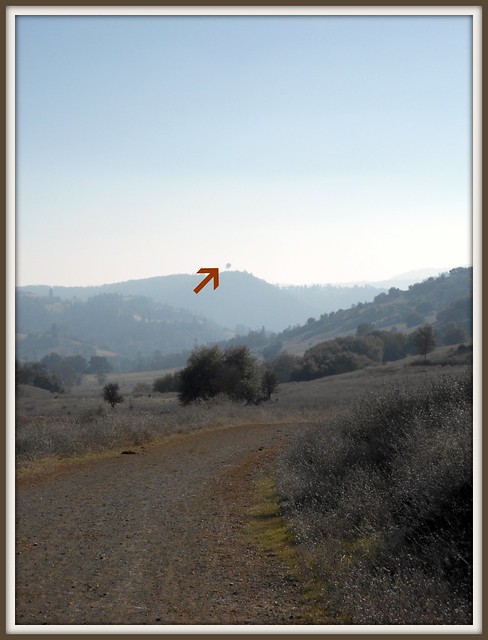
The trail starts off on a downward slope and if you look in the distance you can see our landmark "lollipop" tree (farthest hill with a single tree). We aim for that tree and know that the river is somewhere over there. It is an easy hike with several trail options. We took the Long Valley Trail down to the river and the South Fork Trail back up.
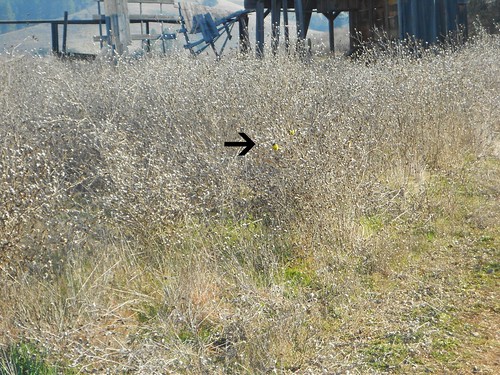
Along one section of the trail we observed lots and lots of goldfinches having a seed feast. Amazing yellow color in real life...our first real color of the hike. We also stopped to observe another little bird who sat on the cattails in the ditch. It was a new bird and we took the time to really look with the binoculars, noting shape, size, color, eye-stripe, beak shape, tail shape, and song. (We identified back at home as a Bewick's Wren=new to our life list!)
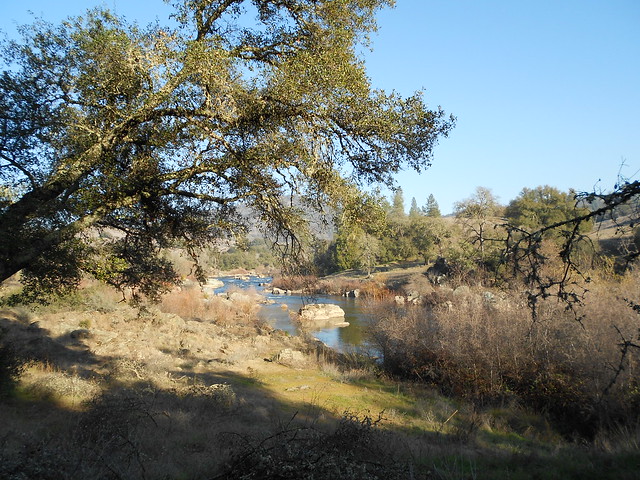
The river was running high and we had the place to ourselves, except for some barn swallows swooping overhead and a couple of fellow travelers on horses. This is a gorgeous section of the river all lined with oaks in the winter sunshine.
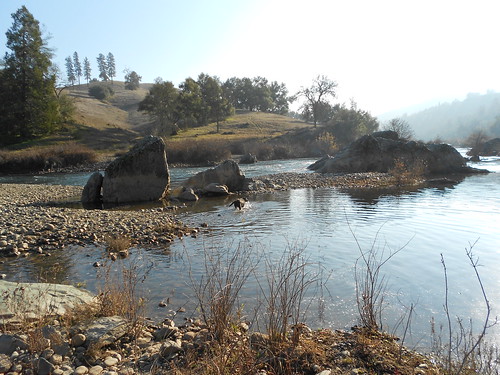
Kona took a swim right off the bat and I decided to rest on the rock overlooking the river. She splashed and retrieved sticks for the next half hour. One man in a canoe and one woman in a kayak went past. I was happy to be dry up on my rock but I waved a friendly wave as they floated past.
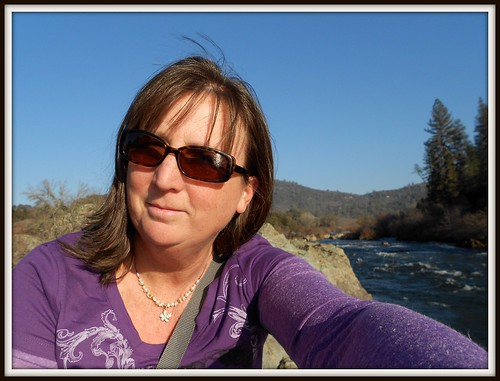
I soaked in the sun, watching the water rush by, and contemplated the beauty.
I was grateful. My heart felt refreshed or maybe just cleansed of the everyday.

The view from my rock spot was enjoyable and it is easy to get lost in your thoughts as the water rushes by you. So much power and so much potential...wondering where the water will end up at the end of its river journey. I even thought for a few minutes about the rocks just under the surface of the water, the rocks the kayaker succeeded in navigating around on her trip down the river. We all need to know where the rocks are.
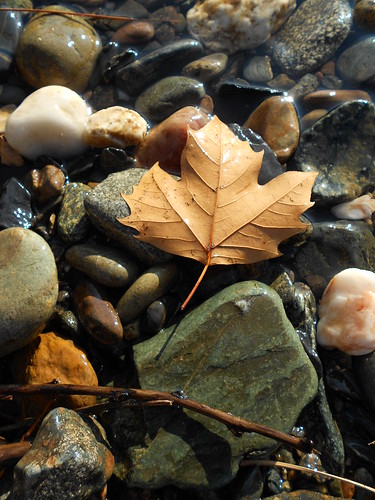
Here is my favorite image of the day showing the winter color of my world. The shore of the river is always changing but these multi-colored rocks keep the river from eroding the banks away except in the highest storm waters. What are your favorite colors found in the rocks? The green? The pinkish orange? The speckled? The white? I put one in my pocket and now it is sitting on my shelf as a reminder of my winter color walk afternoon to the river.
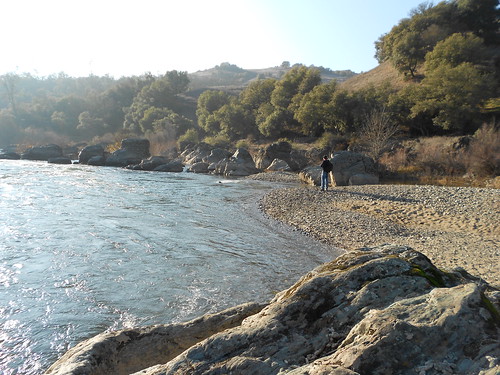
We had to drag Kona away from her beloved stick fetching and started back up the hill towards home. Along the way we watched two birds in flight over the rolling hills...stopping to hover over some prey. We used the binoculars but were unable to really identify this second new bird of the day. We noted behavior, wing shape, size, color. At home we identified this new bird as the White Tailed Kite. How exciting is that?
It was a very good day.
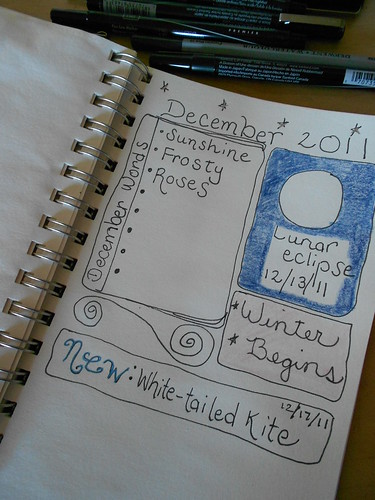
My December nature journal entry in progress...notes and things I want to remember about this month....to be continued as the month rolls along.
I quickly filled the backpack with water, snacks, and camera then we were out the door. The parking lot at the trailhead was about half full of vehicles and most of those were trucks with horse trailers, a few with bike racks. We opted to hike since the Kona dog wanted to take a swim at the river. It was that warm.
The trail starts off on a downward slope and if you look in the distance you can see our landmark "lollipop" tree (farthest hill with a single tree). We aim for that tree and know that the river is somewhere over there. It is an easy hike with several trail options. We took the Long Valley Trail down to the river and the South Fork Trail back up.
Along one section of the trail we observed lots and lots of goldfinches having a seed feast. Amazing yellow color in real life...our first real color of the hike. We also stopped to observe another little bird who sat on the cattails in the ditch. It was a new bird and we took the time to really look with the binoculars, noting shape, size, color, eye-stripe, beak shape, tail shape, and song. (We identified back at home as a Bewick's Wren=new to our life list!)
The river was running high and we had the place to ourselves, except for some barn swallows swooping overhead and a couple of fellow travelers on horses. This is a gorgeous section of the river all lined with oaks in the winter sunshine.
Kona took a swim right off the bat and I decided to rest on the rock overlooking the river. She splashed and retrieved sticks for the next half hour. One man in a canoe and one woman in a kayak went past. I was happy to be dry up on my rock but I waved a friendly wave as they floated past.
I soaked in the sun, watching the water rush by, and contemplated the beauty.
I was grateful. My heart felt refreshed or maybe just cleansed of the everyday.
The view from my rock spot was enjoyable and it is easy to get lost in your thoughts as the water rushes by you. So much power and so much potential...wondering where the water will end up at the end of its river journey. I even thought for a few minutes about the rocks just under the surface of the water, the rocks the kayaker succeeded in navigating around on her trip down the river. We all need to know where the rocks are.
Here is my favorite image of the day showing the winter color of my world. The shore of the river is always changing but these multi-colored rocks keep the river from eroding the banks away except in the highest storm waters. What are your favorite colors found in the rocks? The green? The pinkish orange? The speckled? The white? I put one in my pocket and now it is sitting on my shelf as a reminder of my winter color walk afternoon to the river.
We had to drag Kona away from her beloved stick fetching and started back up the hill towards home. Along the way we watched two birds in flight over the rolling hills...stopping to hover over some prey. We used the binoculars but were unable to really identify this second new bird of the day. We noted behavior, wing shape, size, color. At home we identified this new bird as the White Tailed Kite. How exciting is that?
It was a very good day.
My December nature journal entry in progress...notes and things I want to remember about this month....to be continued as the month rolls along.
Monday, November 28, 2011
November Nature Study - Autumn Hiking Delights
The mountains and forest had been calling for us to come and explore the season before the winter sets in any time now. The forecast was for partly cloudy skies and perhaps a few snow flurries so we didn't plan too long of a hike just in case we needed to move quickly to shelter. The sun actually poked through the clouds a few times and that was a welcome treat.
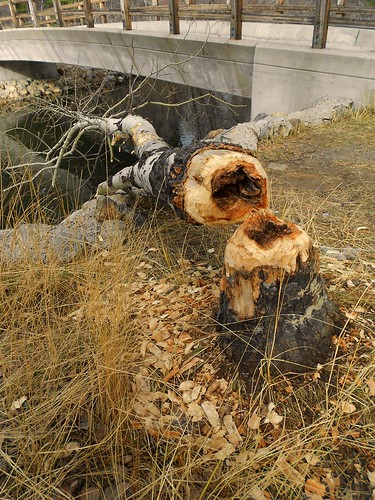
Right near where we parked the car and started on the trail we noticed that a beaver had gnawed this tree down...can you believe how strong that beaver must be? We weren't sure if he was going to come back for the log but we marveled at his ability to bring down a rather large tree.
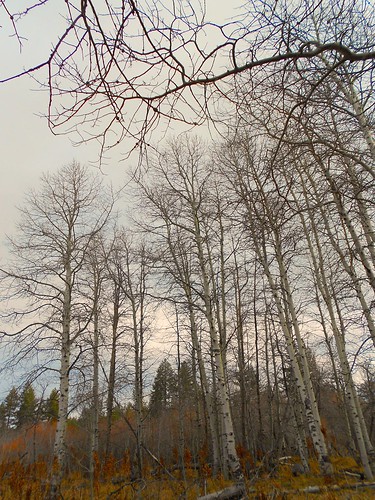
We hiked through the mixed conifer and deciduous forest, noting that the aspens were all bare but still very beautiful. We listened to the bird sounds and a squirrel chattering too. We saw and heard Steller's jays, common ravens, California gulls, mallard ducks, white-headed woodpeckers, Canada geese, and an osprey. It was a great day for birds.
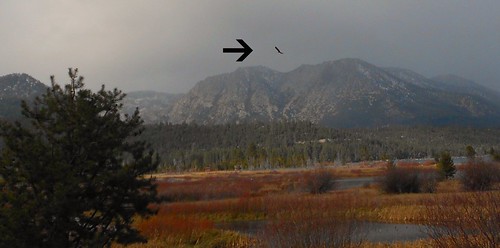
We stopped along the trail to view the meadow and marsh. This spot is known to be an eagle habitat so I had my eyes open wide hoping to see one this day. And.....I was not disappointed. A bald eagle flew very majestically above the meadow from the pine forest and then out over the lake. I was very excited to see this graceful bird as he flew right overhead and then disappeared. It was a moment.
In the photo above you can see how it was snowing up on the mountain peak and we even at one point had soft flakes of snow coming down on us but it didn't last long or stick to the ground at all. It was a perfect day for a hike.

Journal tip: It can be overwhelming when you have so many subjects to write about in your journal. It helps to focus on just one of the highlights like our encounter with the eagle and a list of birds. I don't like to draw birds so I used a photo and then answered the three main questions: when, where, what.
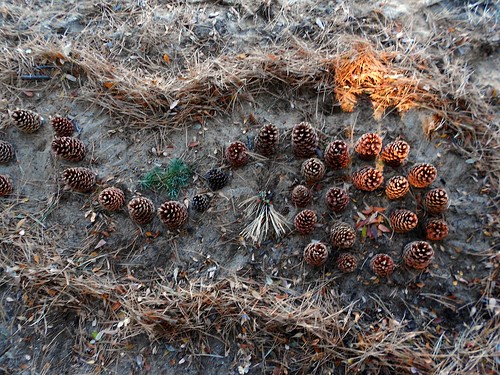
When I take my creative daughter with me, we always find a way to do something fun. This time we settled on making an Andy Goldworthy style art piece using natural items. There were loads of pinecones on the ground so we decided to feature those in our sculpture.
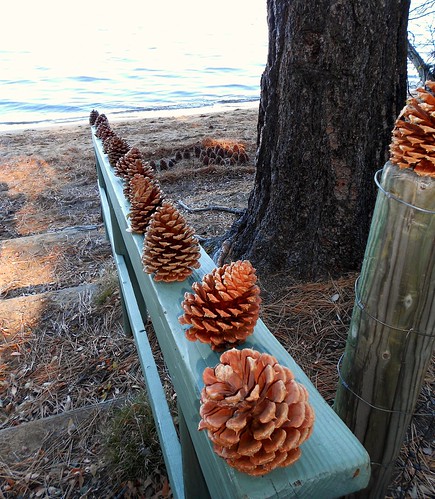
While we were busy with our sculpture, my husband added this line of pinecones leading down the stairway to our artwork. It made me smile and feel appreciative of the support of a great guy for his nature-loving wife.

On the hike back we found a patch of thistles to admire. After studying them this autumn I have a new found appreciation for their features. So pretty even now.
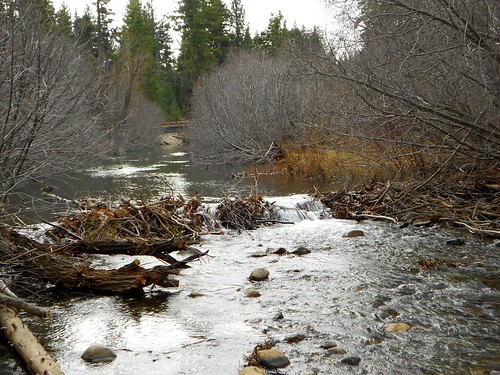
We also saw where the beaver is attempting to build a dam across the creek. The creek is flooding part of the trail right now because of the water backed up behind the dam. We had to circle around to avoid needing to wade through the creek. This is exactly where we saw the mama and two baby bear cubs earlier this fall...no signs of them now.
As always, we were rewarded for our efforts to get outdoors and do some exploring. The informal nature study opportunities were everywhere and I made some mental notes on topics we were curious about as we hiked along. Some afternoon on a cold winter day I will pull out some field guides and we will research a few of the answers to our questions. Nature study truly is a life project.
Right near where we parked the car and started on the trail we noticed that a beaver had gnawed this tree down...can you believe how strong that beaver must be? We weren't sure if he was going to come back for the log but we marveled at his ability to bring down a rather large tree.
We hiked through the mixed conifer and deciduous forest, noting that the aspens were all bare but still very beautiful. We listened to the bird sounds and a squirrel chattering too. We saw and heard Steller's jays, common ravens, California gulls, mallard ducks, white-headed woodpeckers, Canada geese, and an osprey. It was a great day for birds.
We stopped along the trail to view the meadow and marsh. This spot is known to be an eagle habitat so I had my eyes open wide hoping to see one this day. And.....I was not disappointed. A bald eagle flew very majestically above the meadow from the pine forest and then out over the lake. I was very excited to see this graceful bird as he flew right overhead and then disappeared. It was a moment.
In the photo above you can see how it was snowing up on the mountain peak and we even at one point had soft flakes of snow coming down on us but it didn't last long or stick to the ground at all. It was a perfect day for a hike.
Journal tip: It can be overwhelming when you have so many subjects to write about in your journal. It helps to focus on just one of the highlights like our encounter with the eagle and a list of birds. I don't like to draw birds so I used a photo and then answered the three main questions: when, where, what.
When I take my creative daughter with me, we always find a way to do something fun. This time we settled on making an Andy Goldworthy style art piece using natural items. There were loads of pinecones on the ground so we decided to feature those in our sculpture.
While we were busy with our sculpture, my husband added this line of pinecones leading down the stairway to our artwork. It made me smile and feel appreciative of the support of a great guy for his nature-loving wife.
On the hike back we found a patch of thistles to admire. After studying them this autumn I have a new found appreciation for their features. So pretty even now.
We also saw where the beaver is attempting to build a dam across the creek. The creek is flooding part of the trail right now because of the water backed up behind the dam. We had to circle around to avoid needing to wade through the creek. This is exactly where we saw the mama and two baby bear cubs earlier this fall...no signs of them now.
As always, we were rewarded for our efforts to get outdoors and do some exploring. The informal nature study opportunities were everywhere and I made some mental notes on topics we were curious about as we hiked along. Some afternoon on a cold winter day I will pull out some field guides and we will research a few of the answers to our questions. Nature study truly is a life project.
Subscribe to:
Posts (Atom)


