Showing posts with label blood. Show all posts

Thursday, February 9, 2012

Digitising the archives of blood research

Blood transfusion has become such an integral part of life-saving procedures used today that it is hard to imagine a time when operations were extremely risky affairs.

The emergence of the Blood Transfusion Service in 1946 was a blessing, though unfortunately too late for many war wounded. It was the losses incurred during the war that intensified the work of the Blood Group Unit, a successor to the Galton Laboratory Serum Unit that was established in 1935.

As part of the Library's large-scale digitisation programme, scanning of the Blood Group Unit archive (which covers largely the period from 1940s to 1970s) has just been completed and will be available online later this year.


Under the directorship of Dr Robert Race at the Lister Institute for Preventive Medicine, many familiar names worked within this group: among them, serologists Arthur Mourant (whose archive was recently digitised, see earlier blog) and Race's wife, Ruth Sanger. These partnerships resulted in many significant advances in blood group science, as revealed in the archives (see File ref: PP/SAR for the personal archive of Ruth and Robert Sanger also held within the library but not yet digitised).


Between them, they produced a manual entitled 'Blood Groups in Man' (see File ref: PP/SAR/C/16 for Race's summary of the multiplicity of blood groups in man that he delivered to the British Association, Brighton, 8-15 Sept1948). This book became a bible for transfusion specialists, so much so, it became known simply as 'Race and Sanger'.

It is not suprising that they became the most well-known names in blood group science in the period following WW11 up to 1980. The international press quickly picked up on their ground-breaking work: The Dallas Morning News, November 13 1946, featured a mug shot of Dr Race beneath the heading: 'RH factor expected to bare man's origin' (File ref: SA/BGU/B.1/3/1) as revealed at an International Hematology and Rh conference in Dallas, Texas and Mexico City, 1946. The study of RH blood incompatability was paramount to solving many genetic problems during the 1960s.



As a double-act, Race and Sanger were remarkable, which is suggested in a letter from Amos Cahan of the Knickerbocker Foundation in New York October 30 1959:

"I don't know if you know what a thrill it is for us to watch you - how you take a thing like the Reiger serum - pick up the trail of a tiny irregularity - force it to yield it's secrets and lead you to new and unexplored land. We feel privileged to be allowed to take part" (File ref: SA/BGU/F.1/46/1)

The work of the Blood Group inevitably involved studying families which meant close cooperation was necessary, but not always possible. Communication with the families of interesting case-studies was problematic at times. Perservance was required to get continued samples, as indicated in a general letter from Race in February 1950 seeking permission from volunteer blood donors:

"We realise that you have already helped the Blood Transfusion Service a great deal but hope that you will not mind being asked to help again in another way. This Unit is investigating the inheritance of a new blood group; in order to do this small samples of blood are needed from families consisting of both parents and two or more children of any age. Two or three drops of blood from a prick of the finger or ear lobe is all that is required ... Our work is primarily concerned with research into human blood groups, which is of the utmost importance in the practical problems of blood transfusion and certain blood diseases of the newborn" (File ref: SA/BGU/G.3/2/1).
At other times, blood supplies were too plentiful, as Ruth Sanger wrote in a letter to Dr M Pickles of the Radcliffe Infirmary Oxford about a mutual case of interest on 5 April 1977:
"Sorry to be so long in writing, but we've had one of those remarkable deluges of blood, lots of interesting things all at once and exhaustion setting in "
(File ref: SA/BGU/F.20/9).
When Dr Race retired from the Unit in 1973, Dr Ruth Sanger became director. Further progress was made in the identification of blood groups and human genetic problems. One area of continued research interest was differing blood types in twins (SA/BGU/F.20) which revealed the problem of Chimerism, a rare disorder that affects twins when chromosomes are mixed in a single organism resulting in 2 sets of DNA. Evidence of this problem was first published by Sanger along with Race and fellow haemotologists in 1957 in the British Medical Journal (see full article).

The MRC Blood Group Unit moved from the Lister Institute to premises at University College, London in 1975 but was disbanded in September 1995, although its work continues in other research centres.

Images:

A wounded soldier indicating the need for blood donations. Colour lithograph after Reginald Mount, Issued by the Ministry of Health in 1945, Copyright of Central Office of Information, Ref: 22648i, for other publicity issued see, File ref: Archives and Manuscripts GC107/1

Race and Sanger at an International Conference in Washington, 1972, File ref:
SA/BGU/L/1/11

Front cover of 'Blood Groups in Man', Oxford: Blackwell Scientific Publications, 1975 (image courtesy of Google Books)

Race and Sanger with 2 colleagues on streets of 1950's London, File ref:
SA/BGU/4/5

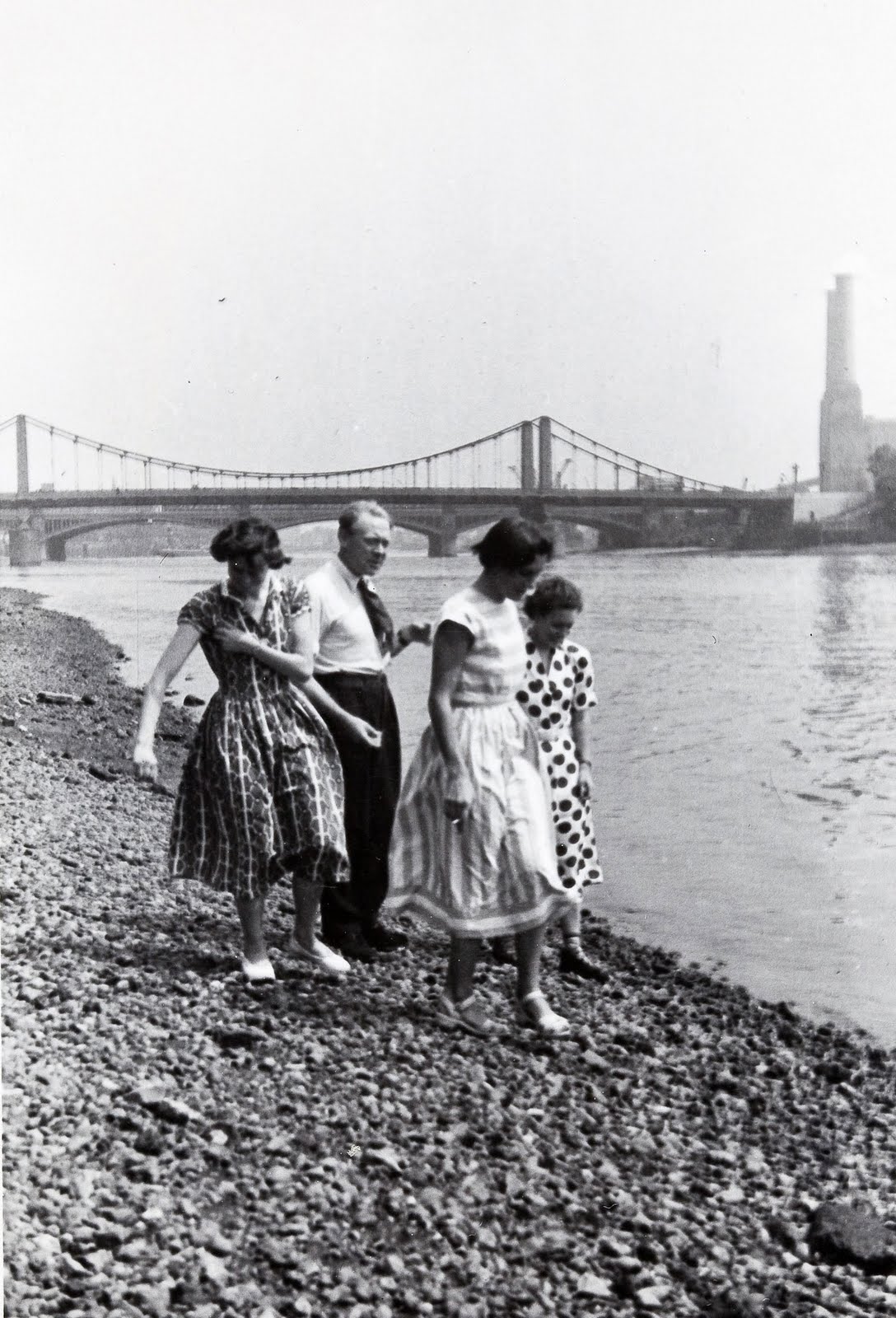
Blood Group Unit at play beside the Thames, 1950's, File ref: SA/BGU/5/2

Friday, July 1, 2011

An unstoppable team in blood grouping: R. R. Race and Ruth Sanger

The archives of Robert Russell Race and Ruth Sanger have recently been made available for consultation in the Wellcome Library (ref. PP/SAR). Race and Sanger are best known for their contribution to the understanding of blood groups, in particular Rh antigens and antibodies, and the genetic mapping of the X chromosome.

Robert Race was born in 1907. After qualifying in medicine in 1933 he became an assistant in a pathological laboratory. In 1937 he was appointed assistant serologist to Professor Ronald Fisher at the Galton Laboratory, University College London, as part of the laboratory serum unit. During the Second World War the unit moved to Cambridge with the duty of preparing blood grouping serum for transfusion purposes.

In 1946 the unit was reconstituted at the Lister Institute for Preventative Medicine in London as the Medical Research Council Blood Group Research Unit, with Race appointed Director. The MRC Blood Group Unit acquired an international reputation in the field of haematology, receiving blood samples from all over the world, and, in 1965, it extended its work into the genetics of blood groups. One of the unit's important contributions was the discovery of the Xg antigen in the 1960s.

Ruth Sanger was born in Australia and first came to England in 1946 to work with Race and complete her PhD. After completing her studies in 1948 she briefly returned to Australia, and then rejoined the staff of the unit in 1950. From this point the work of Race and Sanger becomes intertwined, with most major papers being written together. The first edition of Blood Groups in Man was published in 1950 and quickly became the standard reference text. Race and Sanger married in 1956, and upon the retirement of Race as Director of the Unit in 1973, Sanger became Director until her retirement in 1983.

The collection contains personalia, research notes, newspaper cuttings and photographs relating to honours and awards received, correspondence and papers relating to societies that Race and Sanger were associated with, programmes and photographs of conferences and visits, and reprints of articles written by Race and Sanger. At the heart of the collection is a series of 115 typescripts of lectures given by Race and/or Sanger between 1939-1977. These lectures reflect their research activities and relate to many other parts of the collection.

Complementing the personal papers of Race and Sanger are the archives of the MRC Blood Group Unit. Although progress reports for the unit are in the papers of Race and Sanger, the organisational records of the unit are a separate collection (ref. SA/BGU). Together these collections provide a detailed insight into the work of Race and Sanger.

Both collections will be digitised later this year as part of the Wellcome Digital Library programme, which is currently focussed on the theme of 'Modern Genetics and its Foundations'. Other notable collections being digitised include the papers of Francis Crick, Fred Sanger, Arthur Mourant, and Sir Peter Medawar. For further details see the archives digitisation pages.

Author: Toni Hardy

Image: Sanger and Race together in August 1978, from file PP/SAR/F/6/5. The location is unknown, possibly their office at the Lister Institute; readers may like to amuse themselves trying to match the titles of the files behind them to those in the archive collections.

Tuesday, November 16, 2010

Sickle Cell Anemia Centenary

Today marks the centenary of the publication of this paper, 'Peculiar elongated and sickle-shaped red blood corpuscles in a case of severe anemia' in Archives of internal medicine. Written by Dr James B Herrick, the paper reported the "sickle shaped" cells in the blood of Walter Clement Noel, a student from Grenada who was admitted to Chicago Presbyterian Hospital in December 1904 suffering from anemia (the observation had been made by Herrick's intern Ernest Edward Irons). Although some elements of the disease had been recognised earlier, this paper was the first step to our modern understandings of sickle cell anemia.

Aside from this article, the Wellcome Library holds a range of material relating to sickle cell anemia and sickle cell disease, in both our Medicine & Society and History of Medicine sections and also in our Moving Image and Sound Collection.

We also hold the papers of the haematologist and nutrition researchers Dr Henry Foy and Dr Athena Kondi (PP/FAK), who from the 1940s to 1970s, carried out surveys of sickle cell anemia in Greece, Mozambique, Kenya, Sudan, India and Mauritius. Some of Foy and Kondi's anemia research was funded by the Wellcome Trust: more details on the Trust's recent funding into sickle cell anemia can be found on this post on the Wellcome Trust Blog.

Friday, September 3, 2010

Archives and Manuscripts cataloguing - August 2010

August saw the completion of several long-running projects, with newly catalogued collections and retroconverted catalogues both entering the online database for the first time. Several thousand new records were made available for searching, chiefly relating to twentieth-century collections.

Our first highlight this month (already described more fully in an earlier blog posting) is an indication of how up-to-the-minute archives can be and a valuable addition to our holdings on genetics, complementing the hard science with information on its human impact. Genetic Alliance UK is an umbrella organisation bringing together various groups representing persons affected by genetic conditions (the initial impulse came from a member of the Huntington's Disease Association, whilst in its first years it was run on a voluntary basis by a member of the Tuberous Sclerosis Association): it was founded in 1989 as the Genetic Interest Group and adopted its new name in June this year. It deals, then, with very current issues and the archives include material created only a few months ago. The papers total four boxes (50 database records) and include minutes and agendas of the society's AGMs, Trustee Board and Operational Group, annual reports, and newsletters and publications produced by the society, either alone or in conjunction with other groups. The papers are available under the reference SA/GIG.

In the 1980s the Library received a small collection of papers relating to the work of the biochemist Norman Heatley (1911-2004) and his work as part of the team that developed penicillin; these were made available under the reference GC/48. At the end of Heatley’s life a much larger amount of material was given to the Library, transforming the original single box into a collection filling thirty: this new material has now been catalogued and the original GC/48 merged with it, to form a large new collection with the reference PP/NHE. A fuller description of the papers is to be found in a blog posting by their cataloguer.

A letter by the great cricketer (and general practitioner) W.G. Grace (1848-1915), previously held in the Library’s old Autograph Letters Collection, was added to the online catalogue. It includes information on one of his younger brothers, who is about to take an exam at the Royal College of Surgeons: Grace discusses with the College how to minimise the effects of his exam nerves. The letter can be consulted using the reference MS.8746.

As noted last month, work continued behind the scenes on the papers of the psychiatrist Henry Dicks (PP/HVD) and on a project to expand the amount of material catalogued and available that relates to Wellcome Witness seminars on various topics in medical science (GC/253). Work also continues on a radical expansion of the catalogue of the papers of the geneticist Professor Hans Grüneberg (PP/GRU) which will make available much more detailed information about his individual correspondents. For the moment, the original catalogue of the Grüneberg papers has been taken off-line to avoid creating confusion: contact the archives and manuscripts department to access this material.

Last month's cataloguing highlights mentioned that the retroconversion project, which aims to convert all the Library's old hard-copy archive catalogues to database form, is coming very close to completion. We mentioned then the catalogue of the Abortion Law Reform Association, which completed retroconversion in the final hours of July and went live very early in August, adding 758 new records to the database. The archive includes records of the Association, its officers, and individuals connected with the attempt to reform the abortion laws, plus various associated materials such as papers of Chairman Janet Chance, and, following the passing of 1967 Act making abortion legal, papers of the 'Lane' Committee on Working of the Aberdeen Act and Abortion Amendment Bills. Its reference is SA/ALR.

In an allied area, the catalogue of the Birth Control Campaign was also converted. The 257 new records for searching document the work of the Campaign and its parent body the Birth Control Trust, focusing in particular on Parliamentary action: topics addressed include wider availability of vasectomies, free provision of contraception under the NHS, and general improved NHS facilities for contraception, abortion and sterilisation. There is also a large section of press cuttings, and files relating to attempts to promote and publicise its aims and to relations with other bodies in connected fields. The papers can be found by searching for the reference SA/BCC.

Earlier we mentioned new cataloguing that relates to genetics: retroconversion also contributed to this theme, making available the catalogue of papers relating to the
Medical Research Council Blood Group Unit. Another 498 records were added to the database, the many scientific symbols used in the data leading to a considerable extension in the archivists' HTML abilities. The MRC Blood Group Unit succeeded the Galton Laboratory Serum Unit set up in 1935 under the direction of Professor (later Sir) Ronald Fisher and financed through the Medical Research Council by the Rockefeller Foundation (the need for safe transfusion therapy intensified blood group research in the run-up to the Second World War). The Unit was reconstituted in 1946 at the Lister Institute for Preventive Medicine as the Blood Group Research Unit, under the directorship of Dr Robert Race, and acquired an international reputation in the highly specialised field of haematology, extending its work in 1965 into the genetics of blood groups. Upon the retirement of Dr Race in 1973, Dr Ruth Sanger became director of the Unit. Under Dr Sanger's direction, the Unit continued to make a unique contribution to the identification of blood groups, and to the applications of the blood group systems to the problems of human genetics. The Unit was disbanded in September 1995, although its work continues in other research centres. This collection will be one of those to be digitised early as part of the Library’s focus on material relevant to the history of genetics; the data can be browsed under the reference SA/BGU.

Finally, the catalogue of the papers of Sir Edward Mellanby FRS (1884-1955) and Lady May Mellanby née Tweedy (1882-1978) was converted. The Mellanbys worked together in the field of nutrition, with particular emphasis on vitamins and deficiencies; in addition, Sir Edward was Secretary to the Medical Research Council from 1933-1949. The papers include personal material, correspondence, research notes, lectures and drafts, and add another 876 records to the database which can be found under the reference PP/MEL.

Images:
1/ screenshot of the website of Genetic Alliance UK.
2/ Lady Mary Mellanby and Sir Edward Mellanby in Kew Gardens, c.1950, from PP/MEL.

For information on newly-catalogued material in the Library's other collections - books, pictures, film and so forth - subscribe to the relevant RSS feed.