Showing posts with label crickets. Show all posts

Sunday, July 17, 2011

Nighttime Critters - Our List from the July Newsletter

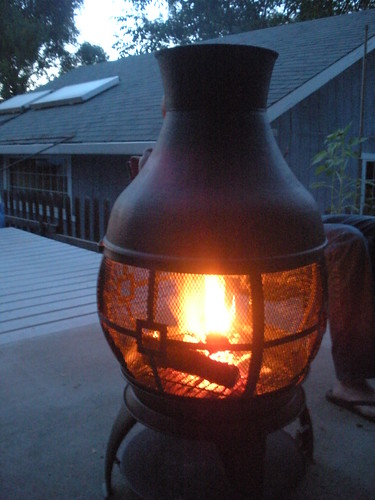
Chiminea
Summer evenings outdoors....with our chiminea.
We have been working on our July Newsletter Nighttime Critter Challenge all month. I wanted to post a little of what we are observing and learning to give you an idea of how you can pick a few things from your area to study in the evening hours.  I will update our list after the end of the month with any new finds.

Our most predominant nighttime critters of interest are the Brown bats that come every single night to fly in our backyard. I wrote about them back in May as part of mammal study.  For the July newsletter challenge for Nighttime Critters, I decided to share a few of our other nighttime visitors of interest. This study was sort of on-going because when the weather is hot, we tend to drag sleeping bags out to the back deck to sleep in the cool night air. We all lay awake and listen and watch as the nighttime settles in around us.

Shooting stars, satellites zipping across the sky, the moon, the swaying trees in the breeze, and the night sounds all entertain us as we wait for sleep to come.


Great Horned Owl Nature Journal
Fill In The Circle and Fill In With Color Example - Poor owl sketch...he has such a crooked beak.
One of the things that we have discovered sleeping outside on hot summer nights is that we have quite a few great horned owls in our neighborhood. We can hear them calling back and forth right after the sun goes down and then again at around 5 AM. Here is a link to AllAboutBirds.org and if you click the sound button, you will hear the two types of sounds we hear from our owls: Great Horned Owls. We have yet to actually see them but they are out there...no doubt about it.

We also are serenaded by crickets when the temperatures get just right. It is amazing how you don't hear any crickets and then all of a sudden it is as if someone turned on a cricket soundtrack and they all chirp at the same time. The lesson in the Handbook of Nature Study gives a great illustration showing the parts of the cricket and an excellent explanation of how he "sings". (Lesson 82)
 "The wing covers are much shorter than the abdomen and beneath them are vestiges of wings, which are never used. The male has larger wing covers than the female, and they are veined in a peculiar scroll pattern. This veining seems to be a framework for the purpose of making a sounding board of the wing membrane, by stretching it out as a drumhead is stretched." Handbook of Nature Study. 
Turn in your copy of the Handbook of Nature Study to read much more in the lesson explaining this interesting creature.There is such a simple explanation of the mechanics of the crickets chirping that it is perfect for sharing with younger children. The crickets and the frogs compete in our neighborhood for the winner of the "background" noise. It seems as if one or the other is singing their little hearts out. 

We smell skunks quite a few nights a week. Sleeping outside we hear rustling in the garden and I think it is the skunk. I know they dig around the base of the birdfeeder outside our window but over the years I have decided that if he leaves me alone, I will leave him alone. Here is another entry where I talk about our nighttime visitors.

Nighttime Critter LIst - Outdoor Hour Challenge
List from the July Newsletter. I cut it out and taped it inside my nature journal.
One last nighttime critter we have had around the neighborhood is the raccoon. Our neighbor has been sharing how they keep forgetting to bring in the dog's food dish at night and the raccoon has decided that it makes a easy snack taken just outside their patio door. We have had our share of raccoons in the yard over the years but we haven't seen any lately. Here is an entry sharing one raccoon experience: Raccoon Visitor.

 
Well that gives you a taste of what we have around here in the evenings. I just thought of something else I need to put on my list....moths.

I look forward to reading about your nighttime critters. Don't forget to post your entry and then submit it to the Outdoor Hour Challenge Blog Carnival before 7/30/11 for a chance in the July Newsletter giveaway!

Barb-Harmony Art Mom

Sunday, September 26, 2010

Another Cricket and Some Queen Anne's Lace

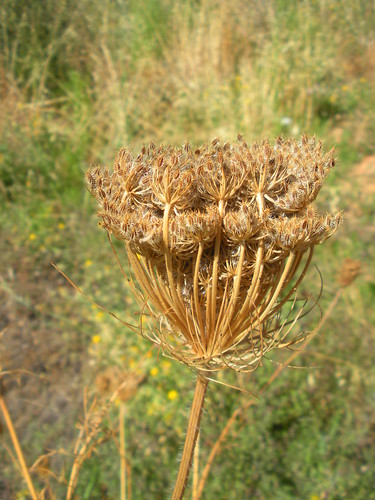
9 9 10 Queen Annes Lace (7)

So we were out for a walk and I decided to take a photo of the Queen Anne's Lace with all its seeds and the clusters. It is so pretty even now that it is drying up in the September drought.

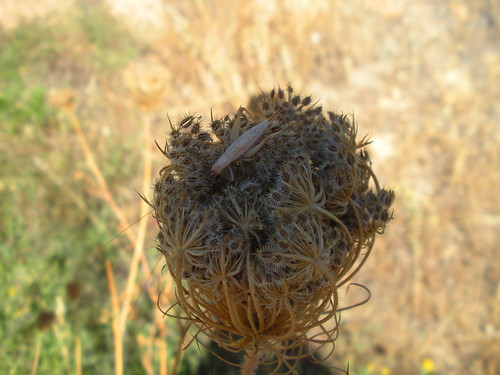
Queen Anne's Lace and Cricket
I was excited to see an insect on the top of one of the seed clusters! It looks like a cricket to me. Just look at those really long antennae!

A wonderful surprise to add even more joy to our walk.

Friday, August 20, 2010

OHC Summer Series #10: Crickets, Grasshoppers, and Katydids

Outdoor Hour button

Summer Series #10
Crickets, Grasshoppers, and Katydids

Train Your Senses
  • Sight: Look for grasshoppers, katydids, and crickets in your yard. Observe them with a hand lens. Look at a grasshopper jump.
  • Hearing: Listen for the chirping of a cricket or katydids and see if you can follow the direction.
Inside Preparation Work:
1.Read in the Handbook of Nature Study pages 338-350 (Lessons 80-82). This a lot of information so you might want to break this challenge up over several weeks so you can read, choose some of the suggestions for observation, spend your time outdoors, and then move onto the next insect.

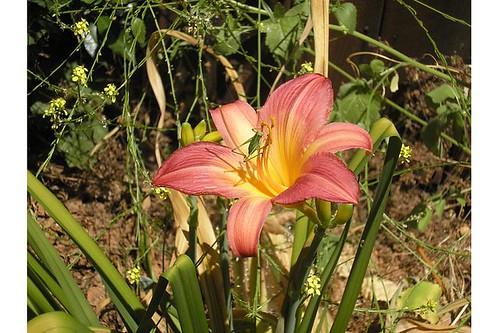
grasshopper in the day lily

Most of us have heard crickets in the evenings and children will be very interested to learn more about these insects that play music with their legs for us to enjoy. Here is a link to a YouTube.com video that shows what a cricket looks like when he is singing: http://www.youtube.com/watch?v=8E6q9W8Ur2k


Katydid Sounds click HERE. Cricket sounds HERE.

2. Read in Discover Nature at Sundown pages 174-188. There are many suggestions for exploring the hopper’s world and you may wish to choose one or two to try with your family. You can collect a grasshopper and keep it for a few hours to observe it up close. Use your hand lens to complete the “Closer Look” activity on page 183.

Outdoor Hour Time:
Try to spend some of your outdoor time in the evening air. Our family likes to sit on our deck and watch as the stars come out after sunset. This is a perfect activity to couple with listening for crickets because it is just about at the same time that you will begin to hear crickets singing their evening songs. You can also spend fifteen minutes looking for grasshoppers or crickets in your yard or a near-by park. This challenge can be split up into two weeks if you want to really study each insect.

Cricket on a rose petal

Follow-Up Activity:
After your observations and outdoor time, have your child tell you some of the things he remembers about the nature study. After you have your outdoor time, provide an opportunity for working on a nature journal entry. Use the Handbook of Nature Study or a library book to find an illustration or photo of an actual cricket to draw in your journal. Have your child label the entry with a title, the date, and the place that you made your observation. Parents can always help the child with this part if needed.

There are also coloring pages included in the Summer Series ebook for the cricket, the grasshopper, and the katydid.

If you would like all the Summer Series Challenges in one place, I have an ebook gathered for you to purchase for your convenience. Here is a link to a complete description:
Summer Series of Outdoor Hour Challenges
Summer 2010 Nature Study Final

If you are interested in notebook pages for your homeschool or nature journal, right now is a fantastic time to pick up a great deal at NotebookingPages.com.


I urge you to follow the link, read her description of how the program works and make an informed decision. If you would like more information about how I use her pages in my homeschooling, you can click on the tab at the top of my blog for links to view some examples.

Plus we have a promo code for you to receive $10 off!
Type in: treasury10

Henri Rousseau Mini Unit cover

Also, if you sign up before Labor Day, she has put together a bonus freebie package of products worth $50 as a thank you. Guess what? There is an ebook from me included in the bonus package! I wrote a special mini-unit featuring Henri Rousseau that could provide weeks and weeks of art appreciation and follow-up.

Please know that I am an affiliate for NotebookingPages.com and I will receive a commission if you follow my link and make a purchase. I always write my true and honest opinion on this blog and I hope my readers know that I would never promote something just to get a commission.

It doesn't hurt to click over and check out the promotion.


Monday, May 17, 2010

Weekend in the Garden

I'm tired after a really busy weekend. Spring weather and the call to be outdoors getting dirt under my fingernails kept us busy, busy, busy.

Here are a few images to share a few glimpses into our weekend.

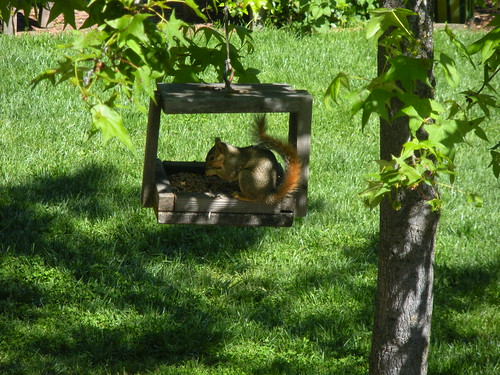
squirrel in the birdfeeder
Our resident squirrel in the birdfeeder. I love his tail.


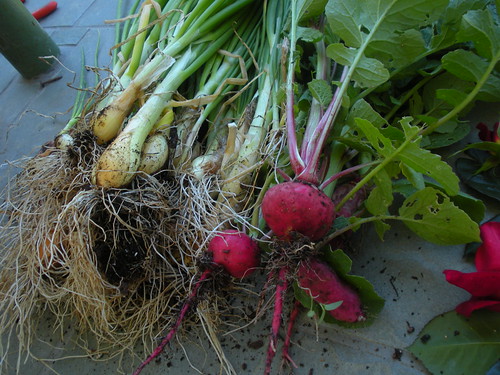
Onions and radishes
Harvesting the radishes and the first round of onions.


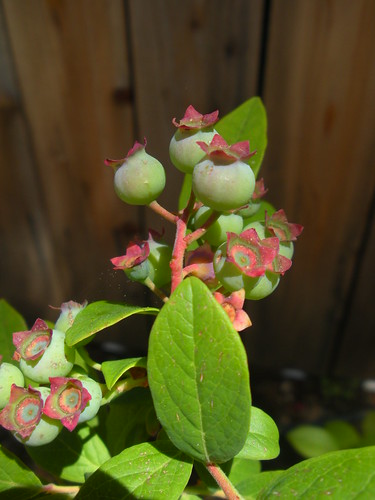
Blueberries 5 14 10
Blueberries growing so round and plump.


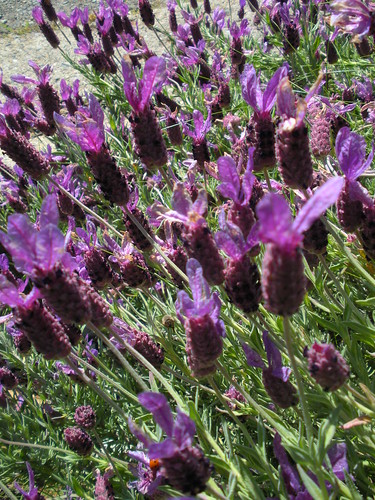
lavender close up
Lavender that is alive with bees.

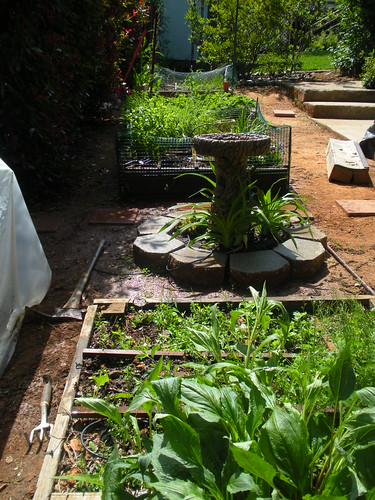
First weeding of the garden
The first round of weeding around the garden boxes is complete thanks to Mr. A. He and I have been working diligently at getting the weeds under control before the warm weather sets in for good. The boxes are all ready for the seedlings we have been nursing upstairs.

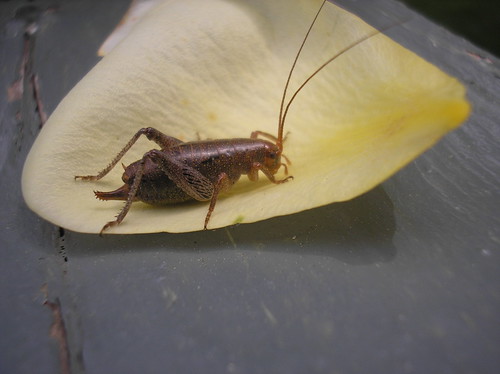
Cricket on a rose petal
We found this guy when we were working in the roses. It was perfect timing since I am working on a cricket challenge for the Summer Series ebook. We were able to do some up close observations before we left him comfortably back on the rose bush.
Edit to add: K left me a comment saying that there is an ovipositor so my he is really a she. Thanks K.


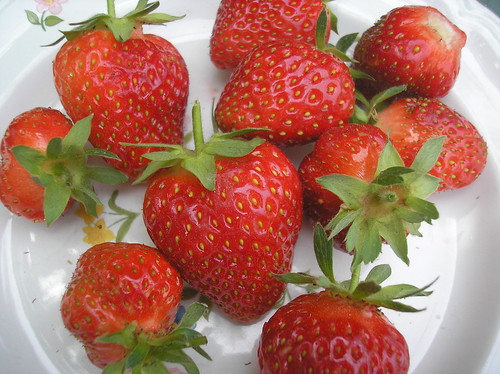
First Strawberries of the Season
No one says that hard work in the garden does not have its rewards. Yummy first strawberries were picked and eaten. The best ever end to a long weekend outdoors, except for maybe the grilled burgers my dear husband made us for dinner which we ate outside on our deck.

Hope you all had some time to get outdoors and enjoy whatever your world offered this weekend. I know that some of you have written to say that you don't have an apple tree to study but you could just as well study any tree you find in the Handbook of Nature Study as a substitute or you could do a general apple study using some apples you have on hand. If all else fails, spend fifteen minutes outdoors with your children and enjoy whatever comes your way.

Barb-Harmony Art Mom

Thursday, August 14, 2008

Crickets Inside and Outside the House: Challenge #24


We have lots of experience with crickets. Our fire-bellied toads eat crickets everyday. The boys have a cricket habitat that they keep the crickets in until they are rationed out as food for the toads to snatch up.

We had to buy really big crickets a few weeks ago and they made such a racket in the house. We normally buy little crickets and they are too young to chirp. The boys could not sleep with the large crickets chirping in their room. There must have been fifty crickets in the habitat. They solved the problem by turning on the light and that made the crickets stop. Interesting.

If you are looking at the photos of the habitat and you see orange cubes, those are cricket food that provides moisture and food for them. Most of the crickets spend their time in the black tubes in the dark. You can remove a tube and shake out a few crickets into the toad habitat very easily. It works very well.

I have included a sketch of one of the crickets that my son made for his nature notebook.

After reading Angi's entry, I feel like we cheated in completing this entry by purchasing our crickets. Angi's boys look like they had a great time searching for crickets at night. We may have to try that soon.

Barb-Harmony Art Mom

Friday, August 1, 2008

Outdoor Hour Challenge #24 Crickets


Edit to Add: There is now another Cricket Challenge in the Summer 2010 ebook and here on the blog:
OHC Summer Series #10: Crickets, Grasshoppers, and Katydids.

Let’s take a look at crickets this week in our mini-focus on insects using the Handbook of Nature Study. Summertime is the perfect time to go outdoors in the cool evenings, listening and tracking these creatures close to home.
“The haunts of the cricket are usually sunny; it digs a little cave beneath a stone or clod in some field, where it can have the whole benefit of all the sunshine when it issues from its door.”
Handbook of Nature Study, page 344
I know in our yard they hide under the landscaping rock and we rarely see them but we do hear them loud and clear. I found this video on YouTube.com that will show you how a cricket makes his song.

Cricket Song


If at all possible, try to spend some of your outdoor hour time outside during the evening hours to see if you can hear some crickets chirping in the twilight and evening.


Outdoor Hour Challenge #24
Focus on Insects-Crickets

1. This week read about crickets in the Handbook of Nature Study, pages 344-349. Most of us have heard crickets in the evenings and children will be very interested to learn more about these insects that play music with their legs for us to enjoy. Here is a link to a YouTube.com video that shows what a cricket looks like when he is singing.
http://www.youtube.com/watch?v=8E6q9W8Ur2k


2. Try to spend some of your outdoor time in the evening air. Our family likes to sit on our deck and watch as the stars come out after sunset. This is a perfect activity to couple with listening for crickets because it is just about at the same time that you will begin to hear crickets singing their evening songs.

3. After you have your outdoor time, provide an opportunity for working on a nature journal entry. Use the Handbook of Nature Study or a library book to find an illustration or photo of an actual cricket to draw in your journal. Have your child label the entry with a title, the date, and the place that you made your observation. Parents can always help the child with this part if needed. This is a good time to work on using descriptive words as described in Outdoor Hour Challenge #2. The more you use the proper names for subjects you see during your nature study, the sooner your children will learn and remember them for themselves.

4. If you observed some other kinds of insects during the week, give the option for making a nature journal for those too. Make sure to pull out the Handbook of Nature Study to see if the insect you found is listed and you can read more about it there. If you are keeping a running list of insects you have observed during this focus period, add the insect’s name to the list.

5. Post an entry on your blog sharing your experiences and then come back to the Outdoor Hour Challenge post and add your blog link to Mr. Linky. All the challenges are listed on the sidebar and top tabs of the Handbook of Nature Study blog.

If you would like to print this challenge out, here is a link to the PDF version.
Outdoor Hour Challenge #24 Crickets (complete set of insect challenges #22-28 in one document)

You may be interested in other insect challenges here on the Handbook of Nature Study:
#22 Butterflies
#23 Moths
#24 Crickets
#25 Housefly
#26 Ladybirds/Aphids
#27 Bees
#28 Dragonflies/Damselflies

Winter Wednesday - Winter Insect Study
Ants (Spring)
Mosquito
Moths and Fireflies
Crickets, Grasshoppers, and Katydids
Leaf-Miners and Leaf-Rollers


Monday, November 26, 2007

Crickets in the House


I have been busy trying to wrap up our fall study of insects. I never imagined we would enjoy finding and viewing insects as much as we did and I am sure part of it was the information provided in the Handbook of Nature Study. Anna Comstock provides such great investigations into the individual insects and we learned so much just by taking a few minutes each time we found a new insect to stop and really look at it. I think everyone in our family has gained a new appreciation for the little creatures we pass by so often.

Speaking of that topic, I had completely forgotten that we had our own personal laboratory in our house for studying a particular insect. Our Fire-Bellied toad eats crickets every morning and we keep a ready supply on hand but I had never thought to investigate them in the HNS. Sure enough, there on page 344 there is the start of a whole section on crickets. On page 346 there are instructions for making a "cricket cage". Pages 347 and 348 have observations questions for you to use with your cricket.

Here's something interesting from page 346:
"There would be no use of the cricket's playing his mandolin if there were not an appreciative ear to listen to his music. This ear is placed most conveniently in the tibia of the front leg, so that the crickets literally hear with their elbows, as do the katydids and the meadow grasshoppers. The ear is easily seen with the naked eye as a little white, disclike spot."

Our crickets don't make any noise so I don't know what that means. They are rather small and we purchase them at the feed store, 40 crickets for $2.00. They are much smaller than the local crickets we find in our yard. They are golden in color. I am going to ask at the feed store the next time we get crickets and see if they know what variety of crickets they are. Even though our particular cricket is not listed in the HNS, we can still read through the sections on black crickets and snowy tree crickets and apply the information to our crickets. See, I am learning to not use this big book as a field guide but as a way to familiarize us with general information about something we find in our nature study. :)

Barb-Harmony Art Mom