Showing posts with label year-long cattail study. Show all posts

Monday, March 28, 2011

Spring Cattail Nature Study and Voles...Oh My!

Cattails in Spring

Our Cattail Adventure- Spring Cattail Outdoor Hour Challenge

I already hinted about our cattail spot....the one that was cut down and cleaned out. We were a little disappointed but not discouraged. We have two others places to check but one has so much water right now because we have had heavy rains. Eight inches from Thursday to this morning....crazy wet! The boys were upset about the cattails being cut down but there is hope if you look at the photo below.

Spring Cattail Spot 1

We are going to watch this spot to see if those little baby cattails will fill in the creek area like they were before. It will be interesting to see how long it takes to have another batch of cattails to observe. If you haven't seen Creation Wiki yet, give this LINK a try to read more about cattails.

Cattail Nature Journal
Watercolor pencils, background semi-moist watercolor, Prismacolor Pen

On another note...

Vole Tunnels

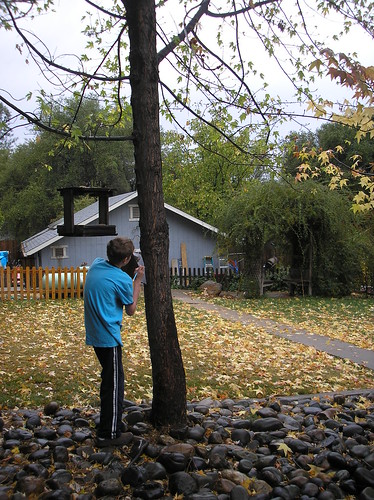
We came across something that was interesting. Our retaining wall had started to fall over and Mr. A helped me fix it but in the process we realized the problem was caused by a system of vole tunnels directly underneath the cement blocks. The wall is right near the birdfeeder (find the green in the photo and then you will see the post) and the voles are tunneling up underneath...in fact there was a hole earlier in the year that came up directly under the hanging feeder and the spilled seed just went down the hole, a very convenient set-up for the vole. Not sure how to solve the problem but we got the wall back up and we will see how long it lasts.

How about a couple pretty images to end this entry?

Goldfinch 2

We have had quite a variety of birds at our feeders during the month of March...lots of Lesser goldfinches, even in the cold snowy weather we had last week.I am keeping a list of our birds observed for the month to post on Heather's Tweet and See.

Goldfinch 1

They are one of my favorite feeder birds right now and I cannot stop taking photos of them.

We are going to have an on-going study of cattails again this year because I think we can glean some new information for our nature journals.One thing we will research is how they reproduce and how the seeds are spread.....which we sort of know a little about already but we want to have some concrete facts to include in a future journal entry.

Hope you have a chance to check out your cattails soon!

Barb-Harmony Art Mom

Saturday, August 7, 2010

The End of Our Year-Long Cattail Study

1 Cattails 8 10
Can it truly be the last season of our year-long cattail study? This year has really gone by fast. I can remember the autumn study we completed for our cattails and how we noted so many interesting new things about them for the first time. The advice in the Handbook of Nature Study to study plants and trees over an entire year, watching in each season is one that we have learned so much from in our family.

We have now spent a complete round the circle observation of a patch of cattails just around the corner from our house. We drive by several times a week and each time I notice the cattails and how they change with the season.

5 Cattails 8 10
After looking back on our previous entries, our cattails in summer look pretty much the same as our cattails in autumn. The biggest changes were from winter to spring.

3 Cattails 8 10
The habitat was definitely wetter in the spring and the other vegetation was tall, thick, and green. Now the surrounding area filled in with berries and thistles. We realized that there is a path that some sort of animal has made to get down to the little creek, probably a mule deer. There is a family of deer that live along this stretch of the road and we see them several times a week.

Fall Study


Winter Study

Spring Study

We used our senses but the thing that impressed us the most was how smooth and long the leaves were. We noticed upon looking closer at the arrangement of the leaves and how they are attached to the stalk. Somehow we missed that observation in the other seasons. We tried to remove a leaf from the stalk and we were not successful. Usually someone has a knife in their pocket (that is what happens when you have boys) but not this time. We had to go back another time to get a sample to observe closely.

There were birds all around the cattails but not directly on them. The boys think the birds were attracted to the thistles, berries, and water that were available in the area that the cattails grew in big clumps. In the spring we had heard all kinds of insects in this area and now it was silent. We were hoping to see some frogs too, or at least hear them on this outing but it was very quiet.

I love these year-long studies that give us time and incentive to watch a common plant more closely.

Barb-Harmony Art Mom

Friday, July 30, 2010

OHC Summer Series #7 Summer Cattail Observations

Outdoor Hour Challenge
Summer #7 Summer Cattail Observations


Train Your Senses

  • Sight: Observe the cattail’s habitat. Look for birds, insects, and animals living or resting in or on the cattails. Look for nests. See if you can find the cattail flowers.
  • Smell: Sit or squat near your cattails and close your eyes. Breathe deeply and see if you smell anything.
  • Touch: Feel the leaves, edges, and spikes of the cattails.
  • Hearing: Take a minute to listen as you stand or sit near your cattails. Can you hear any birds or insects? Water running?
Inside Preparation Work:
Read pages 500-502 in the Handbook of Nature Study if you have not done so before (starting on page 551 if you have the free download version) . It might also be beneficial to read it again this season and highlight the parts that contain information about the leaves of the cattail plant.

Outdoor Hour Time:
Enjoy your outdoor time this week at your cattail spot. If you have been participating in the year-long cattail study since last autumn, you will know just where to look for cattails. Use the suggestions from the Handbook of Nature Study to talk a little about the habitat where your cattails are growing.
  • Is your cattail still growing in water or has it dried up?
  • What does the “cattail” parts of the plant look like now?
  • What color and shape are the leaves?
  • Do you see the cattails seeds or balloons?
  • Can you pull some of the fuzz from the cattail and observe it more closely?
  • How do you think the seeds spread, by wind or water?
  • How crowded are the cattails growing together?
Please note: If you do not have any cattails to observe in your area, you may wish to choose another local plant to observe in each season throughout the next year.

Follow-Up Activity:
Make sure to allow some time after your outdoor hour to discuss any subjects that your child finds interesting. Encourage the completion of a nature journal entry recording your observation of your cattails. You can use the notebook page and coloring page created for the Summer Series ebook, the notebook page from Autumn, a blank page, or any other general notebook page listed on the sidebar of my blog. You may wish to pull out your other cattail entries and compare the year-long changes in your cattails.

Please make sure to come back and post your link on Mr. Linky after completing this challenge and writing your blog entry.

If you would like all the Summer Series Challenges in one place, I have an ebook gathered for you to purchase for your convenience. Here is a link to a complete description:
Summer Series of Outdoor Hour Challenges
Summer 2010 Nature Study Final

Thursday, May 6, 2010

Spring Cattails to Study

This is our third season for studying our little patch of cattails. Actually, we are watching two different patches, one patch around the corner from our house and one on our regular walking trail. They both have sprung to life over the last few weeks.

Here is our winter entry: Winter Cattails.

The first spot....
Cattails 5 6 10
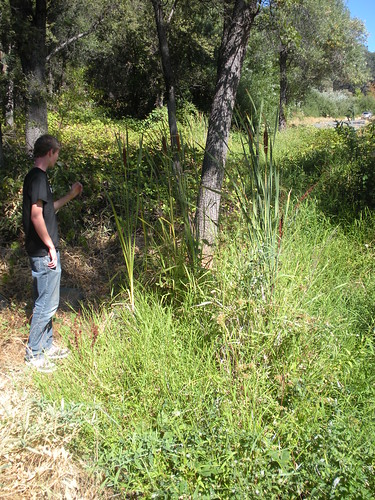
This area is alongside the road and it has been easy to watch the cattails growth as we drive by a few times a week. We actually walked over to do our observations of the cattails so we could take our time and really look at them up close. Well, so much for getting up close. The grasses are about chest high and the ground is sloppy wet. The creek is running and everything is so green! We compared these photos with the ones we took in the winter and it is amazing how different the surroundings are for our little cattail patch.

Cattails 5 6 10 (1)
Here I zoomed in with the camera a little so you can see the cattails but as far as getting close to examine them, no way. We will have to watch and see when the water levels go down and then make an update.


I took a 10 second video so you could here what we heard.....insects. If you read this entry in your email, you may need to click over to the blog to see the video.

Cattails 5 3 10 1
The second patch is green and ankle deep in water, so muddy that none of us wanted to wade over to investigate further. We did hear some red-winged blackbirds and some robins near-by as we stopped to observe the cattail's leaves more closely.

Cattails 5 3 10 2
There are quite a few growing and it seems like there are more now than when we started observing this patch in the autumn.

Cattails 5 3 10 3
Here you can see the slippery mud alongside the walking trail. One thing we noticed this time is that there is a certain smell to this area, perhaps the mud has a particular odor but even just typing about it brings the scent back to mind. It is a peculiar smell and not unpleasant. Marshy growing things....if I had to pick a way to describe it.

Alligator Lizard
We were treated to a reptile sighting on this walk. This sort of reptile does not bother me as much as the two rattlesnakes we saw on our walk last weekend. Rattlesnakes are a common snake in our area but I have rarely seen them out and about as we walk. Today though, this alligator lizard stopped scurrying along so I could take his photo.

Our journals are in the works but I wanted to get this entry up before this week's challenge posts. I have really enjoyed the entries lately and I want to thank all the families that faithfully post their nature study stories on Mr. Linky.

Have a great week!
Barb-Harmony Art Mom


In case you haven't heard yet, NotebookingPages.com is having a huge sale right now and if you purchase before May 14th, 2010, there is a chance you can earn some free gifts. Click here for more information and some suggested sets to purchase for your nature study:
Notebooking Resources.

Friday, April 30, 2010

OHC Spring Series #5: Year-Long Cattail Study

We have been looking forward to this challenge for a few weeks now. Watching our little patch of cattails, my boys observed that the new growth is coming in and we will be anxious to take a closer look using this challenge.

I hope that you will complete this challenge even if you are just finding and starting your year-long cattail study. Please feel free to jump in and join us!


Outdoor Hour Challenge

Spring Series #5

Spring Cattail Observations

“It is an interesting process to take apart a cattail plant; the lower, shorter leaves surround the base of the plant, giving it size and strength. All the leaves have the same general shape, but vary in length. Each leaf consists of two parts; the free portion, which is long and narrow and flat toward its tepering tip but is bent into a trough as it nears the plant, and the lower portion, which clasps the plant entirely or partially, depending upon whether it is an outer or inner leaf.”
Handbook of Nature Study, page 500
Inside Preparation Work:
Read pages 500-502 in the Handbook of Nature Study if you have not done so before. It might also be beneficial to read it again this season and highlight the parts that contain information about the leaves of the cattail plant. We will be focusing this season on where the cattail grows and what the leaves look like as they grow up from the plant. Prepare yourself for this week’s outdoor time by reading #1, #2, #4, and #5 suggestions for study on page 502.

Note: If you are using the free version of the Handbook of Nature Study, the cattail section starts on page 551. If you are using the free version from HomeschoolFreebies, you need to look in Plants and Trees, page 65. (Thanks Angie.)


Cronan Ranch 2 Cattails
Outdoor Hour Time:
Enjoy your outdoor time this week at your cattail spot. If you have been participating in the year-long cattail study since last autumn, you will know just where to look for cattails. Use the suggestions from the Handbook of Nature Study to talk a little about the habitat where your cattails are growing.

Please note: If you do not have any cattails to observe in your area, you may wish to choose another local plant to observe in each season throughout the next year.

Some Suggestions for a Spring Cattail Study
  • How wide a strip of land do the cattails cover?
  • Are they near a stream, brook, or pond?
  • Observe the kind of soil where your cattails grow.
  • How are the leaves arranged-growing opposite or alternating?
  • Describe the leaves’ texture, color, shape.
  • Have your child make as many observations as they can during your outdoor time of the cattail. (Keep it fun.)


Cattails with Mr A
Follow-Up Activity:

Make sure to allow some time after your outdoor hour to discuss any subjects that your child finds interesting. Encourage the completion of a nature journal entry recording your observation of your cattails. You can use the notebook page created for the Spring Series ebook, the notebook page from Autumn, a blank page, or any other general notebook page listed on the sidebar of my blog.

Make sure to encourage your child to sketch the cattail leaves. Also try to include a little of the habitat that your cattails are growing in during this season. Include in your sketch any insects, birds, or animals that you observed near your cattails during your outdoor time.

Please make sure to come back and post your link on Mr. Linky after completing this challenge and writing your blog entry. I always love to come by and see what you are up to!

If you would like all the Spring Series Challenges in one place, I have an ebook gathered for you to purchase for your convenience. The ebook also contains art and music appreciation plans for the spring months as well as custom notebooking pages for each of the challenges. Please see this entry for more details:
Spring Series Cover
Spring Nature Study with Art and Music Appreciation

Barb-Harmony Art Mom

Sunday, January 10, 2010

Winter Cattails-Surprised Again!

We started our cattail study last fall with this entry: Cattails in Autumn.

We had two locations to visit for this study....one within walking distance and another up on our regular walking trail on the other side of town.

Here are the cattails near our house.
Cattail 12 09
Our cattails are starting to look a little ragged. The water that was there in the fall has now completely dried up. The stalks of the cattails are dry, stiff, and hard. The leaves are stiff as well.

Cattail winter 2
Here is our cattail area that is along our walking trail. I think that someone came and cut a lot of the actual cattails. Even thought they are still growing in water, the leaves and stems are all brown and stiff.

Cattail winter 1
There is still a little water in this area that flows down to a creek. We all noticed that the water was a little smelly this time of year....hmmmm. We enjoyed having a purpose to our walk today and it was nice to focus on something other than the cold air. :)

The other interesting thing that we noted on this walk was that there were lots of mushrooms growing. Here are three different kinds that we stopped and looked at.

Mushroom 4 Jan 10
There were lots of this kind pushing up through the leaves.

Mushroom 2 Jan 10
There were some that were really white.

Mushroom 1 Jan 10
Then we saw this cute little yellow mushroom.

We are off to another hike today but this time down to the river. We will keep our eyes out for anything interesting.

Hope you get a chance to look for your cattails.

Barb-Harmony Art Mom

Friday, January 8, 2010

Outdoor Hour Challenge-Winter Series: Cattails in Winter

Here we go again with another series of challenges. This format has opened my eyes to a unique style of nature study. Keeping my thoughts on the changes of the seasons has become the backbone to our family's nature study. They cycle of seasons is a natural beginning to awakening a child's interest in knowing more about the world outside their very own back door. This is real life and real nature study.

We may all start out on the same topic for each challenge, but in each and every family the challenge time looks completing unique. The variety of personalities in each family, the varied terrain of our natural world, the ups and downs of temperatures and pressures gives us our own little view of the universe.

Recently a mom commented on her blog that she finally "gets" nature study. She started off with one idea in mind but it has evolved into something very different. What was once an exercise in just getting outdoors has now brought her closer to knowing our loving Creator. She sees the small and the big as all part of one huge gift to unwrap. I rejoice in my heart when I see another family taking the time and steps to keep at nature study and mold it into something that brings their family a deeper understanding of all that is around us.

Beauty is different things to different people.

So start fresh or start anew, it all counts with our children.

Outdoor Hour Challenge
Winter Series #1

Cattail Study-Winter

Inside Preparation Work:
Read the section on cattails in the Handbook of Nature Study on pages 500-503. Pay close attention to suggestion #7 on page 502. If you completed an autumn cattail study, you may wish to pull out your nature journal page and refresh your memory with how your cattail looked a few months ago.

Outdoor Hour Time:
Take your Outdoor Hour Time and visit your cattail location if possible. Many of us were surprised that we actually had cattails close to our homes and it will be fun to revisit the area now that winter is upon us. (If you do not have cattails in your neighborhood, see the alternate activity below.)

cattails in winter 12 09

You may wish to take along your nature journal or your camera to record how your cattails look during the winter. Use your best observation skills and observe as much about your cattail as possible.

You might include:
Is your cattail still growing in water or has it dried up?
What does the “cattail” parts of the plant look like now?
What color and shape are the leaves?
Do you see the cattails seeds or balloons?
Can you pull some of the fuzz from the cattail and observe it more closely?
How do you think the seeds spread, by wind or water?
How crowded are the cattails growing together?

Follow-Up Activity:
Follow up your outdoor time with a chance to draw the cattail in the nature journal. You can use the notebook page I created for the Winter Series (available only with the ebook or notebooking page purchase-see link below), the notebook page from Autumn, a blank page in your journal, or any other general notebook page listed on my sidebar of my blog.

Alternate Study:
If you don’t have a cattail study started or you do not have cattails in your area, you can choose another plant to observe over the course of a year if you would like. Just about any plant would make a great subject if you observe it closely. The idea is to start to see how the seasons and plants change around you.

Winter
If you would like all the Winter Series Challenges in one book, I have an ebook gathered for you to purchase for your convenience. The ebook also contains art and music appreciation plans for the winter months as well. Please see this entry for more details:
Winter Nature Study Ebook Now for Sale.
If you ordered an ebook and you have not received it from me yet, please email ASAP. I have sent out all the orders that I had from the last few days but apparently some went astray. I apologize in advance if you did not receive your ebook....please email me.

Make sure to come back and enter your blog entry for this challenge in Mr. Linky. I would love to see your study and I'm sure the other readers will too!

Barb-Harmony Art Mom

Tuesday, September 29, 2009

Why Complete a Year-Long Study of a Nature Subject?

The Autumn Series of Outdoor Hour Challenges contain several year-long nature studies. Challenge #1 was to find a cattail to observe during each season. Challenge #2 was to find a tree in your yard to watch and record changes in over the next four seasons. We will also be completing a seasonal weather study very soon as part of the Autumn Series of challenges.

What is the value of completing these year-long nature studies? Why go to all that effort?

"Children should be encouraged to make notes about the same plants or birds for several consecutive years. Each year will bring some new things to their notice and a fuller knowledge of the ways and habits of their subject. It is a tremendous encouragement to find that one has discovered some peculiar little habit of a plant or bird purely by frequent and careful watching and not by reading about it in some book."
The Charm of Nature Study, Parents Review, May 6th, 1930.

We have worked our way through a year-long study of two trees so far and we are eager to pick a new tree starting with this Autumn Series challenge. Getting up close and watching the changes as the seasons go by has brought an intimate knowledge of each tree.


My boys can tell you what birds and animals they have seen in the tree. They can tell you the differences between the two trees.


They can recognize the type of tree wherever it grows now. The slowing down and the focusing is the key.

I encourage you all to give the year-long nature study a try. It is not too late to get started with the cattail study, the tree study, or both. If you do not have a tree in your yard, pick a tree in a place that you frequently visit. Perhaps there is a tree near your grocery store, at the library, or growing in a park that you have near-by. This study works where ever you live. Keep it informal if you wish and make observations every time you see your tree.


The nature journal entry is a great way to record your observations but a photo will do just as well.
Young children can describe their tree in each season with words, noticing the color of the leaves and the bark, the texture of the bark, the size of the trunk, the shape of the leaves, or the smell of the blossoms. There are no rules to the year-long nature study....make it your own. If you don't have a cattail to study, pick some other plant in your area to observe in each season. Keep an open mind and give it a try. :)

Barb-Harmony Art Mom

Wednesday, September 23, 2009

Our Cattail Study: Autumn Series Challenge #1


We went on a search for cattails and we found that we have two different areas of cattails within walking distance of our house. We decided that we could cut one cattail to bring home to closely observe. I was surprised at how "into" finding the cattails the boys became once we got started.


Another place that we found cattails was along the walking trail we frequent every week. These were much taller than the others and I think this will be the spot we observe over the next year.


There was a little water in the ditch where we found our cattails but not much. It was more like a muddy puddle than anything else.


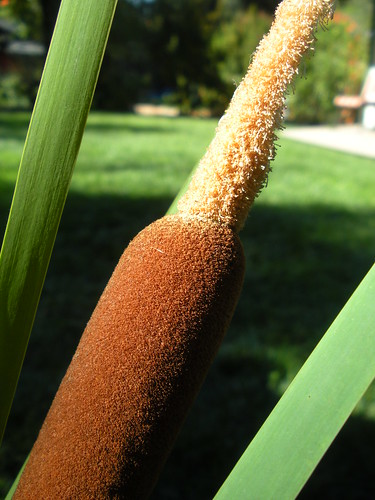
Here is a close-up of the flower spike and right now it feels like velvet. The boys were surprised at how soft and fuzzy it was to the touch. We talked about what we learned from our pre-study and how the cattail is edible. We all decided that we would like to try eating it someday......something to plan for the future.


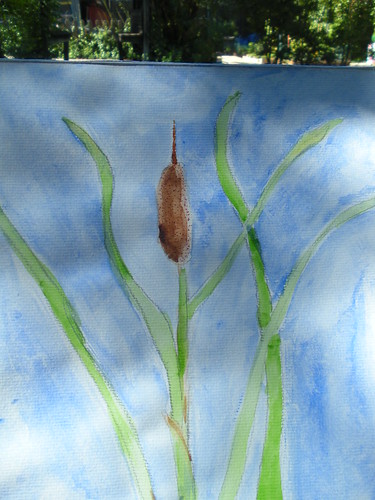
My sons were content to complete the notebook page with photos but I was inspired as so many others are by the simple beauty of this plant that we so often don't take the time to appreciate. I pulled out my watercolors and made a quick painting for my nature journal. I found a tutorial in a watercolor book that I have on the shelf that showed how to add stippling with a pen once the paints are dry. I love the way it adds a little detail to the cattail.

This was a perfect way to start off our Autumn Series of Outdoor Hour Challenges.

Barb-Harmony Art Mom

Here is the book I used to make my watercolor of the cattail.

Friday, September 18, 2009

Outdoor Hour Challenge: Autumn Series-Cattails

Here we go with another series of challenges. Our family has lacked a little focus lately in the nature study area. Perhaps it is the time of year or that we are busy with a new school schedule but it is going to be nice to have a challenge to set us on course again.

I have received quite a few comments from new participants wondering whether they should complete the first five challenges before joining in on the Autumn Series. I am going to suggest that you combine your nature study to include at least the first five challenges along with the Autumn Series challenges. You can very easily combine the challenges without adding too much complexity. For instance, combine Challenge 2 to use your words during any of the Autumn Series challenges. Challenge 3 is easily completed along with any of the Autumn Series challenges. At the very least, do the reading for the first five challenges in the Handbook of Nature Study along with the Autumn Series challenges. If you have any questions, please email me anytime. The notebook pages that come with the Getting Started ebook can be used with the Autumn Challenges as well.

I want to add nother note before the challenge for the week. I have started a separate page on Squidoo for the Autumn Series of Outdoor Hour Challenges. This page will have all the challenges in one place along with a few additional resources.

*All the challenges will eventually be listed.
*Links to the appropriate places for notebook pages.
*Additional resources for some of the challenges.
*Autumn ideas for art and music appreciation.
*A few other surprises as the weeks go by.

Make sure to bookmark the page so you can check it each week.
Autumn Series Challenges on Squidoo

Outdoor Hour Challenge-Autumn Series #1
Cattail Autumn Study


Inside Preparation Work
Read pages 500-503 in the Handbook of Nature Study. View the images of cattails and talk about where you can find them in your local area. I asked my boys and they thought of three places near-by that they remember seeing them grow. Print out the Cattail Seasonal Nature Study notebook page and go over the suggested activities so when you have your Outdoor Hour time your children will be prepared for what to look for.
"The nature study lesson should be short and sharp and may vary from ten minutes to a half hour in length." Handbook of Nature Study page 6
Cattails are the focus of this nature study and you will either be able to complete the challenge by observing cattails this week or sometime in the future. Look at the reading of the Handbook of Nature Study as a way to prepare you for a future nature study. Be on the look out for cattails as you drive around your local area and you may be surprised to find them in places you did not notice before. If you do not have cattails in your part of the world, please feel free to complete a challenge from the right sidebar of the blog and share your link on Mr. Linky below.

Outdoor Time
You have two choices:
Spend your outdoor time looking for cattails and then observing them to record their appearance at this time of the year. You will be revisiting this spot in every season to record your observations and to note the changes that take place from season to season. If your child does not want to sketch the cattail, bring along a camera to have them record the appearance with a photo. Remember the things you read about in the Handbook of Nature Study and see if you can complete the Cattails Seasonal Nature Study notebook page with lots of details. Also, look for other living creatures that might make their home in the cattails or that might visit there if you are still and quiet.

or

Use your fifteen minutes of outdoor time to explore your own backyard. Look for something ordinary that you can learn more about during the next week. The most important part of your Outdoor Hour time is to spend a few minutes with your children outdoors, slowing down enough to observe something closely in your own backyard or neighborhood. Keep the atmosphere relaxed and let your child's interests guide you to find something to observe. Don't forget to use all your senses and try to include a few minutes of quiet time to experience the sounds of your own backyard.

Follow-Up Activity
Allow your child a few minutes to tell you about their outdoor experience. Help them find a few words to record in their nature journal. Give time for a nature journal entry and remember it can be as simple as a sketch, a label, and a date. Complete the Cattails Seasonal Nature Study notebook page for the Autumn season and file it in your nature journal to compare to future cattail studies. As always, remember that the nature journal entry is a great way to record your outdoor experiences but it is not necessary every time.
"The book should be considered the personal property of the child and should never be criticized by the teacher except as a matter of encouragement; for the spirit in which the notes are made is more important than the information they cover." Handbook of Nature Study, page 13
After your nature study, make your blog entry and then come back to the current Autumn Series Challenge entry or any other Autumn Series entry and record your link. This way each week we will have fresh links to share.


See the sidebar of my blog in the free downloads section if you are interested in printing out the notebook pages for this series of entries.

Additional Resource for the Cattail Seasonal Nature Study:
There is a great book to look for at your library, Discover Nature in Water and Wetlands. This book has a whole section on studying cattails that I found very useful in preparing this challenge in addition to the Handbook of Nature Study. I also found a preview of it on Google Books if you wish to read it there. The cattail section begins on page 47.


Next week we will be continuing our Autumn Series of Outdoor Hour Challenges with an Autumn Tree study and special nature journal entry. In the near future we will be working with oak trees, acorns, and oak galls so if over the next few weeks you can be on the lookout for a good oak tree to study, your family will be ready to go when the challenge comes up. :)

Barb-Harmony Art Mom
Use Mr. Linky to record this week's nature study. Be sure that your link goes to your entry and not your blog in general.