Last month's archive cataloguing saw the release of three complete archive collections, as well as various manuscripts and supplementary items. The highlights are described below.
John Wilson Boag (1911-2007), radiation physicist and peace campaigner: papers of the influential radiation physicist and peace campaigner Jack Boag (1911-2007) were transferred to the Library last month thanks to the good offices of his colleague, G. Gordon Steel, the National Cataloguing Unit of the Archives of Contemporary Scientists and the Centre for Science Archives @ The Science Museum. With radiation hitting the headlines for all the wrong reasons recently, it is timely that the Library is releasing a new archive collection on this topic, which takes its place beside our other archive resources on radiology, radiotherapy and radiobiology. Although a rather patchy representation of Boag’s career, the eight boxes of his papers do contain interesting material relating his early work at the Radiotherapeutic Research Unit, Hammersmith Hospital in the 1940s-1950s, and later research, including at the Institute of Cancer Research; in addition, material relating to lectures and papers that Boag gave during the 1990s on the history of x-rays and radiation dosimetry. (PP/JWB)
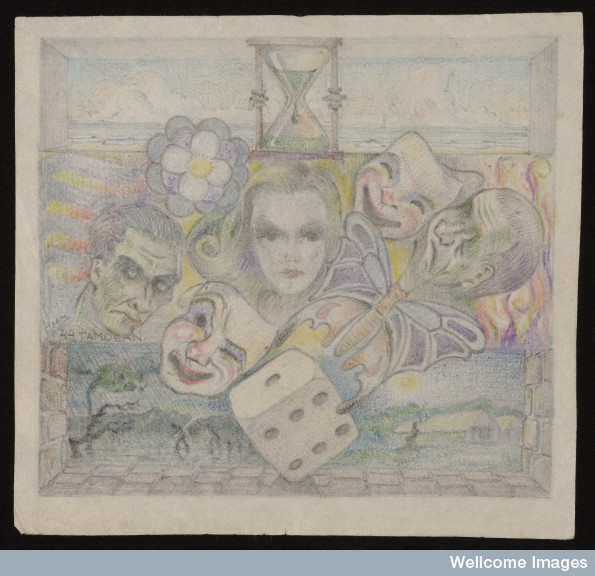
Captain George Blair, RAMC (1917-1979): material mainly relating to Blair's service in World War II and period as a prisoner of war of the Japanese: letters to and from family members, friends and relatives, personal documentation, photographs, and bound copy of a typescript thesis by Blair on malnutrition among PoWs in the Far East. The letters from him to his family give some details of his experiences, though some correspondence takes the form of preprinted formulaic postcards. His family and friends' letters give details of life on the home front and in other parts of the world. His sister Lydia's letters often mention her experiences as a Kitchen Supervisor at King's Cross Hospital, Dundee. (PP/GBL)
Otto Neubauer (1874-1957), German biochemist: papers relating mainly to his experiments on liver and kidney function prior to his leaving Nazi Germany for Britain. (GC/207)
Sir John Robert Vane (1927-2004), pharmacologist: two audio visual items were added to Vane’s papers, both recordings on CD: namely, a 1960 Ciba Foundation symposium (PP/JRV/F/8), and the speeches made in 1955 at Sir Henry Dale's 80th birthday dinner, 1955 PP/JRV/F/9), which include numerous anecdotes on the history of physiology and physiologists.
Adolf Stempel (fl.1868-1882): gymnastics notebook, giving highly detailed and numbered instructions on gymnastic excercises, movements and floor routines to be performed, and information on various events and competitions in London (including at the Orion gymnasium and the Bow and Bromley Institute). The notebook also includes several intricate diagrams for the excercises. (MS.7981)
Anna Maria Meysey of Shakenhurst Hall, Worcestershire: domestic recipe book including medical and culinary material and also instructions for household tasks (including one how to wash silk stockings). Late 18th – early 19th century. (MS.8685)
8685)
German Household Remedy Book: 17th century medical recipe book and herbal including recipes for cures for common illnesses and for veterinary medicine; also various remedies for the plague. The herbal section includes information on the properties of quinces, lemons, lime, aloe and sage, as well as herbs from the New World such as sarsaparilla. (MS.8454)
“Chyromancy or Palmestrye. Also Physiognomy and Metoposcopie”: an English manual of practical chiromancy or palmistry dated 1648, which will be described in more detail in a future blog post. (MS.8727)
In addition, as noted previously, work continues on the retroconversion of the Chartered Society of Physiotherapists catalogue (SA/CSP). Finally, in an earlier posting we flagged up the impending release of the final tranche of Francis Crick's papers (PP/CRI). There has been a slight change of plan here: the catalogue is completed but rather than release them at once the opportunity is being taken to digitise the papers immediately, bringing them forwards in our digitisation schedule, which means that there will be no need at a later date to take them out of circulation again for 2-3 months, as has been the case for the other Crick material to be digitised, and thus once this material is finally opened to the public it will stay opened. As soon as photography is completed these papers will be released, and an announcement will be made on this blog to herald the end of this long-running project.
The image of the X-ray warning sign at the head of this posting comes from Wellcome Images, image no.C0022404.