Showing posts with label mullein. Show all posts

Friday, February 3, 2012

OHC More Nature Study Book 2 - Mullein and Winter Weeds


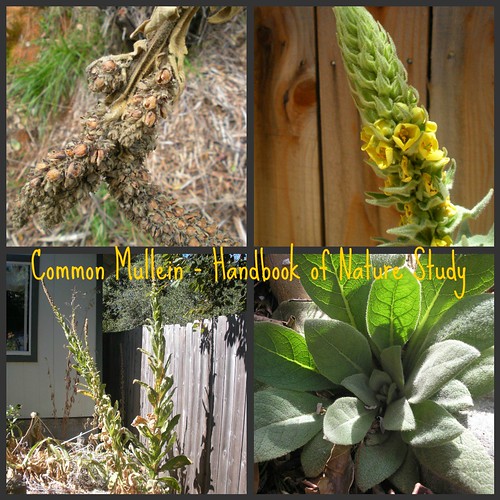
Common Mullein - Summer, Autumn, Winter

More Nature Study Book #3
Winter Weeds - Mullein Study

Inside Preparation:
  1. Read in the Handbook of Nature Study pages 537-539 (Lesson 146). Share a few facts and the images with your children so they can be on the lookout for mullein in your area. The distinctive rosette growth, the velvety leaves, and the flower stalk make this plant an easy one to spot, even in winter. (Ebook users have images included in the book and others can use the videos and the links in the Follow-Up section to view mullein.)
  2. Make sure to note that mullein is a biennial (takes two years to mature and produce seeds). 
  3. Optional: Watch this short YouTube video that gives you an idea of what a winter mullein looks like: Common Mullein. I also made my own mullein video from my garden: Mullein in Autumn
Outdoor Hour Time:
  1. Common mullein is found throughout the United States and Canada. During your outdoor time this week, try to find some common mullein to observe in its winter state. First year mullein will be look like green, soft, rosettes. Second year mullein will be the brown plant with the flower stalk. Observe how the leaves grow out between the two of the lower circle, that the upper leaves are smaller than those below, and that the upper leaves do not lie flat.
  2. Observe the mullein plant, looking at ways it survives the winter cold, rain, and snow. Make note of the plant’s location and plan to revisit it over the next year in each season. 
  3. Alternate winter weed activity: Find and observe any winter weed in your neighborhood. Even if you have snow, see if you can find a part of a plant sticking up out of the snow and make some observations. You may want to click over and read my Winter Weeds challenge for additional ideas for your family.
Follow-Up Activities:
  1. Complete a follow-up nature journal entry or notebook page for your mullein observations. Ebook users choose from the Common Mullein or Winter Weed notebook pages. 
  2. Advanced follow-up: Research the mullein plant online and find how it is used its traditional, medicinal, and health uses. Try this LINK or this LINK (this one is excellent!). Ebook users: Complete a notebook page. 
  3. Advanced follow-up: Research annual, perennial, and biennial plants on Wikipedia. Ebook users: Complete the notebook page with a summary of the information and give examples of each kind of plant. 
Here is a short video that will give you an idea of what mullein looks like in the winter. You can view our winter weeds study here: Winter Weeds - On-going Study


More Nature Study #2 button


Winter related books and field guides you may wish to look for at your library this week. All of these books are helpful but not necessary to the Outdoor Hour Challenge.

Sunday, September 18, 2011

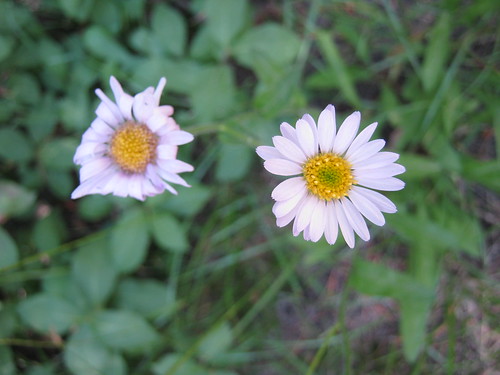
Fall Wildlfowers - Alternate to the Milkweed Study

Asters
Asters
Many areas do not have milkweed to observe right now and I have had requests for alternate flowers to study. So here are some ideas for an alternative to your More Nature Study #1 Milkweed Study.

Goldenrod
Goldenrod
I mentioned in the challenge that you can find several alternate flowers in the Handbook of Nature Study. Anna Botsford Comstock gives us some ideas and I suggested "check for other fall blossoming wildflowers to observe like: Jewel Weed (Lesson 134), Late blooming Goldenrod (Lesson 132), or Asters (Lesson 133). "

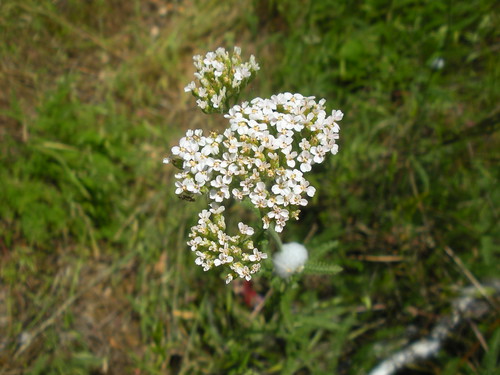
Yarrow
Yarrow
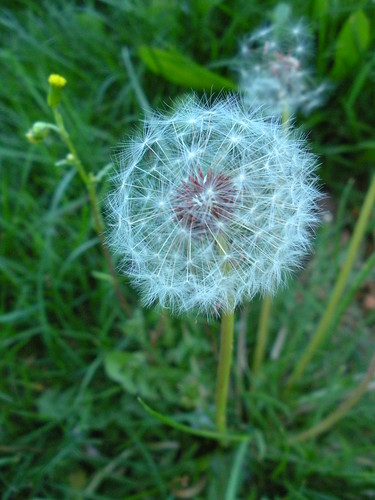
I have been doing additional research and you can also look for mullein (Lesson 146), dandelions (Lesson 144), sunflowers (Lesson 159), and several flowers not found in the Handbook of Nature Study- gentians, yarrow, or chrysanthemum. Hope that helps your family to complete the #1Milkweed Study (alternate study-any fall blooming flower).

Dandelion up close
Dandelion

Mullein September
Mullein in my backyard right now...not very pretty.

Wednesday, September 8, 2010

Mullein: Friend or Foe?

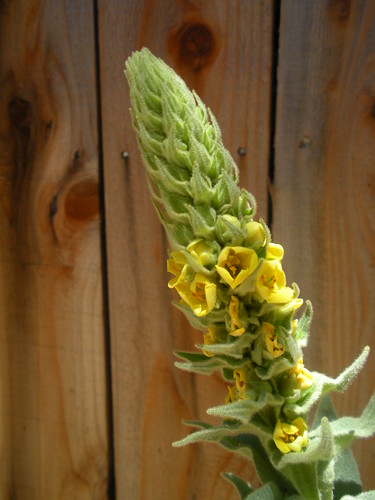
Mullein blooming

Mullein in our garden is about the only thing that is totally native and grows without any help or water from me. In the past, I dug it up and got rid of it but now I am converted. I leave it alone. It is rather pretty when it blossoms and the lesson in the Handbook of Nature Study has given me a new appreciation for this plant. (The lesson starts on page 537 and the study is Lesson 146.)

We actually studied mullein a little bit a few years ago and you can read about it here: Mullein.

After watching it grow in the garden, we realize now that it grows one year and blooms the next. This means that next year we will have loads of flowers from the many plants I have left in the garden this season. I am anxious to see how they survive the winter.

One thing that intrigued us from the lesson in the Handbook of Nature Study is the information on the "felt" of the leaves and stem. Anna Botsford Comstock suggests looking at it under a microscope. So....we did that and it was beautiful and enlightening. We could clearly see that the felt is actually a mat of sharp little spikes. The Handbook says that this felt also helps keep the water in the leaves from evaporating.

I have begun to open my eyes to native plants and the concept of weed vs. wildflower. There is always something new to learn about and to appreciate if we are open to the beauty right under our very own noses.

Still learning....