Showing posts with label acorns. Show all posts

Tuesday, September 27, 2011

Leaf-Miner Study Updated and Some Acorns Too

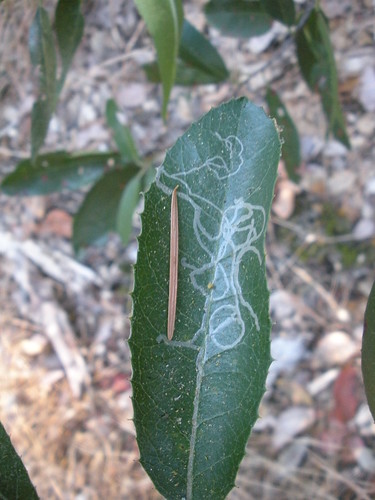
Leaf Miner 1

Today we hit the jackpot with leaf-miners while we were taking a hike with the dog. We found a whole bunch of leaves with signs of leaf-miners...how exciting!
(Original post HERE and the OHC Challenge HERE)

Leaf Miner 2
We were amazed at how crazy the path is on some of the leaves. Curls and swirls and then along the edges, there seems to be no rhyme or reason.

Oaks and Acorns 1
The creation of a thousand forests is in one acorn.
Ralph Waldo Emerson
We also were fascinated with the furry, fuzzy tops on these acorns. I like how they grow like twins on the branches of the oak tree.

Acorns and moss
I found a few on the ground along with some moss for a cute little acorn photo.

Just wanted to update our study with our latest finds.

Barb

Saturday, October 9, 2010

Trees Do Fall Down in the Woods

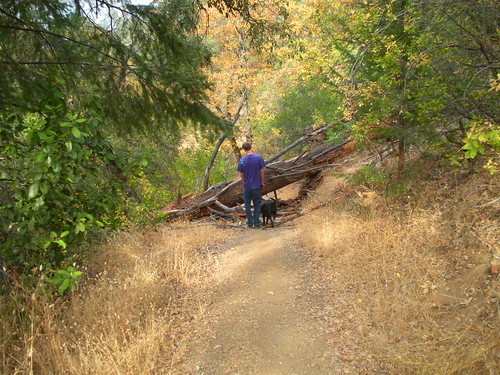
Red Shack 10 6 10 (9) Tree Down

Now this could pose a problem.....a big pine tree down across our hiking trail.

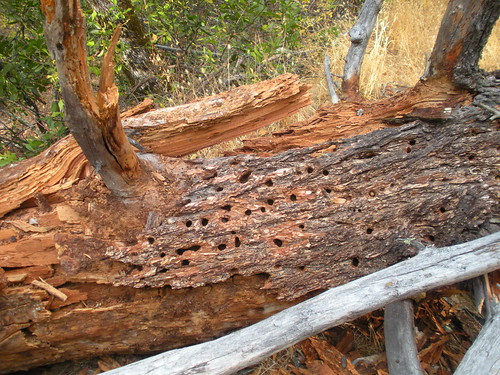
Red Shack 10 6 10 (11) Acorns in the trunk

We actually noticed before that this particular tree is *full* of acorn holes where the woodpeckers have made a huge storehouse of acorns in the trunk. We think this is what led to the demise of this big tree. That looks like a fresh acorn inside the hole.

Red Shack 10 6 10 (12) Acorn holes

When it fell, big pieces of the bark came off and exposed all the acorn holes. We climbed up and over to continue our hike. The dog decided to crawl underneath but either way it worked.

Red Shack 10 6 10 (1) Paper Wasp

Further down the trail my son spotted this section of a wasp nest on the trail. These are amazing creations and hard to believe that an insect made this out of their spit and plant fibers. Once again the Handbook of Nature Study helped us to learn a little bit more about the process of building the nest on page 381 (Lesson 95). The whole section is fascinating...here is an excerpt:
"The nest is of paper made of bits of wood which the wasps pull off with their jaws from weather-worn fences or boards. This wood is reduced to pulp by saliva which is secreted from the wasp's mouth, and is laid on in little layers which can be easily seen by examining the outside of the nest." Handbook of Nature Study, page 381.
Red Shack 10 6 10 (8) Some sort of gall

We also noticed these puffy growths on the oak branches along the trail. We thought maybe they were some sort of gall. I am still working on figuring out what exactly they are so if anyone has any ideas, I would appreciate an email.

It is nice to be out hiking again as the weather is cooling down a bit. My sons have been down off and on this week with a cold/flu. Mr. A said it was nice to get out and enjoy the fresh air and sunshine and I know it always makes me feel better too.

Barb-Harmony Art Mom

Tuesday, February 23, 2010

Winter Mix and Match Nature Study

Wildlife Viewing Sign
This post is a mix and match post with lots of different interesting things we are studying. I am trying to get through all the photos I have taken in the last month to close off our winter studies before spring comes.

Sweet gum forsythia and river willow
I brought in some branches of various trees and bushes in January and we have been watching them as they unfold. This is such an easy project that I encourage you to give it a try. Any woody plant will work and we are trying some new ones this year.

Here are some instructions you might want to read: Bursting Blooms

bud sweet gum
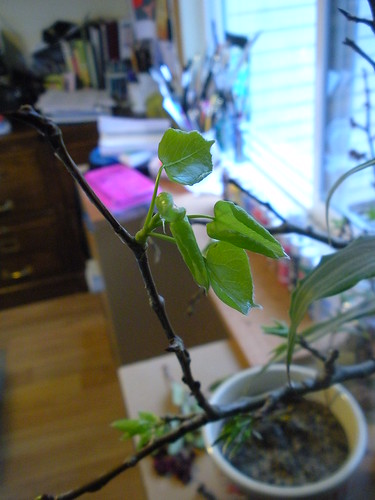
This is the sweet gum as it starts to unfold. Edit to add that this is a maple and not a sweet gum.

Now this is my mystery tree branch (perhaps a Quaking Aspen) that I brought home from my romp up in the mountains. The branch was broken off on the trail and I decided it might be interesting to bring it home and see if it would sprout leaves. It had buds at first and then the buds burst open to reveal these catkins.
bud catikin leaves- Aspen?

Leaves on branch-Aspen?
The catkins then dropped off and the leaves are now sprouting bright spring green leaves and I am still not 100% sure this is a Quaking aspen branch.

Forsythia blossom
This is the forsythia bush twig that I brought in and it is so pretty in yellow. I must be tired of the winter drabs because this yellow really cheers me up.

seeds trumpet vine and crepe myrtle
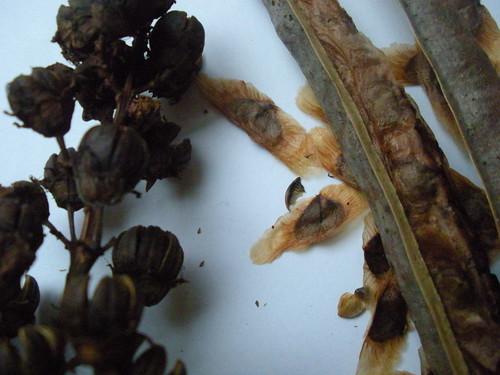
These are just two things that have been sitting on the nature shelf that someone brought in to look at and study. We haven't had time to really research them much, but they are interesting none the less. The crepe myrtle bush has some interesting seeds and the pods have become really hard as they dry. The seed pod from the trumpet vine is filled with thousands of seeds with wings. They are amazing actually.

Now for a few outdoor things that I would like to share.

buckeye with sprout
This buckeye seed has broken open and sent out a pinkish root. They are striking to see as we walk along the trail.

acorn with sprout
The acorns are doing the same thing right now as well. This black oak acorn has sprouted.

acorn sprouting 2
Here is another photo of an acorn sending down a root. Amazing to see in real life. Just think, a gigantic tree can grow from just this little acorn and one little sprout.

Manzanita Blossoms 2
One last photo with some manzanita that is ready to bloom. I love the delicate pink buds that will soon be blooming all along our walking trail.

I think that catches me up with photos from the camera. We are trying to keep up our daily walks and I am feeling the change of the seasons coming. The air is different.

I encourage you to try the Bursting Blooms activity with your kids and to get outside for a few minutes this week to enjoy the day.

Barb-Harmony Art Mom

Friday, October 9, 2009

Outdoor Hour Challenge Autumn Series-Oaks and Acorns

This challenge involves finding an oak tree to observe. We studied oaks last year during our tree series but since it is a great tree to learn about in the autumn with its acorns and galls, I decided to include it again this time as part of the Autumn Series of Outdoor Hour Challenges.

There is plenty to learn about an oak so if you have already completed the oak challenge you might want to revisit your oak or find a different variety of oak and compare the two. Oaks should be a tree that many of us have in our local area and I encourage you to read the Handbook of Nature Study and then to keep your eyes out for a tree to observe this week.

Outdoor Hour Challenge
Autumn Series #4
Oak Trees and Acorns
(formerly Challenge #33)


Inside Preparation Work

This week read in the Handbook of Nature Study pages 638-642 to learn more about oak trees. Make sure to note the ideas suggested for studying oaks in the lesson at the end of the section-Lesson 176 and incorporate those suggestions into your follow-up time if you wish.

If you own the Peterson Field Guide to Trees, turn to the index and look up oaks. You will find the plate numbers to turn to for oak identification. The great thing about the Peterson Field Guide is that it shows the leaf and the acorn so this time of year you should have an easier time identifying your oak. Scan the book before you go outside and remember to bring back a leaf and an acorn if possible for your follow-up time. This challenge can be completed without identifying your oak if you have younger children or you do not have a field guide.

Outdoor Time
Spend 15 to 20 minutes outdoors this week with your children in your own yard or on your own street. The weather should be getting cooler for most of us and it is a very enjoyable time to be outdoors.

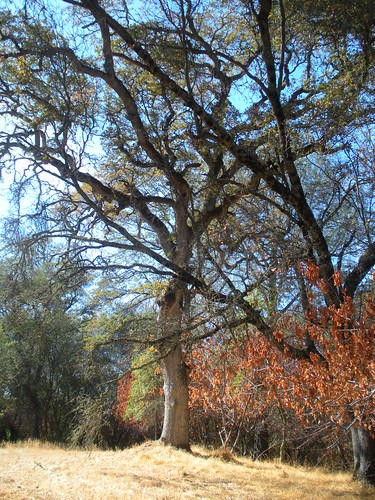
If you have an oak tree of any variety in your yard or on your street, use the ideas from the lesson on page 641 and 642 to guide your observation of the oak tree. Take along your magnifying lens if you want to get a closer look at the bark or leaves of your tree as you spend time outdoors. Don’t forget to look for acorns. Bring home one acorn and several leaves to look at more closely and to use for identification if you wish.

There is no reason to be concerned if you do not find an oak. See if you can spot a tree that is turning colors or any other tree that captures your child's interest. Make sure to look for creatures that can be found around trees this time of year like squirrels or blue jays.
Follow-Up Activities
After you outdoor time, talk about anything that interested your child. This would also be a good time to look up any oak trees you observed in your field guide and see if you can learn more about your particular oak tree.

In the Handbook of Nature Study in the lesson for oaks it suggests completing Lesson 173 on making leaf prints. The directions include using kerosene and gasoline. I found much easier and safer directions for making leaf prints using an ink pad.
The Naturalist's Apprentice: Making Leaf Prints
http://www.inhs.illinois.edu/inhsreports/fall-2000/leaf.html

I used the instructions and made beautiful leaf prints with my boys. Make sure to use an ink pad with plenty of ink and I found it made a better print if you inked the backside of the leaf. I suggest using washable ink since little fingers will be getting inky. :) I wrote a blog entry about our experiences with leaf prints made with ink HERE.

The Handbook of Nature Study suggests planting your acorn to see if it sprouts.

Complete a nature journal entry for your oak, its leaf, and the acorn. You can use the provided notebook page for your journal from the sidebar of my blog in the free downloads section.

Don't forget to come back to the Autumn Series entry and record you link using Mr. Linky. I would love to come over to your blog and see how you enjoyed your oak study. Your entries encourage me and all the other readers as well.

The field guide suggested in this challenge is include on the Autumn Series Challenges on Squidoo. Make sure to bookmark the Squidoo Autumn Series page so you can check it each week for any additional ideas. I added some literature books for young children to read to enhance their autumn nature study.
Autumn Series Challenges on Squidoo